
RS232-1V8

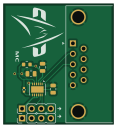
About the RS232-1V8 PCB
RS232-1V8 is an open source PCB design by mastupristi, published on GitHub under the CERN-OHL-S-2.0 license. It is a 2-layer board measuring 29 × 31.8 mm, with 8 components from 5 distinct parts.
Other key parts include the LTC2802. By type, the board carries 4 capacitors, 2 connectors, 1 IC and 1 inductor.
From the project
A compact RS-232 ↔ TTL adapter supporting logic levels down to 1.8V
A compact RS-232 ↔ TTL adapter supporting logic levels down to 1.8V, based on the LTC2802 transceiver.
Most commercial RS-232 to TTL adapters — typically based on the MAX3232 — only support 3.3V or 5V logic levels. However, modern embedded platforms (such as low-power microcontrollers, SoCs, and FPGAs) increasingly operate at 1.8V.
RS232-1V8 was designed to address this gap, providing a drop-in alternative that supports logic levels from 1.8V to 5V, while maintaining a familiar form factor and pinout.
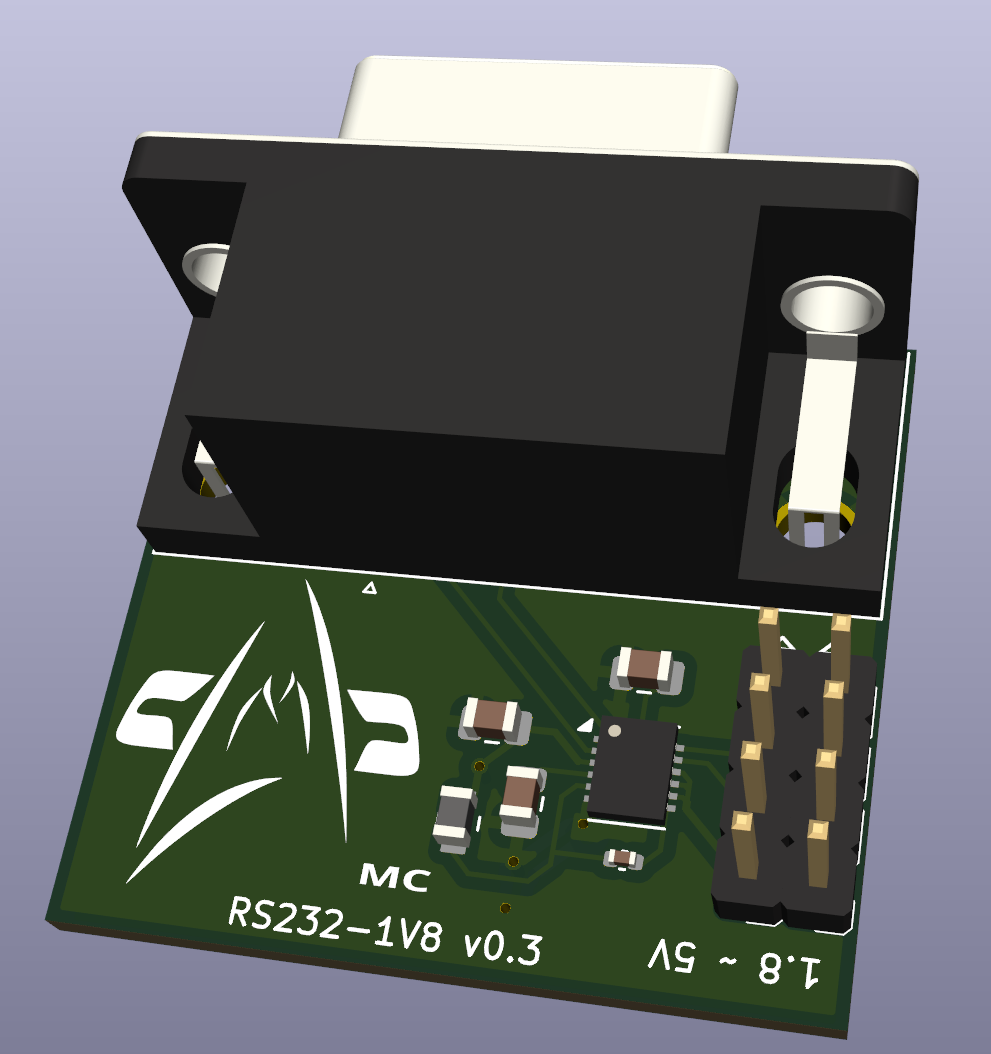
Main components on the RS232-1V8
RS232-1V8 bill of materials (BOM)
8 components, 5 distinct parts — part numbers from the project's BOM.
| Qty | Part | Footprint | Refs |
|---|---|---|---|
| 1 | LTC2802 | DFN-12-1EP_3x4mm_P0.5mm_EP1.7x3.3mm | U1 |
| 2 | PZ254V-11-04P | PinHeader_1x04_P2.54mm_Vertical | J2, J3 |
| 1 | 10UH 10uH | L_0806_2016Metric_MuRata | L1 |
| 1 | 220NF 220nF | C_0402_1005Metric | C1 |
| 3 | 1UF 1uF | C_0805_2012Metric | C4, C5, C6 |
RS232-1V8 design files
The KiCad project lives in the mastupristi/RS232-1V8 repository on GitHub; these links point at the commit this page was built from.
- LayoutRS232-1V8.kicad_pcb
- SchematicRS232-1V8.kicad_sch
- BOMRS232-1V8_bom_top.csv
RS232-1V8: common questions
How big is the RS232-1V8 PCB?
The RS232-1V8 measures 29 × 31.8 mm, has 2 copper layers and is 1.6 mm thick.
How many components are on the RS232-1V8?
8 components, from 5 distinct parts, with part numbers taken from the project's own BOM. The full bill of materials is listed on this page.
Where can I download the RS232-1V8 design files?
From the mastupristi/RS232-1V8 repository on GitHub, which has the KiCad layout, the schematic and the BOM; the links under Design files point to each one.
Can I use the RS232-1V8 design in my own project?
Yes, under the terms of its CERN-OHL-S-2.0 license, which mastupristi chose for the repository.