
L2 cache adapter

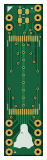
About the L2 cache adapter PCB
L2 cache adapter is an open source PCB design by pc2005cz, published on GitHub under the CC-BY-NC-4.0 license. It is a 2-layer board measuring 10 × 40 mm, with 4 components from 3 distinct parts.
Other key parts include the 628128_TSOP32. By type, the board carries 3 capacitors and 1 IC.
From the project
Yet another 486 L2 cache adapter
NOTICE this is just an untested proof of concept
Asynchronous fast SRAM chips in DIP32 package, were phased out. This makes not possible to use new chips to upgrade 486 L2 cache. However there are still compatible SRAM variants in SMT packages.
This project aims to create a PCB design, which allows the retro community to put TSOP32 chip into a DIP32 socket.
DIP32 sockets usually have the absolute maximum dimensions 10 x 40 mm. The adapter need to be less wide than that (and any exceeding PCB space due to a manufacturing tolerances needs to be sanded out).
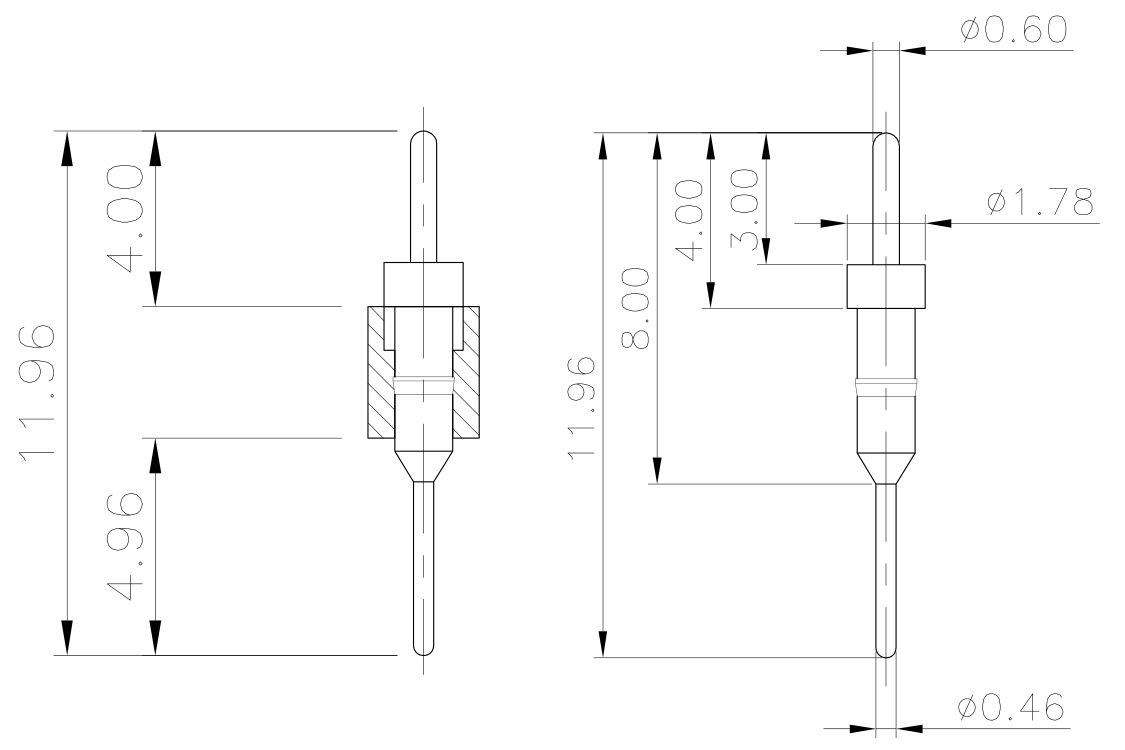
Main components on the L2 cache adapter
L2 cache adapter bill of materials (BOM)
4 components, 3 distinct parts.
| Qty | Part | Footprint | Refs |
|---|---|---|---|
| 1 | 628128_TSOP32 | TSOP-I-32_18.4x8mm_P0.5mm_silkscreen_mod | U1 |
| 1 | 100nF | C_0805_2012Metric | C1 |
| 2 | 1uF | C_0805_2012Metric | C2, C3 |
L2 cache adapter design files
The KiCad project lives in the pc2005cz/L2_cache_adapter repository on GitHub; these links point at the commit this page was built from.
- Layoutsram.kicad_pcb
- Schematicsram.kicad_sch
L2 cache adapter: common questions
How big is the L2 cache adapter PCB?
The L2 cache adapter measures 10 × 40 mm, has 2 copper layers and is 1.6 mm thick.
How many components are on the L2 cache adapter?
4 components, from 3 distinct parts. The full bill of materials is listed on this page.
Where can I download the L2 cache adapter design files?
From the pc2005cz/L2_cache_adapter repository on GitHub, which has the KiCad layout and the schematic; the links under Design files point to each one.
Can I use the L2 cache adapter design in my own project?
It is published under CC-BY-NC-4.0, which limits how it may be reused; read the license before building on it.