
Getting to blinky

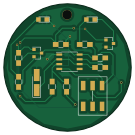
About the Getting to blinky PCB
Getting to blinky is an open source PCB design by ALeggeUp, published on GitHub under the CC-BY-SA-4.0 license. It is a 2-layer board measuring 33.7 × 33.7 mm, with 16 components from 12 distinct parts.
Other key parts include the ICM7555. By type, the board carries 8 resistors, 2 transistors, 2 diodes, 1 IC, 1 battery holder and 1 switch.
From the project
This work is licensed under the Creative Commons Attribution 4.0 International License. To view a copy of this license, visit http://creativecommons.org/licenses/by/4.0/ or send a letter to Creative Commons, PO Box 1866, Mountain View, CA 94042, USA.
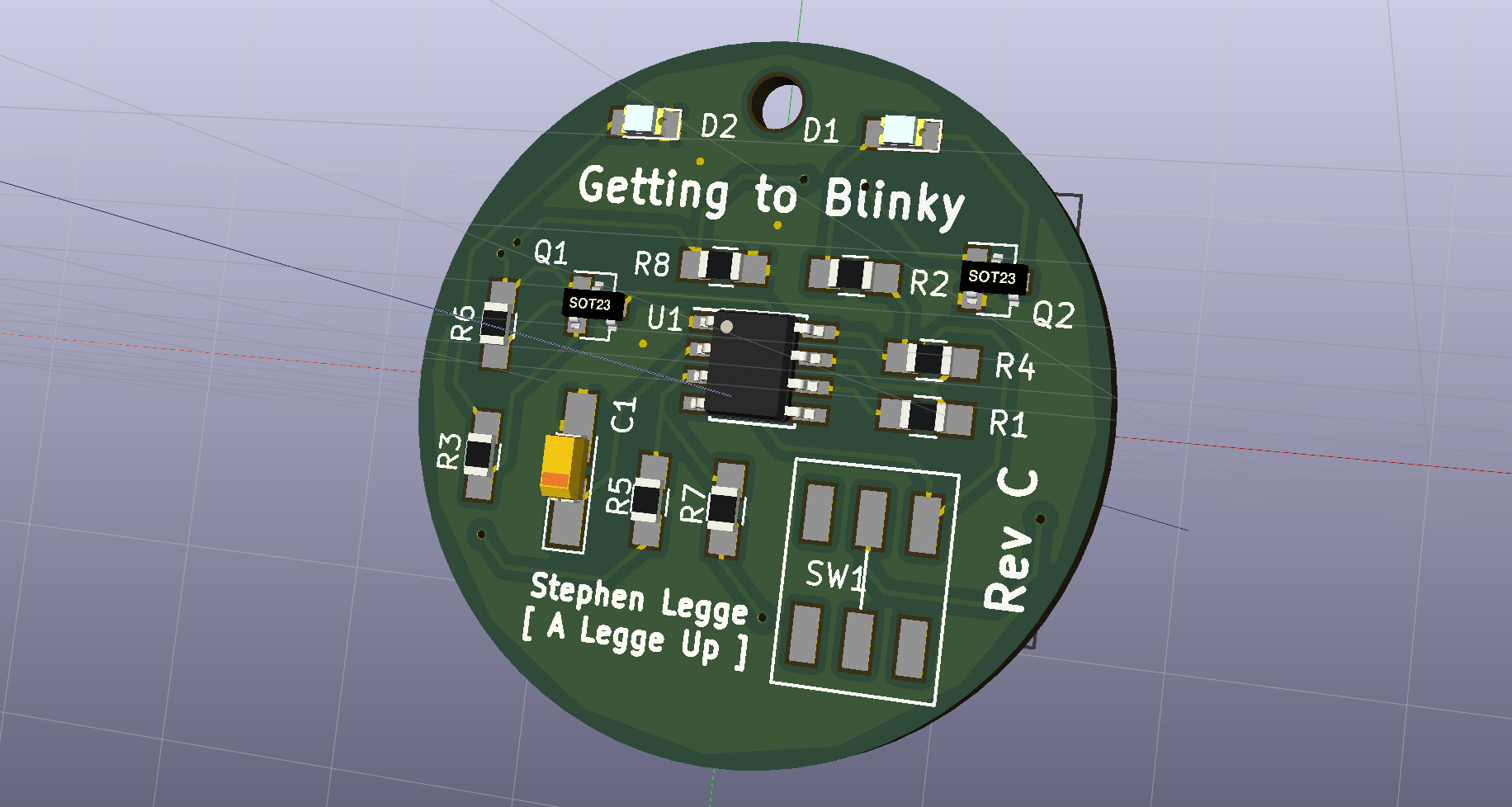
Main components on the Getting to blinky
Getting to blinky bill of materials (BOM)
16 components, 12 distinct parts.
| Qty | Part | Footprint | Refs |
|---|---|---|---|
| 1 | ICM7555 | SOIC-8_3.9x4.9mm_Pitch1.27mm | U1 |
| 1 | BC808-40 | SOT-23 | Q1 |
| 1 | BC818-40 | SOT-23 | Q2 |
| 1 | Battery_Cell | BAT-HLD-001-CR2032 | BT1 |
| 1 | JS202011SCQN | JS202011SCQN | SW1 |
| 2 | LED | LED_0805 | D1, D2 |
| 1 | 10U | CP_Tantalum_Case-A_EIA-3216-18_Hand | C1 |
| 1 | 110K | R_0805_HandSoldering | R1 |
| 2 | 55 | R_0805_HandSoldering | R2, R3 |
| 1 | 470 | R_0805_HandSoldering | R4 |
| 2 | 1.2K | R_0805_HandSoldering | R5, R7 |
| 2 | 720 | R_0805_HandSoldering | R6, R8 |
Getting to blinky design files
The KiCad project lives in the ALeggeUp/getting-to-blinky repository on GitHub; these links point at the commit this page was built from.
Getting to blinky: common questions
How big is the Getting to blinky PCB?
The Getting to blinky measures 33.7 × 33.7 mm, has 2 copper layers and is 1.6 mm thick.
How many components are on the Getting to blinky?
16 components, from 12 distinct parts. The full bill of materials is listed on this page.
Where can I download the Getting to blinky design files?
From the ALeggeUp/getting-to-blinky repository on GitHub, which has the KiCad layout; the links under Design files point to each one.
Can I use the Getting to blinky design in my own project?
Yes, under the terms of its CC-BY-SA-4.0 license, which ALeggeUp chose for the repository.