
Hojicha44 Hojicha44-Right

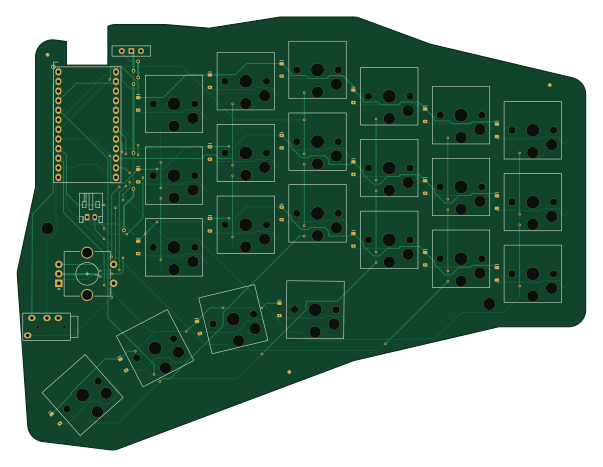
About the Hojicha44 Hojicha44-Right PCB
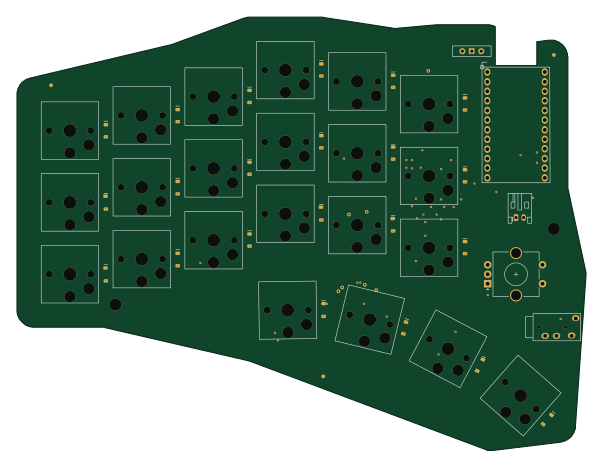
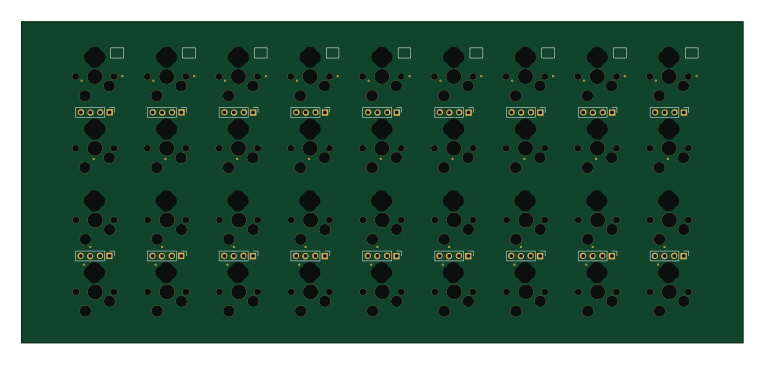
Hojicha44 Hojicha44-Right is an open source PCB design by Cypherico, published on GitHub. It is a 2-layer board measuring 150.5 × 114.6 mm, with 48 components from 27 distinct parts.
It belongs with the keyboards and iot & wireless designs in this gallery.
From the project
Open Source Split wireless columnar 44-key keyboard with a focus on sound!
Custom split columnar mechanical keyboard (44 keys + 2 encoders, nice!nano x2). Roadmap: KEYBOARDPROJECTROADMAP.md. Current phase: PCB release v0.5.0 cut + fab-pointable; plate rev-8 gated (+ new z-stack gate); case/cover v4.1 generated + gated (thin top plate, key-field ledge, floor −6.35) with committed STEP solids; ZMK CI green. Board release evidence: generated/release/v0.5.0; order-time print geometry: generated/print/v0.5.0/MANIFEST.txt (STEP files verified in CI); renders: generated/renders/v0.5.0. Remaining before any batch: the first-article checklist (spec/first-article.md) —…
Hojicha44 Hojicha44-Right bill of materials (BOM)
48 components, 27 distinct parts — part numbers from the project's BOM.
| Qty | Part | Footprint | Refs |
|---|---|---|---|
| 22 | 1N4148W | D_SOD-123 | D_R00, D_R01, D_R02, D_R03, D_R04, D_R05, D_R06, D_R07 +14 |
| 1 | XKB PJ-320A PJ-320A TRRS | TRRS-PJ-320A | J_R1 |
| 1 | JST S2B-PH-K-S BATT_LIPO | JST_PH_S2B-PH-K_1x02_P2.00mm_Horizontal | J_R2 |
| 1 | Kailh PG1350 K00 | SW_Hotswap_Kailh_Choc_V1_1.00u | SW_R00 |
| 1 | Kailh PG1350 K01 | SW_Hotswap_Kailh_Choc_V1_1.00u | SW_R01 |
| 1 | Kailh PG1350 K02 | SW_Hotswap_Kailh_Choc_V1_1.00u | SW_R02 |
| 1 | Kailh PG1350 K03 | SW_Hotswap_Kailh_Choc_V1_1.00u | SW_R03 |
| 1 | Kailh PG1350 K04 | SW_Hotswap_Kailh_Choc_V1_1.00u | SW_R04 |
| 1 | Kailh PG1350 K05 | SW_Hotswap_Kailh_Choc_V1_1.00u | SW_R05 |
| 1 | Kailh PG1350 K06 | SW_Hotswap_Kailh_Choc_V1_1.00u | SW_R06 |
| 1 | Kailh PG1350 K07 | SW_Hotswap_Kailh_Choc_V1_1.00u | SW_R07 |
| 1 | Kailh PG1350 K08 | SW_Hotswap_Kailh_Choc_V1_1.00u | SW_R08 |
| 1 | Kailh PG1350 K09 | SW_Hotswap_Kailh_Choc_V1_1.00u | SW_R09 |
| 1 | Kailh PG1350 K10 | SW_Hotswap_Kailh_Choc_V1_1.00u | SW_R10 |
| 1 | Kailh PG1350 K11 | SW_Hotswap_Kailh_Choc_V1_1.00u | SW_R11 |
| 1 | Kailh PG1350 K12 | SW_Hotswap_Kailh_Choc_V1_1.00u | SW_R12 |
| 1 | Kailh PG1350 K13 | SW_Hotswap_Kailh_Choc_V1_1.00u | SW_R13 |
| 1 | Kailh PG1350 K14 | SW_Hotswap_Kailh_Choc_V1_1.00u | SW_R14 |
| 1 | Kailh PG1350 K15 | SW_Hotswap_Kailh_Choc_V1_1.00u | SW_R15 |
| 1 | Kailh PG1350 K16 | SW_Hotswap_Kailh_Choc_V1_1.00u | SW_R16 |
Show 7 more
| Qty | Part | Footprint | Refs |
|---|---|---|---|
| 1 | Kailh PG1350 K17 | SW_Hotswap_Kailh_Choc_V1_1.00u | SW_R17 |
| 1 | Kailh PG1350 K18 | SW_Hotswap_Kailh_Choc_V1_1.00u | SW_R18 |
| 1 | Kailh PG1350 K19 | SW_Hotswap_Kailh_Choc_V1_1.00u | SW_R19 |
| 1 | Kailh PG1350 K20 | SW_Hotswap_Kailh_Choc_V1_1.00u | SW_R20 |
| 1 | Kailh PG1350 K21 | SW_Hotswap_Kailh_Choc_V1_1.00u | SW_R21 |
| 1 | Wuerth 450301014042 PWR_SW | SW_Slide-03_Wuerth-WS-SLTV_10x2.5x6.4_P2.54mm | SW_RPWR1 |
| 1 | nice!nano v2 | Socket_Strips_2x12_P2.54mm_NiceNano | U_R1 |
Hojicha44 Hojicha44-Right design files
The KiCad project lives in the Cypherico/Hojicha44 repository on GitHub; these links point at the commit this page was built from.
Hojicha44 Hojicha44-Right: common questions
How big is the Hojicha44 Hojicha44-Right PCB?
The Hojicha44 Hojicha44-Right measures 150.5 × 114.6 mm, has 2 copper layers and is 1.6 mm thick.
How many components are on the Hojicha44 Hojicha44-Right?
48 components, from 27 distinct parts, with part numbers taken from the project's own BOM. The full bill of materials is listed on this page.
Where can I download the Hojicha44 Hojicha44-Right design files?
From the Cypherico/Hojicha44 repository on GitHub, which has the KiCad layout, the schematic and the BOM; the links under Design files point to each one.
Can I use the Hojicha44 Hojicha44-Right design in my own project?
The repository has no license, so all rights stay with Cypherico. Use it as a reference, and ask the author before reusing the design.
 byrantech


 google