SAO Jack


About the SAO Jack PCB
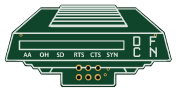
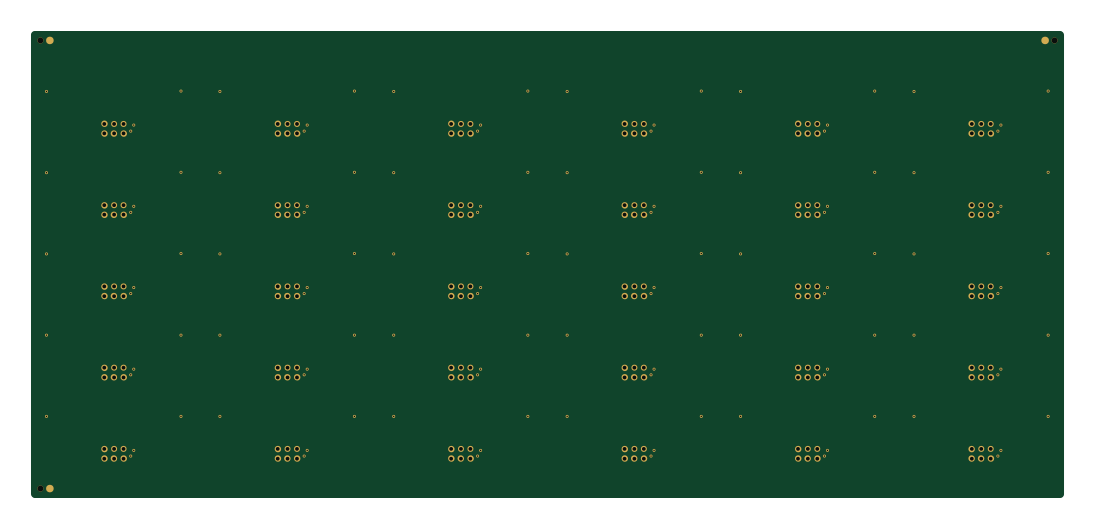
SAO Jack is an open source PCB design by hamster, published on GitHub under the MIT license. It is a 2-layer board measuring 35.7 × 37.4 mm, with 7 components from 3 distinct parts.
By type, the board carries 4 diodes, 2 resistors and 1 crystal.
From the project
defcon 30 SAOs
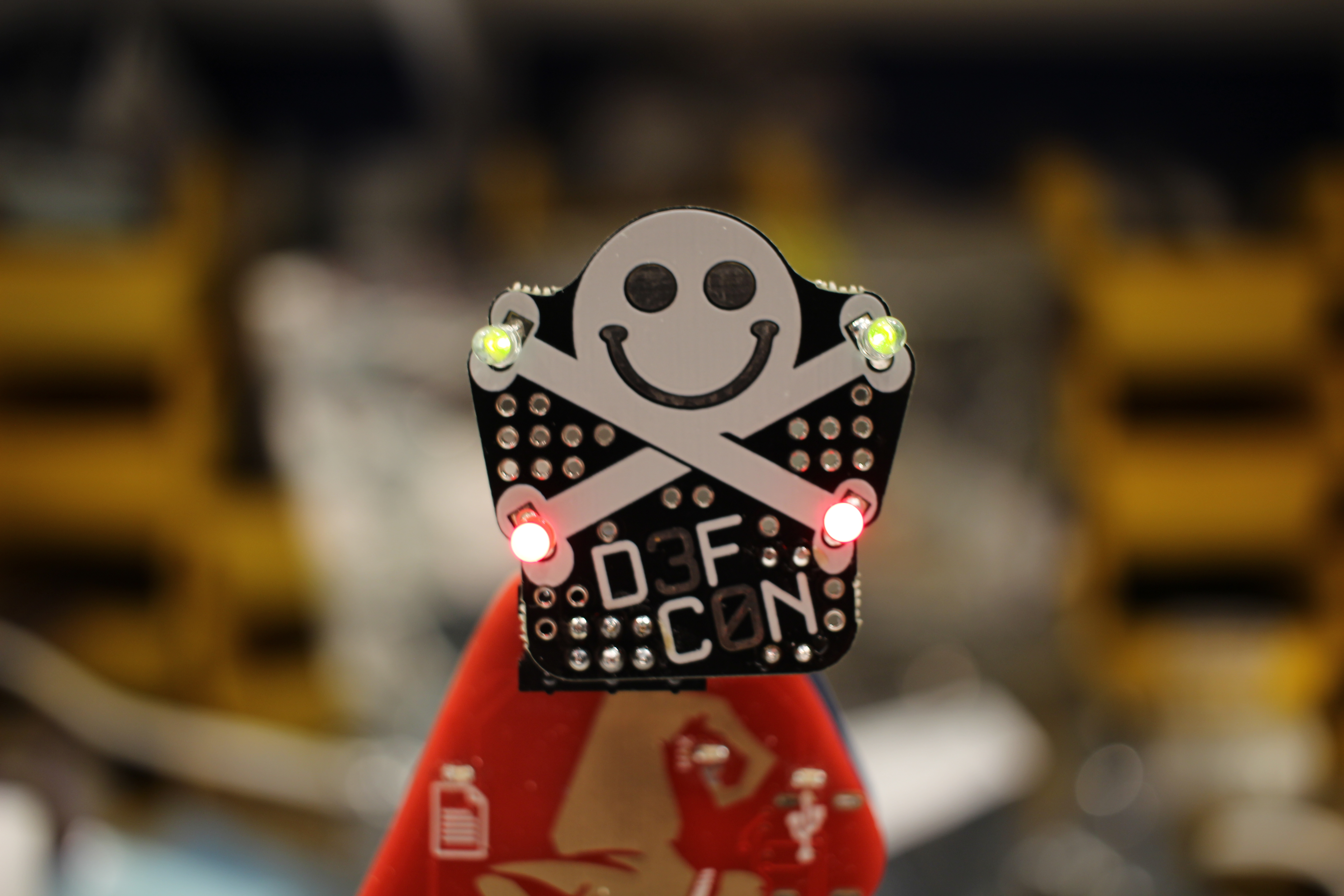
Jack is a simple SAO soldering kit. Consisting of 4 LEDs in two colors, two resistors, and a connector, it's an easy way to learn how to solder.
To start, dump your kit out on the table and make sure you have all the parts pictured. You'll need a soldering iron, solder, and a pair of wire cutters.
Locate the LEDs. Note that typically the LED is cast with a flat spot to indicate the cathode (or negative) terminal. However, these small LEDS instead have the shorter leg as the cathode.
SAO Jack bill of materials (BOM)
7 components, 3 distinct parts — part numbers from the project's BOM.
| Qty | Part | Footprint | Refs |
|---|---|---|---|
| 1 | Badgelife_sao_connector_v169bis | Badgelife-Shitty-v1.69bis | X1 |
| 4 | LED | LED_D3.0mm | D1, D2, D3, D4 |
| 2 | 140 | R_Axial_DIN0204_L3.6mm_D1.6mm_P7.62mm_Horizontal | R1, R2 |
SAO Jack design files
The KiCad project lives in the hamster/defcon30 repository on GitHub; these links point at the commit this page was built from.
- Layoutjack/jack.kicad_pcb
- Schematicjack/jack.kicad_sch
- BOMjack/jack-BOM.xlsx
SAO Jack: common questions
How big is the SAO Jack PCB?
The SAO Jack measures 35.7 × 37.4 mm, has 2 copper layers and is 1.6 mm thick.
How many components are on the SAO Jack?
7 components, from 3 distinct parts, with part numbers taken from the project's own BOM. The full bill of materials is listed on this page.
Where can I download the SAO Jack design files?
From the hamster/defcon30 repository on GitHub, which has the KiCad layout, the schematic and the BOM; the links under Design files point to each one.
Can I use the SAO Jack design in my own project?
Yes, under the terms of its MIT license, which hamster chose for the repository.