
Roborock

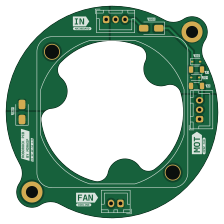
About the Roborock PCB
Roborock is an open source PCB design by jniebuhr, published on GitHub. It is a 2-layer board measuring 56 × 56 mm, with 9 components from 8 distinct parts.
By type, the board carries 3 connectors and 2 resistors.
From the project
This repository contains a custom PCB for use with the awesome work at Roborock CPAP. The PCB shields the controller board from any back flow that might occur from the brushless controller.
This repository contains a custom PCB for use with the awesome work at Roborock CPAP. The PCB shields the controller board from any back flow that might occur from the brushless controller.
The logic is the same as in the work of stas2z but reshaped to better fit on the back of the blower while also allowing for a cooling fan to be added.
The pinout can also be found on the back side of your board and may be different from the most recent version (see note below).
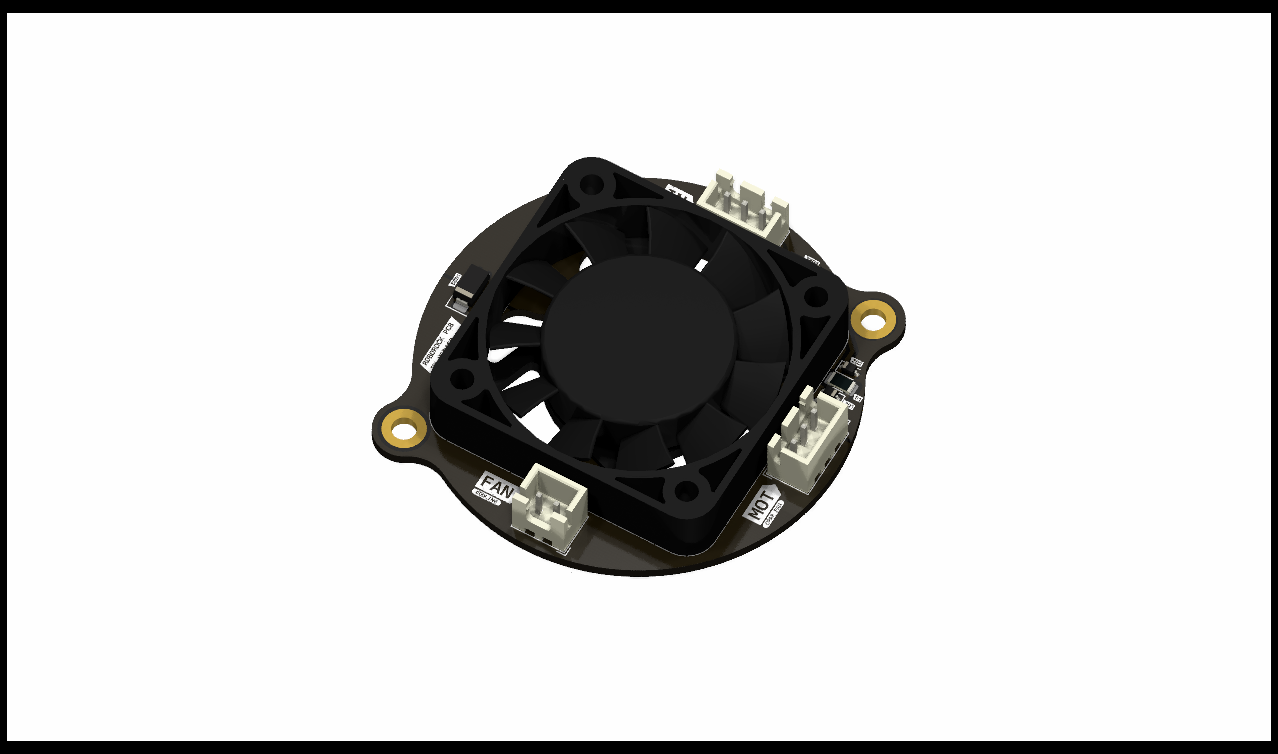
Roborock bill of materials (BOM)
9 components, 8 distinct parts — part numbers from the project's BOM.
| Qty | Part | Footprint | Refs |
|---|---|---|---|
| 1 | INPUT | JST_XH_B3B-XH-A_1x03_P2.50mm_Vertical | J1 |
| 1 | MOTOR | JST_XH_B3B-XH-A_1x03_P2.50mm_Vertical | J2 |
| 1 | FAN | JST_XH_B2B-XH-A_1x02_P2.50mm_Vertical | J3 |
| 1 | SS54 | D_SMA | SBD1 |
| 1 | SS34 | D_SMA | SBD2 |
| 2 | BZT52C5V1S | D_SOD-323 | ZD1, ZD2 |
| 1 | 1K | R_1206_3216Metric | R1 |
| 1 | 10K | R_1206_3216Metric | R2 |
Roborock design files
The KiCad project lives in the jniebuhr/roborock-pcb repository on GitHub; these links point at the commit this page was built from.
Roborock: common questions
How big is the Roborock PCB?
The Roborock measures 56 × 56 mm, has 2 copper layers and is 1.6 mm thick.
How many components are on the Roborock?
9 components, from 8 distinct parts, with part numbers taken from the project's own BOM. The full bill of materials is listed on this page.
Where can I download the Roborock design files?
From the jniebuhr/roborock-pcb repository on GitHub, which has the KiCad layout, the schematic and the BOM; the links under Design files point to each one.
Can I use the Roborock design in my own project?
The repository has no license, so all rights stay with jniebuhr. Use it as a reference, and ask the author before reusing the design.