
Lightfury panel

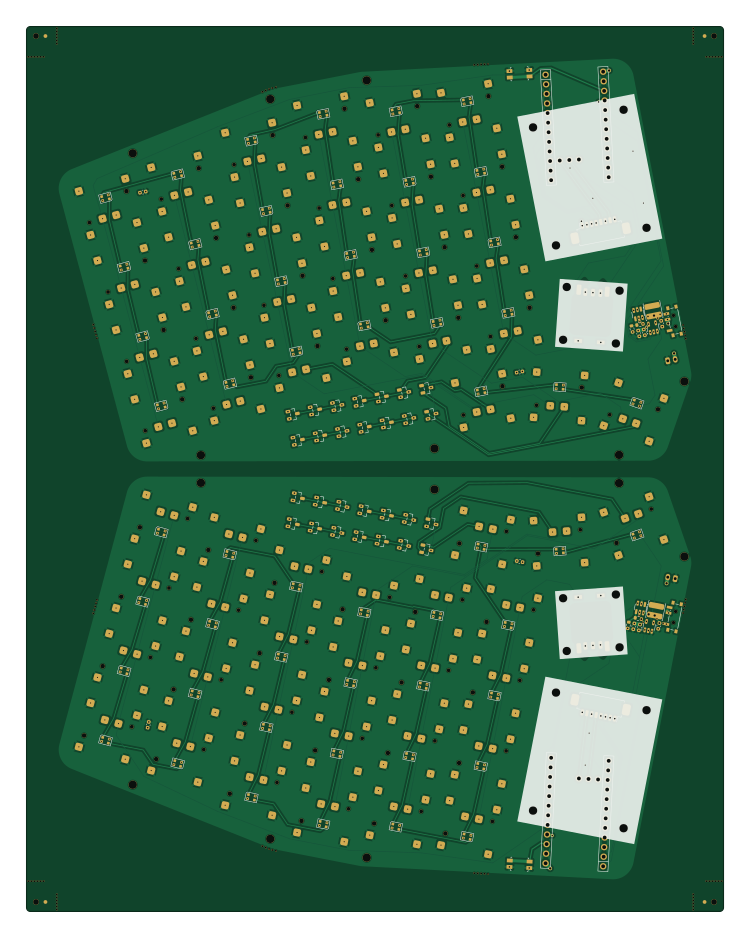
About the Lightfury panel PCB
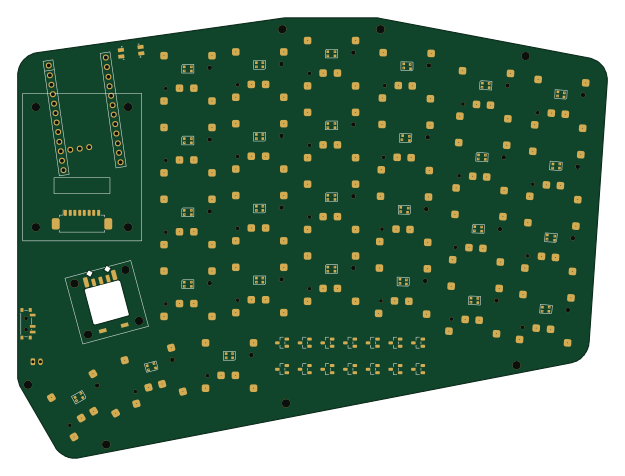
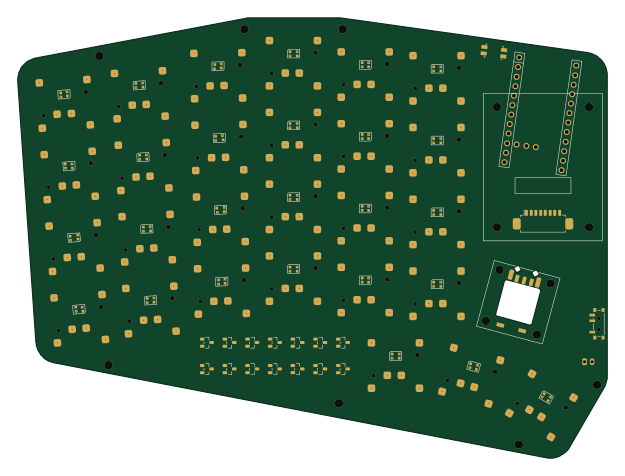
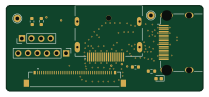
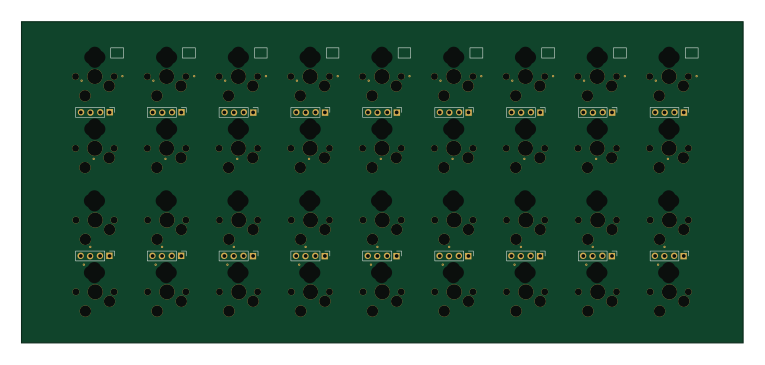
Lightfury panel is an open source PCB design by jusdisgi, published on GitHub under the MIT license. It is a 6-layer board measuring 184.3 × 234 mm, with 164 components from 31 distinct parts.
Other key parts include the TLV61070ADBV and SN74LV1T126DBVR. By type, the board carries 54 switches, 54 LEDs, 28 diodes, 10 capacitors, 4 ICs and 4 resistors.
It belongs with the keyboards designs in this gallery.
From the project
Light Fury Keyboard: Ergo Split with 54 PG1316S keyswitches, 54 LEDs, LCDs, and Roller Encoders.
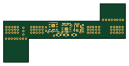
Run on your machine (KiKit drives KiCad's pcbnew — it won't run in the sandbox). The per-half boards (lightfuryleft/right.kicadpcb) are the source of truth; everything below rebuilds the combined board and panel from them, so re-run it any time a half changes.
Environment: use the KiCad Command Prompt (so python = KiCad's Python with pcbnew). KiKit's kikit.exe installs to ...KiCad\9.0\3rdparty\Python311\Scripts, which isn't on PATH by default — add it for the session before the kikit commands:
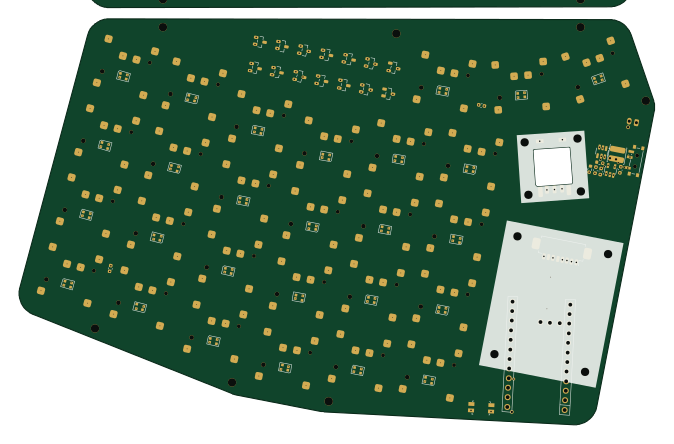
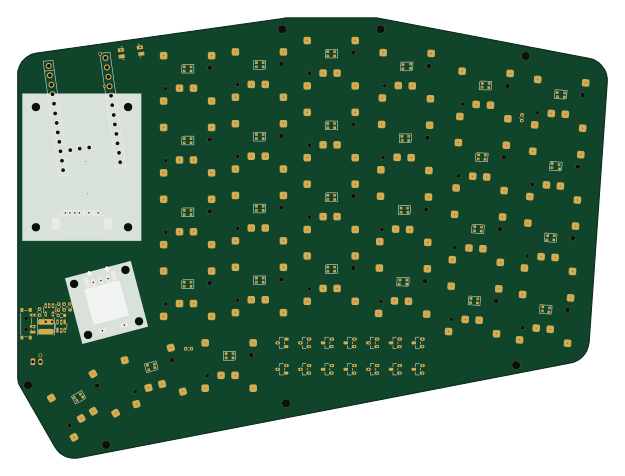
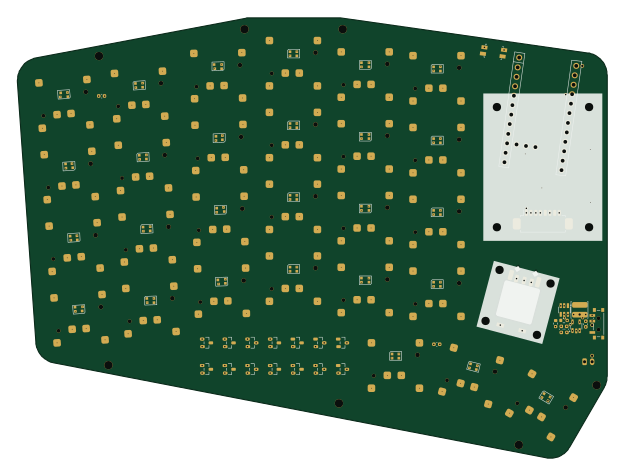
Main components on the Lightfury panel
Lightfury panel bill of materials (BOM)
164 components, 31 distinct parts — part numbers from the project's BOM.
| Qty | Part | Footprint | Refs |
|---|---|---|---|
| 1 | TLV61070ADBV | SOT-23-6 | U1 |
| 1 | TLV61070ADBV | SOT-23-6 | U1_2 |
| 1 | SN74LV1T126DBVR | SOT-23-5 | U2 |
| 1 | SN74LV1T126DBVR | SOT-23-5 | U2_2 |
| 2 | LCD HEADER | Molex_PicoBlade_53261-0871_1x08-1MP_P1.25mm_Horizontal | CONN1, CONN1_2 |
| 2 | Power SW | power_switch_smd_side | PWR1, PWR1_2 |
| 1 | CKW12-ENCODER CKW12 | CKW12 | RE1 |
| 1 | CKW12 | CKW12 | RE1_2 |
| 2 | Reset SW | reset_switch_smd_side | RST1, RST1_2 |
| 54 | PG1316S | PG1316S | S1, S1_2, S2, S2_2, S3, S3_2, S4, S4_2 +46 |
| 1 | WS2812B-2020 Outer Bottom | LED_WS2812B-2020_PLCC4_2.0x2.0mm | LED1 |
| 1 | Outer Bottom | LED_WS2812B-2020_PLCC4_2.0x2.0mm | LED1_2 |
| 22 | WS2812B-2020 | LED_WS2812B-2020_PLCC4_2.0x2.0mm | LED2, LED3, LED5, LED6, LED7, LED8, LED9, LED10 +14 |
| 22 | WS2812B-2020 | LED_WS2812B-2020_PLCC4_2.0x2.0mm | LED2_2, LED3_2, LED5_2, LED6_2, LED7_2, LED8_2, LED9_2, LED10_2 +14 |
| 1 | WS2812B-2020 Outer Top | LED_WS2812B-2020_PLCC4_2.0x2.0mm | LED4 |
| 1 | Outer Top | LED_WS2812B-2020_PLCC4_2.0x2.0mm | LED4_2 |
| 1 | Far Thumb | LED_WS2812B-2020_PLCC4_2.0x2.0mm | LED15_2 |
| 1 | WS2812B-2020 Inner Bottom | LED_WS2812B-2020_PLCC4_2.0x2.0mm | LED21 |
| 1 | WS2812B-2020 Inner Top | LED_WS2812B-2020_PLCC4_2.0x2.0mm | LED24 |
| 1 | Inner Bottom | LED_WS2812B-2020_PLCC4_2.0x2.0mm | LED24_2 |
Show 11 more
| Qty | Part | Footprint | Refs |
|---|---|---|---|
| 1 | WS2812B-2020 Outer Thumb | LED_WS2812B-2020_PLCC4_2.0x2.0mm | LED27 |
| 1 | Inner Top | LED_WS2812B-2020_PLCC4_2.0x2.0mm | LED27_2 |
| 14 | BAV70 | BAV70 SOT23 | D1, D2, D3, D4, D5, D6, D7, D8 +6 |
| 14 | BAV70 | BAV70 SOT23 | D1_2, D2_2, D3_2, D4_2, D5_2, D6_2, D7_2, D8_2 +6 |
| 2 | 2.2μH | L_CJIANG_FTC404030S_4.1x4.1x3.0_SMD | L1, L1_2 |
| 2 | 10μF | C_0603_1608Metric | C1, C1_2 |
| 4 | 10μF 25V | C_0603_1608Metric | C2, C2_2, C4_2, C5_2 |
| 2 | 100nF | C_0603_1608Metric | C3, C3_2 |
| 2 | 10µF 25V | C_0603_1608Metric | C4, C5 |
| 2 | 470kΩ | R_0603_1608Metric | R1, R1_2 |
| 2 | 51kΩ | R_0603_1608Metric | R2, R2_2 |
Lightfury panel design files
The KiCad project lives in the jusdisgi/LightFury repository on GitHub; these links point at the commit this page was built from.
Lightfury panel: common questions
How big is the Lightfury panel PCB?
The Lightfury panel measures 184.3 × 234 mm, has 6 copper layers and is 1.6 mm thick.
How many components are on the Lightfury panel?
164 components, from 31 distinct parts, with part numbers taken from the project's own BOM. The full bill of materials is listed on this page.
Where can I download the Lightfury panel design files?
From the jusdisgi/LightFury repository on GitHub, which has the KiCad layout and the BOM; the links under Design files point to each one.
Can I use the Lightfury panel design in my own project?
Yes, under the terms of its MIT license, which jusdisgi chose for the repository.
 byrantech

 google