
WolfieMouse

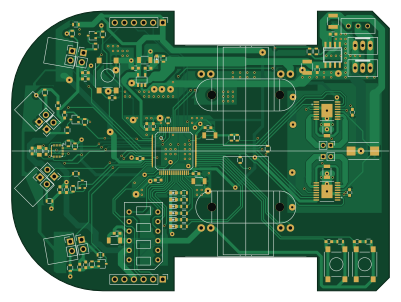
About the WolfieMouse PCB
WolfieMouse is an open source STM32 PCB design by kbumsik, published on GitHub. It is a 2-layer board measuring 100 × 74 mm, with 104 components from 38 distinct parts.
Its main chip is the STM32F446RE_LQFP64, from the STM32 family. Other key parts include the MAX14871, HCMS-2901, MPU-9250, TPS76850 and TPS73633. By type, the board carries 8 transistors, 8 resistors, 7 ICs, 7 LEDs, 4 modules and 4 connectors.
It belongs with the robotics & motion designs in this gallery.
From the project
IEEE Reion 1 Micromouse competition.
WolfieMouse is a robotics project to build a micromouse. This project covers three parts:
Robotics algorithm for maze solving (C++) low-level hardware driver software (C and ARM assembly) Tools to capture and plot robot's sensor data (Python) Embedded hardware design and PCB design (KiCad, an open-source alternative to Altium)
This robot won: The Special Mention Award in 2018 IEEE Region 1 Micromouse Robotics Competition. The 3rd Place Award in 2019 IEEE Region 1 Micromouse Robotics Competition.
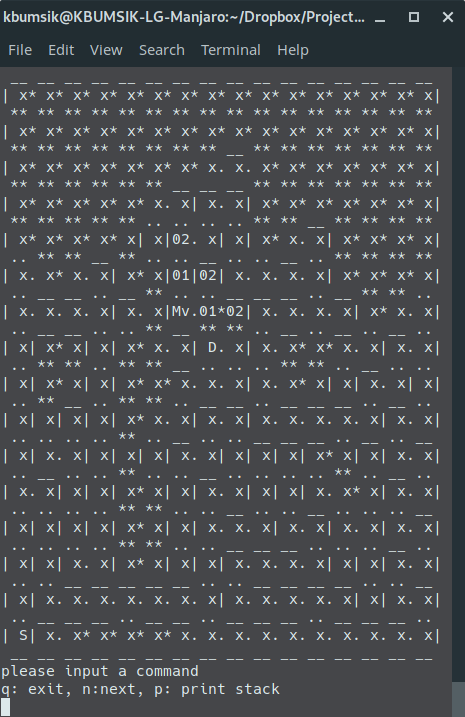
Main components on the WolfieMouse
WolfieMouse bill of materials (BOM)
104 components, 38 distinct parts — part numbers from the project's BOM.
| Qty | Part | Footprint | Refs |
|---|---|---|---|
| 1 | STM32F446RE_LQFP64 STMicroelectronics | STM32F446_LQFP64 | U1 |
| 2 | MAX14871 Maxim Integrated | TSSOP-16_EP | U2, U3 |
| 1 | HCMS-2901 Avago (Broadcom company) | HCMS-2903 | U9 |
| 1 | MPU-9250 InvenSense | QFN-24%2f3MM | U10 |
| 1 | TPS76850 Texas Instruments | TPS76850_SOIC-8 | U11 |
| 1 | TPS73633 Texas Instruments | TPS73633_SOT-23 | U12 |
| 1 | MOTOR_MOUNTS_AND_ENCODERS | FUTURA-1.0-MOTOR-MOUNT-TEMPLATE | M1 |
| 1 | LEFT_MOTOR | Pin_Header_Straight_1x02_Pitch2.00mm | M2 |
| 1 | 2.54MM-SLIDE-SWITCH_TS02_SWITCH | 2.54MM-SLIDE-SWITCH_TS02_SWITCH | M3 |
| 1 | RIGHT_MOTOR | Pin_Header_Straight_1x02_Pitch2.00mm | M4 |
| 4 | DMN3150LW | SOT-323_SC-70 | Q1, Q2, Q3, Q4 |
| 4 | TEFT4300 | Pin_Header_Straight_1x02_Pitch2.54mm | Q5, Q6, Q7, Q8 |
| 2 | 5_PIN_HEADER 6_PIN_HEADER | Pin_Header_Straight_1x06_Pitch2.54mm | CN1, CN2 |
| 2 | B3B-PH-SM4-TB JST Sales America Inc. | JST_B3B-PH_HEADER | P1, P2 |
| 1 | 0.1UF 0.1uF Vishay Vitramon | C_0603 | CNR1 |
| 2 | 10uF | C_1206 | C_3.3V1, C_DIS2 |
| 15 | 0.1uF | C_0603 | C_3.3V2, C_5V2, C_DIS1, C_IMU1, C_IMU3, C_PB1, C_PB2, C_RESET1 +7 |
| 2 | 100uF | C_1210 | C_5V1, C_VBAT1 |
| 4 | 4.7u | C_0603 | C_F1, C_F3, C_F5, C_F7 |
| 4 | 0.1u | C_0603 | C_F2, C_F4, C_F6, C_F8 |
Show 18 more
| Qty | Part | Footprint | Refs |
|---|---|---|---|
| 1 | 10nF | C_0805 | C_IMU2 |
| 1 | 220uF | TantalC_SizeD_EIA-7343_Reflow | C_M1 |
| 2 | 1uF | C_0603 | C_MOTOR1, C_MOTOR2 |
| 1 | 4.7uF | C_1206 | C_VCAP1 |
| 1 | 2.2uF | C_1206 | C_VCAP2 |
| 4 | SFH 4545 | Pin_Header_Straight_1x02_Pitch2.54mm | D_F1, D_F2, D_F3, D_F4 |
| 1 | 10uH | R_0603 | L_BEAD1 |
| 8 | 10k | R_0603 | R_BOOT1, R_IMU1, R_IMU2, R_MOTOR1, R_MOTOR2, R_MOTOR3, R_MOTOR4, R_VOL2 |
| 4 | 47k | R_0603 | R_F1, R_F3, R_F5, R_F7 |
| 2 | 10 | R_0603 | R_F2, R_F8 |
| 2 | 20 | R_0603 | R_F4, R_F6 |
| 4 | 2.4k | R_0603 | R_F9, R_F10, R_F11, R_F12 |
| 3 | 1k | R_0603 | R_PB1, R_PB2, R_PWR1 |
| 1 | 20k | R_0603 | R_VOL1 |
| 3 | SWITCH_DPST C&K Components | SW_SPST_PTS645 | SW1, SW2, SW3 |
| 7 | Led_Small | LED_0603 | D_PWR1, LED_BLUE1, LED_BLUE2, LED_GREEN1, LED_RED1, LED_RED2, LED_WHITE1 |
| 6 | 1k Vishay Dale | R_0603 | R1, R2, R3, R4, R5, R6 |
| 2 | 62.5M 62.5m Vishay Dale | R_1206 | R13, R14 |
WolfieMouse design files
The KiCad project lives in the kbumsik/WolfieMouse repository on GitHub; these links point at the commit this page was built from.
WolfieMouse: common questions
What microcontroller does the WolfieMouse use?
The WolfieMouse is built around the STM32F446RE_LQFP64, from the STM32 family.
How big is the WolfieMouse PCB?
The WolfieMouse measures 100 × 74 mm, has 2 copper layers and is 1.6 mm thick.
How many components are on the WolfieMouse?
104 components, from 38 distinct parts, with part numbers taken from the project's own BOM. The full bill of materials is listed on this page.
Where can I download the WolfieMouse design files?
From the kbumsik/WolfieMouse repository on GitHub, which has the KiCad layout and the BOM; the links under Design files point to each one.
Can I use the WolfieMouse design in my own project?
The repository has no license, so all rights stay with kbumsik. Use it as a reference, and ask the author before reusing the design.
Can I test firmware for the WolfieMouse without the hardware?
Yes. HardLabs builds a simulation of the board from its netlist and BOM, so you can run and debug STM32 firmware against it before you order a PCB.
Similar boards
 STM32
STM32AxxSolder
AxxAxx
39 × 82.5 mm122 parts2LGPL-3.01.7k STM32
STM32AIOC
skuep
21 × 31.5 mm47 parts2LMIT1.4k STM32
STM32Ferris
pierrechevalier83
208.8 × 86.8 mm102 parts2LSHL-2.11.3k STM32
STM32Module 16S
stuartpittaway
71.1 × 89.6 mm113 parts4LCC-BY-NC-4.01.1k STM32
STM32Djinn
tzarc
192.3 × 150.5 mm216 parts2LCERN-OHL-S-2.0988 STM32
STM32Ghoul
228.6 × 79.4 mm163 parts2LCERN-OHL-S-2.0988