
Smiley-LED

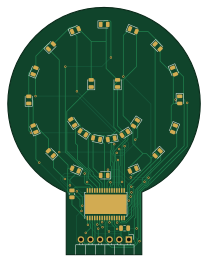
About the Smiley-LED PCB
Smiley-LED is an open source PCB design by Rob-Sligter, published on GitHub. It is a 2-layer board measuring 51 × 65.5 mm, with 28 components from 5 distinct parts.
Other key parts include the TLC5947DAP. By type, the board carries 24 diodes, 1 IC, 1 connector, 1 capacitor and 1 resistor.
From the project
This repo contains my first PCB design, a smiley face board with LEDs controlled by a TLC5947 driver chip.
My first PCB design! A smiley face board with LEDs that light up the outline, eyes, and mouth using the TLC5947 LED driver.
- Smiley face design with LED-lit features - TLC5947 LED driver chip for individual LED control - 12-bit PWM control per LED channel - Chainable design (via serial data)
- LED Driver: TLC5947 - Datasheet: TLC5947 on TI website
- Smiley.kicadpcb - PCB layout - Smiley.kicadsch - Schematic - production/ - Production files (BOM, positions, netlist) - mfr/ - Gerber files for manufacturing
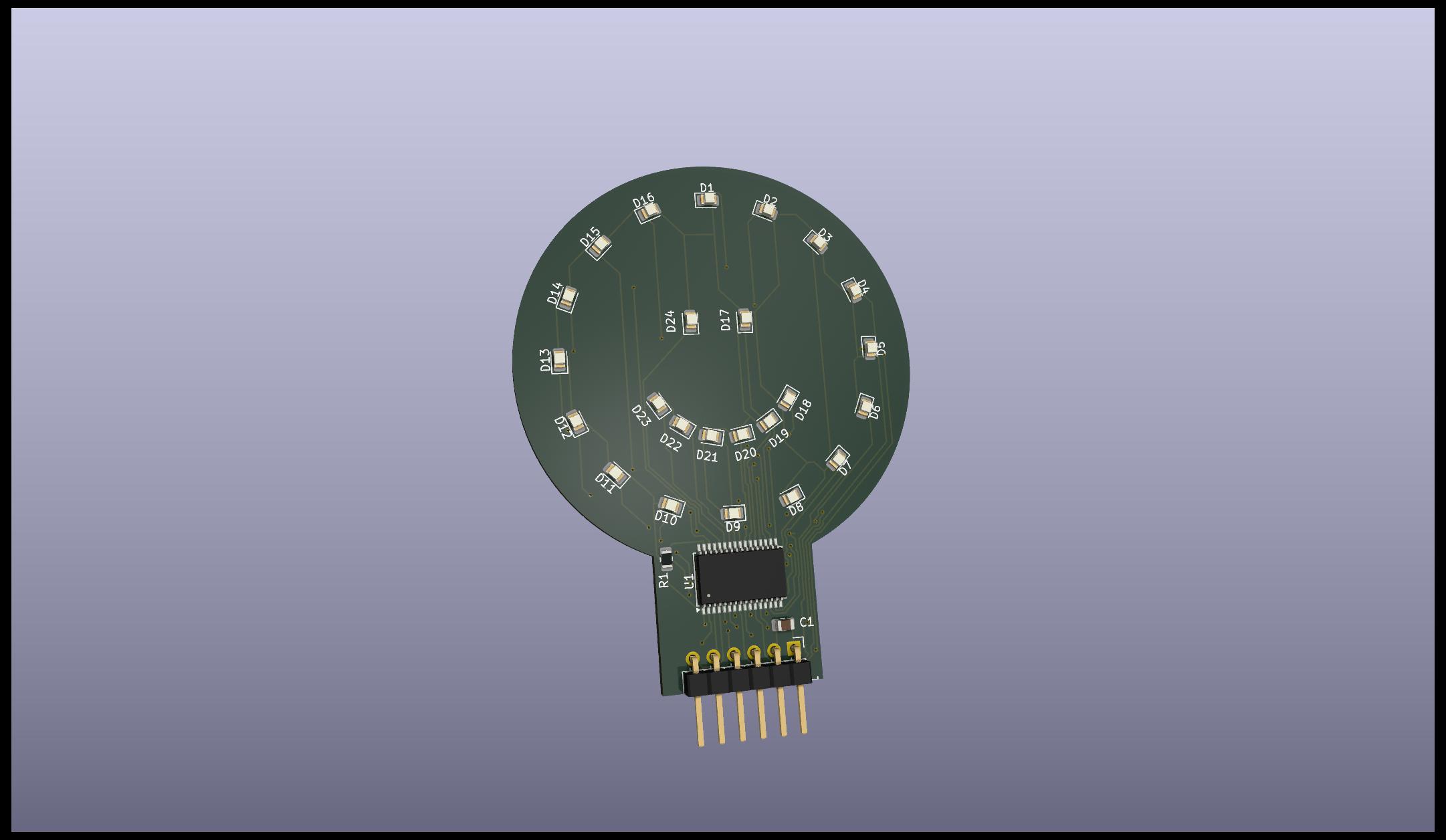
Main components on the Smiley-LED
Smiley-LED bill of materials (BOM)
28 components, 5 distinct parts.
| Qty | Part | Footprint | Refs |
|---|---|---|---|
| 1 | TLC5947DAP | HTSSOP-32-1EP_6.1x11mm_P0.65mm_EP5.2x11mm_Mask4.11x4.36mm | U1 |
| 1 | Conn_01x06 | PinHeader_1x06_P2.54mm_Horizontal | J1 |
| 24 | LED | LED_0805_2012Metric | D1, D2, D3, D4, D5, D6, D7, D8 +16 |
| 1 | 0.1NF | C_0805_2012Metric | C1 |
| 1 | 2.4 Kohm | R_0805_2012Metric | R1 |
Smiley-LED design files
The KiCad project lives in the Rob-Sligter/Smiley-LED-PCB repository on GitHub; these links point at the commit this page was built from.
- LayoutSmiley.kicad_pcb
- SchematicSmiley.kicad_sch
Smiley-LED: common questions
How big is the Smiley-LED PCB?
The Smiley-LED measures 51 × 65.5 mm, has 2 copper layers and is 1.6 mm thick.
How many components are on the Smiley-LED?
28 components, from 5 distinct parts. The full bill of materials is listed on this page.
Where can I download the Smiley-LED design files?
From the Rob-Sligter/Smiley-LED-PCB repository on GitHub, which has the KiCad layout and the schematic; the links under Design files point to each one.
Can I use the Smiley-LED design in my own project?
The repository has no license, so all rights stay with Rob-Sligter. Use it as a reference, and ask the author before reusing the design.