TD4dice

About the TD4dice PCB
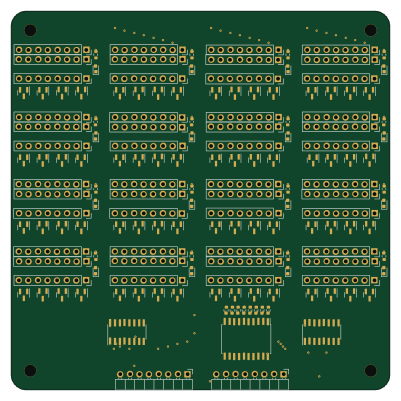
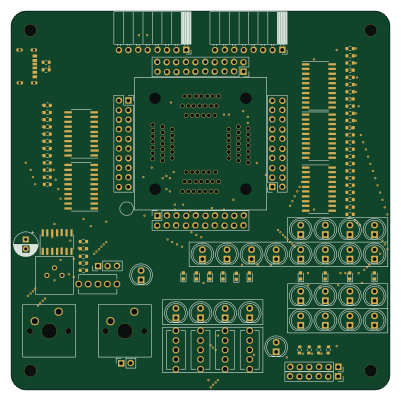
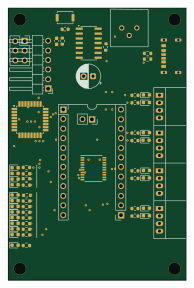
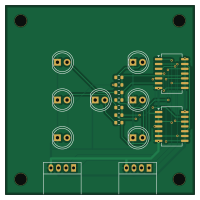
TD4dice is an open source PCB design by akita11, published on GitHub under the MIT license. It is a 2-layer board measuring 50 × 50 mm, with 18 components from 5 distinct parts.
Other key parts include the 74HC00 and 7402. By type, the board carries 7 diodes, 7 resistors, 2 ICs and 2 connectors.
From the project
4bit CPU TD4 using OpenRule1um PDK
4bit CPU, TD4, in book "How to Build CPU" ("CPUの創りかた" in Japanese) using NDA-free PDK, OpenRule1um.
- Layout GDS: TD4core.GDS (open with KLayout, with OpenRul1um PDK(https://github.com/MakeLSI/OpenRule1um) and [its standard cells installed)
- Schematic: sch/TD4core.kicad_sch (open with EEschema in KiCAD)
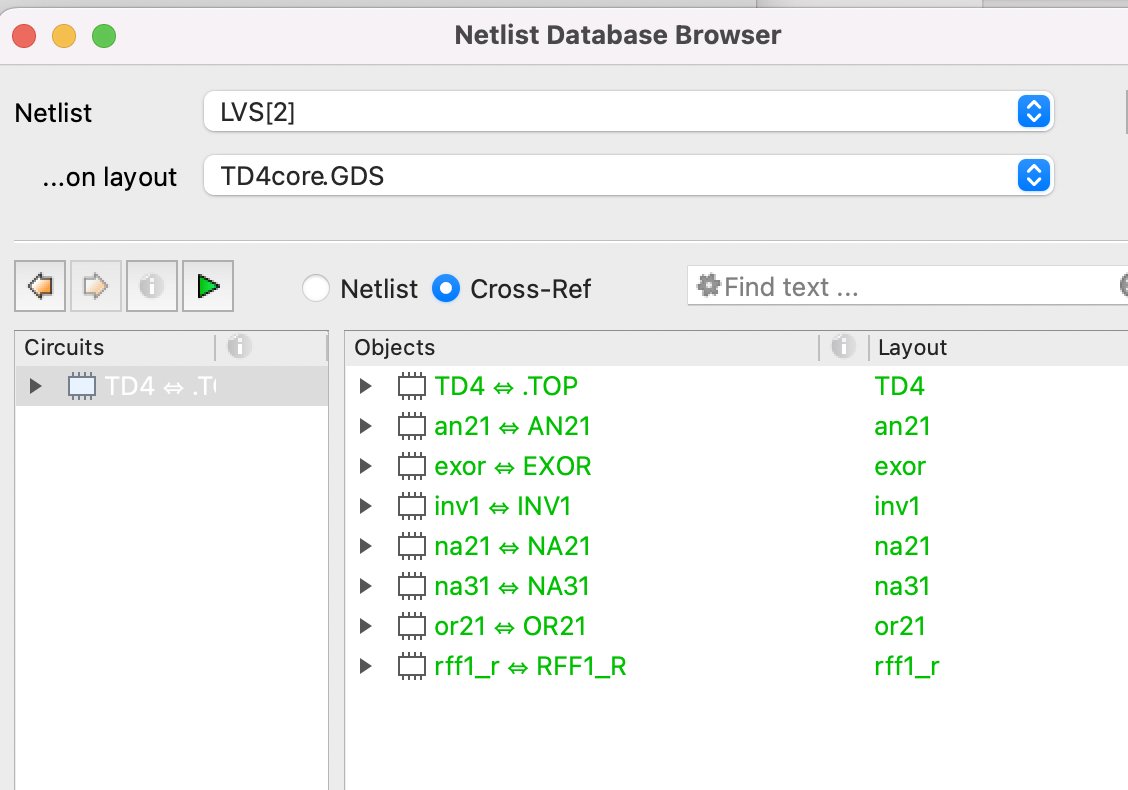
- Export netlit from TD4core.kicadsch using EEschema, TD4core.cir. - Add ".inc OR1SC.cir" at 2nd line in netlist file, TD4core.cir. - Open TD4core.GDS with KLayout, execute "getreference" macro with specifying TD4core.cir for reference netlist, and then, execute LVS (mainly digitl script).
Main components on the TD4dice
TD4dice bill of materials (BOM)
18 components, 5 distinct parts.
| Qty | Part | Footprint | Refs |
|---|---|---|---|
| 1 | 74HC00 | SO-14_5.3x10.2mm_P1.27mm | U1 |
| 1 | 7402 | SO-14_5.3x10.2mm_P1.27mm | U2 |
| 2 | CON_GROVE | CON_GROVE_H_roundPad | CN1, CN2 |
| 7 | LED | LED_D5.0mm | D1, D2, D3, D4, D5, D6, D7 |
| 7 | 1k | R_0603_1608Metric | R1, R2, R3, R4, R5, R6, R7 |
TD4dice design files
The KiCad project lives in the akita11/TD4_OR1 repository on GitHub; these links point at the commit this page was built from.
TD4dice: common questions
How big is the TD4dice PCB?
The TD4dice measures 50 × 50 mm, has 2 copper layers and is 1.6 mm thick.
How many components are on the TD4dice?
18 components, from 5 distinct parts. The full bill of materials is listed on this page.
Where can I download the TD4dice design files?
From the akita11/TD4_OR1 repository on GitHub, which has the KiCad layout and the schematic; the links under Design files point to each one.
Can I use the TD4dice design in my own project?
Yes, under the terms of its MIT license, which akita11 chose for the repository.