
Keyboard

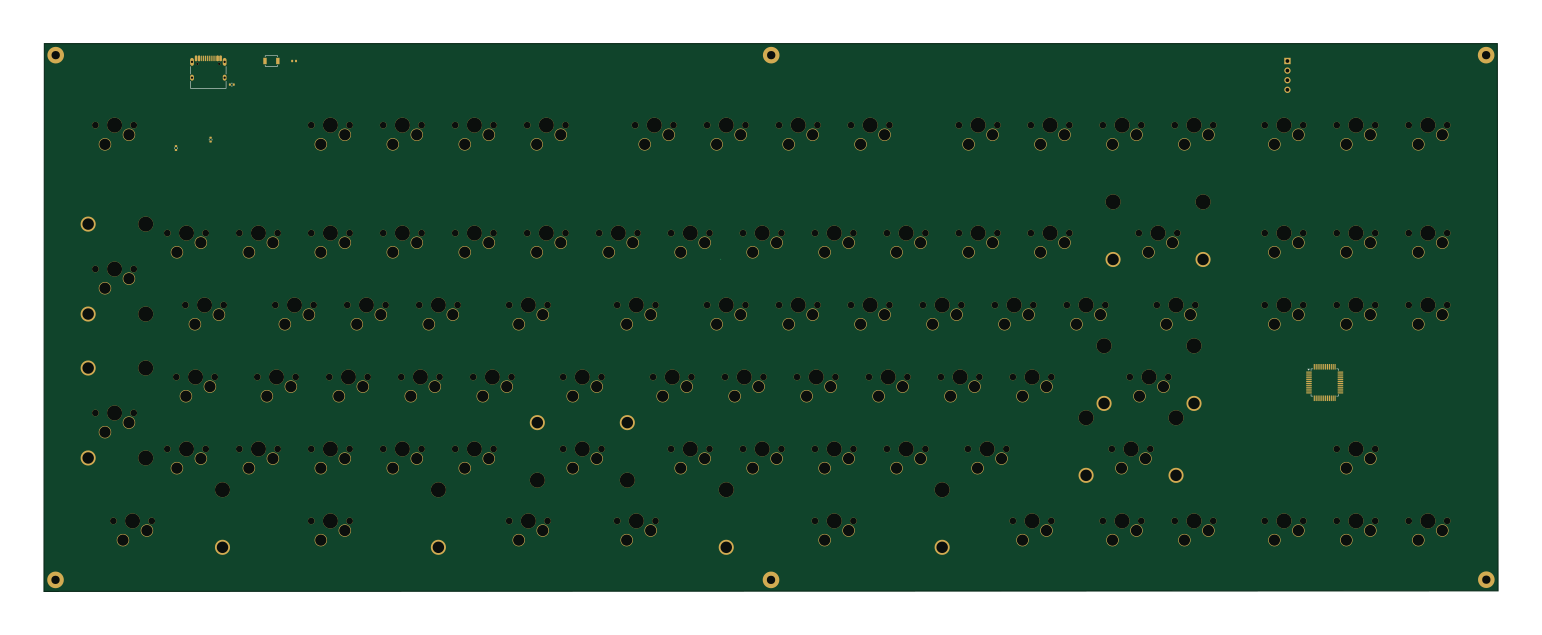
About the Keyboard PCB
Keyboard is an open source STM32 PCB design by ibulgaru, published on GitHub under the MIT license. It is a 2-layer board measuring 384.9 × 145 mm, with 195 components from 102 distinct parts.
Its main chip is the STM32F103C8T6, from the STM32 family. Other key parts include the AP2112K-3.3. By type, the board carries 90 switches, 88 diodes, 8 capacitors, 4 resistors, 2 ICs and 2 connectors.
It belongs with the keyboards designs in this gallery.
From the project
Custom 75% mechanical keyboard layout designed with Vim motion–oriented workflows in mind.
The Vym Keyboard (vym) is a custom ergonomic mechanical keyboard project optimized for software development and Vim navigation, bringing essential control keys into comfortable reach without sacrificing typing efficiency.
This repository is organized into dedicated modules for hardware engineering, CAD models, firmware, layout configurations, and documentation:
Main components on the Keyboard
Keyboard bill of materials (BOM)
195 components, 102 distinct parts.
| Qty | Part | Footprint | Refs |
|---|---|---|---|
| 1 | AP2112K-3.3 | SOT-23-5 | U1 |
| 1 | STM32F103C8T6 | LQFP-48_7x7mm_P0.5mm | U2 |
| 1 | 8MHz | Crystal_SMD_3225-4Pin_3.2x2.5mm | Y1 |
| 1 | USB_C | USB_C_Receptacle_HRO_TYPE-C-31-M-12 | J1 |
| 1 | SWD_Header | PinHeader_1x04_P2.54mm_Vertical | J2 |
| 1 | SW1 | SW_MX_HS_CPG151101S11_1u | SW1 |
| 1 | RESET | SW_SPST_B3U-1000P | SW1_RESET1 |
| 1 | SW2 | SW_MX_HS_CPG151101S11_1u | SW2 |
| 1 | BOOT0_SW | SW_SPST_B3U-1000P | SW2_BOOT1 |
| 1 | SW3 | SW_MX_HS_CPG151101S11_1u | SW3 |
| 1 | SW4 | SW_MX_HS_CPG151101S11_1u | SW4 |
| 1 | SW5 | SW_MX_HS_CPG151101S11_1u | SW5 |
| 1 | SW6 | SW_MX_HS_CPG151101S11_1.5u | SW6 |
| 1 | SW7 | SW_MX_HS_CPG151101S11_1.5u | SW7 |
| 1 | SW8 | SW_MX_HS_CPG151101S11_1u | SW8 |
| 1 | SW9 | SW_MX_HS_CPG151101S11_1u | SW9 |
| 1 | SW10 | SW_MX_HS_CPG151101S11_1.5u | SW10 |
| 1 | SW11 | SW_MX_HS_CPG151101S11_1u | SW11 |
| 1 | SW12 | SW_MX_HS_CPG151101S11_1u | SW12 |
| 1 | SW13 | SW_MX_HS_CPG151101S11_1u | SW13 |
Show 82 more
| Qty | Part | Footprint | Refs |
|---|---|---|---|
| 1 | SW14 | SW_MX_HS_CPG151101S11_1.75u | SW14 |
| 1 | SW15 | SW_MX_HS_CPG151101S11_1.5u | SW15 |
| 1 | SW16 | SW_MX_HS_CPG151101S11_1u | SW16 |
| 1 | SW17 | SW_MX_HS_CPG151101S11_1u | SW17 |
| 1 | SW18 | SW_MX_HS_CPG151101S11_1u | SW18 |
| 1 | SW19 | SW_MX_HS_CPG151101S11_1u | SW19 |
| 1 | SW20 | SW_MX_HS_CPG151101S11_1u | SW20 |
| 1 | SW21 | SW_MX_HS_CPG151101S11_1u | SW21 |
| 1 | SW22 | SW_MX_HS_CPG151101S11_1u | SW22 |
| 1 | SW23 | SW_MX_HS_CPG151101S11_1u | SW23 |
| 1 | SW24 | SW_MX_HS_CPG151101S11_1u | SW24 |
| 1 | SW25 | SW_MX_HS_CPG151101S11_1.5u | SW25 |
| 1 | SW26 | SW_MX_HS_CPG151101S11_1u | SW26 |
| 1 | SW27 | SW_MX_HS_CPG151101S11_1u | SW27 |
| 1 | SW28 | SW_MX_HS_CPG151101S11_1u | SW28 |
| 1 | SW29 | SW_MX_HS_CPG151101S11_1u | SW29 |
| 1 | SW30 | SW_MX_HS_CPG151101S11_1u | SW30 |
| 1 | SW31 | SW_MX_HS_CPG151101S11_1u | SW31 |
| 1 | SW32 | SW_MX_HS_CPG151101S11_1u | SW32 |
| 1 | SW33 | SW_MX_HS_CPG151101S11_1.5u | SW33 |
| 1 | SW34 | SW_MX_HS_CPG151101S11_1u | SW34 |
| 1 | SW35 | SW_MX_HS_CPG151101S11_1u | SW35 |
| 1 | SW36 | SW_MX_HS_CPG151101S11_1u | SW36 |
| 1 | SW37 | SW_MX_HS_CPG151101S11_1u | SW37 |
| 1 | SW38 | SW_MX_HS_CPG151101S11_1u | SW38 |
| 1 | SW39 | SW_MX_HS_CPG151101S11_1u | SW39 |
| 1 | SW40 | SW_MX_HS_CPG151101S11_1u | SW40 |
| 1 | SW41 | SW_MX_HS_CPG151101S11_1u | SW41 |
| 1 | SW42 | SW_MX_HS_CPG151101S11_1u | SW42 |
| 1 | SW43 | SW_MX_HS_CPG151101S11_1u | SW43 |
| 1 | SW44 | SW_MX_HS_CPG151101S11_1u | SW44 |
| 1 | SW45 | SW_MX_HS_CPG151101S11_1u | SW45 |
| 1 | SW46 | SW_MX_HS_CPG151101S11_1u | SW46 |
| 1 | SW47 | SW_MX_HS_CPG151101S11_1u | SW47 |
| 1 | SW48 | SW_MX_HS_CPG151101S11_1u | SW48 |
| 1 | SW49 | SW_MX_HS_CPG151101S11_1u | SW49 |
| 1 | SW50 | SW_MX_HS_CPG151101S11_1u | SW50 |
| 1 | SW51 | SW_MX_HS_CPG151101S11_1u | SW51 |
| 1 | SW52 | SW_MX_HS_CPG151101S11_1u | SW52 |
| 1 | SW53 | SW_MX_HS_CPG151101S11_1u | SW53 |
| 1 | SW54 | SW_MX_HS_CPG151101S11_1u | SW54 |
| 1 | SW55 | SW_MX_HS_CPG151101S11_1u | SW55 |
| 1 | SW56 | SW_MX_HS_CPG151101S11_1u | SW56 |
| 1 | SW57 | SW_MX_HS_CPG151101S11_1u | SW57 |
| 1 | SW58 | SW_MX_HS_CPG151101S11_1u | SW58 |
| 1 | SW59 | SW_MX_HS_CPG151101S11_1u | SW59 |
| 1 | SW60 | SW_MX_HS_CPG151101S11_1.5u | SW60 |
| 1 | SW61 | SW_MX_HS_CPG151101S11_1u | SW61 |
| 1 | SW62 | SW_MX_HS_CPG151101S11_1u | SW62 |
| 1 | SW63 | SW_MX_HS_CPG151101S11_1u | SW63 |
| 1 | SW64 | SW_MX_HS_CPG151101S11_1u | SW64 |
| 1 | SW65 | SW_MX_HS_CPG151101S11_1u | SW65 |
| 1 | SW66 | SW_MX_HS_CPG151101S11_1u | SW66 |
| 1 | SW67 | SW_MX_HS_CPG151101S11_1u | SW67 |
| 1 | SW68 | SW_MX_HS_CPG151101S11_1u | SW68 |
| 1 | SW69 | SW_MX_HS_CPG151101S11_1u | SW69 |
| 1 | SW70 | SW_MX_HS_CPG151101S11_1u | SW70 |
| 1 | SW71 | SW_MX_HS_CPG151101S11_1u | SW71 |
| 1 | SW72 | SW_MX_HS_CPG151101S11_1u | SW72 |
| 1 | SW73 | SW_MX_HS_CPG151101S11_1u | SW73 |
| 1 | SW74 | SW_MX_HS_CPG151101S11_1u | SW74 |
| 1 | SW75 | SW_MX_HS_CPG151101S11_1u | SW75 |
| 1 | SW76 | SW_MX_HS_CPG151101S11_1u | SW76 |
| 1 | SW77 | SW_MX_HS_CPG151101S11_1u | SW77 |
| 1 | SW78 | SW_MX_HS_CPG151101S11_1.5u | SW78 |
| 1 | SW79 | SW_MX_HS_CPG151101S11_1u | SW79 |
| 1 | SW80 | SW_MX_HS_CPG151101S11_1.5u | SW80 |
| 1 | SW81 | SW_MX_HS_CPG151101S11_1.5u | SW81 |
| 1 | SW82 | SW_MX_HS_CPG151101S11_1u | SW82 |
| 1 | SW83 | SW_MX_HS_CPG151101S11_1.5u | SW83 |
| 1 | SW84 | SW_MX_HS_CPG151101S11_1u | SW84 |
| 1 | SW85 | SW_MX_HS_CPG151101S11_1.25u | SW85 |
| 1 | SW86 | SW_MX_HS_CPG151101S11_1u | SW86 |
| 1 | SW87 | SW_MX_HS_CPG151101S11_1u | SW87 |
| 1 | SW88 | SW_MX_HS_CPG151101S11_1u | SW88 |
| 88 | 1N4148W | D_SOD-123 | D1, D2, D3, D4, D5, D6, D7, D8 +80 |
| 5 | 100nF | C_0402_1005Metric | C1, C2, C3, C4, C8 |
| 1 | 4.7uF | C_0603_1608Metric | C5 |
| 2 | 20pF | C_0402_1005Metric | C6, C7 |
| 2 | 5.1k | R_0402_1005Metric | R1, R2 |
| 1 | 1.5k | R_0402_1005Metric | R3 |
| 1 | 10k | R_0402_1005Metric | R4 |
Keyboard design files
The KiCad project lives in the ibulgaru/keyboard repository on GitHub; these links point at the commit this page was built from.
- Layouthardware/pcb/vym.kicad_pcb
- Schematichardware/pcb/vym.kicad_sch
Keyboard: common questions
What microcontroller does the Keyboard use?
The Keyboard is built around the STM32F103C8T6, from the STM32 family.
How big is the Keyboard PCB?
The Keyboard measures 384.9 × 145 mm, has 2 copper layers and is 1.6 mm thick.
How many components are on the Keyboard?
195 components, from 102 distinct parts. The full bill of materials is listed on this page.
Where can I download the Keyboard design files?
From the ibulgaru/keyboard repository on GitHub, which has the KiCad layout and the schematic; the links under Design files point to each one.
Can I use the Keyboard design in my own project?
Yes, under the terms of its MIT license, which ibulgaru chose for the repository.
Can I test firmware for the Keyboard without the hardware?
Yes. HardLabs builds a simulation of the board from its netlist and BOM, so you can run and debug STM32 firmware against it before you order a PCB.
Similar boards
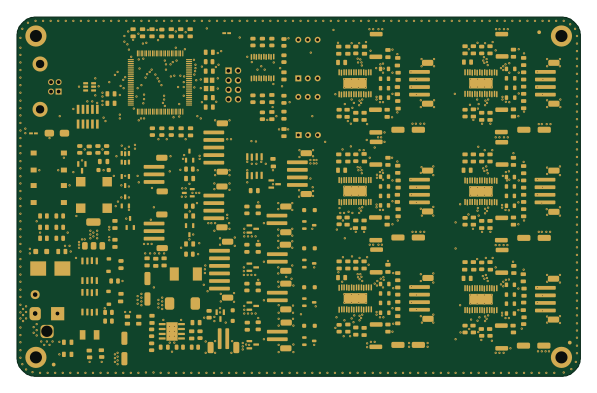 STM32
LumenPnP Motherboard
opulo-inc
149 × 95 mm296 parts4LCC-BY-SA-4.03.7k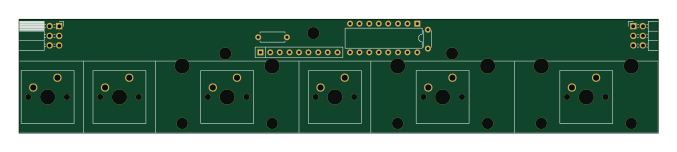 STM32
Type g
google
169 × 30 mm24 parts2LApache-2.02.9k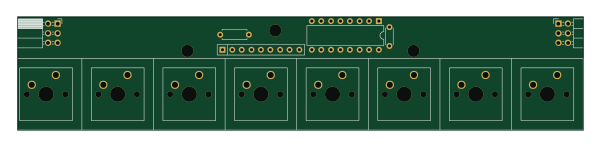 STM32
Type a
150 × 30 mm14 parts2LApache-2.02.9k STM32
Base
52.3 × 52.3 mm36 parts2LApache-2.02.9k STM32
Main panel
234 × 84 mm26 parts4LApache-2.02.9k STM32
Type c
188 × 30 mm17 parts2LApache-2.02.9k