
NKT Basik single ended to differential modulation V2


About the NKT Basik single ended to differential modulation V2 PCB
NKT Basik single ended to differential modulation V2 is an open source PCB design by ograsdijk, published on GitHub. It is a 2-layer board measuring 12.2 × 13.5 mm, with 7 components from 7 distinct parts.
By type, the board carries 3 connectors, 2 ICs and 2 resistors.
NKT Basik single ended to differential modulation V2 bill of materials (BOM)
7 components, 7 distinct parts.
| Qty | Part | Footprint | Refs |
|---|---|---|---|
| 1 | — | OPA2320AIDGKR | U1 |
| 1 | — | REF3025AIDBZR | U2 |
| 1 | Conn_01x03 | PinHeader_1x03_P2.54mm_Vertical | J1 |
| 1 | 1-1634612-0 | 1-1634612-0 | J2 |
| 1 | Conn_01x02 | PinHeader_1x02_P2.54mm_Vertical | J3 |
| 1 | Rf | R_0603_1608Metric | R1 |
| 1 | Rg | R_0603_1608Metric | R2 |
NKT Basik single ended to differential modulation V2 design files
The KiCad project lives in the ograsdijk/CeNTREX-pcb repository on GitHub; these links point at the commit this page was built from.
NKT Basik single ended to differential modulation V2: common questions
How big is the NKT Basik single ended to differential modulation V2 PCB?
The NKT Basik single ended to differential modulation V2 measures 12.2 × 13.5 mm, has 2 copper layers and is 1.6 mm thick.
How many components are on the NKT Basik single ended to differential modulation V2?
7 components, from 7 distinct parts. The full bill of materials is listed on this page.
Where can I download the NKT Basik single ended to differential modulation V2 design files?
From the ograsdijk/CeNTREX-pcb repository on GitHub, which has the KiCad layout; the links under Design files point to each one.
Can I use the NKT Basik single ended to differential modulation V2 design in my own project?
The repository has no license, so all rights stay with ograsdijk. Use it as a reference, and ask the author before reusing the design.
More boards in CeNTREX-pcb
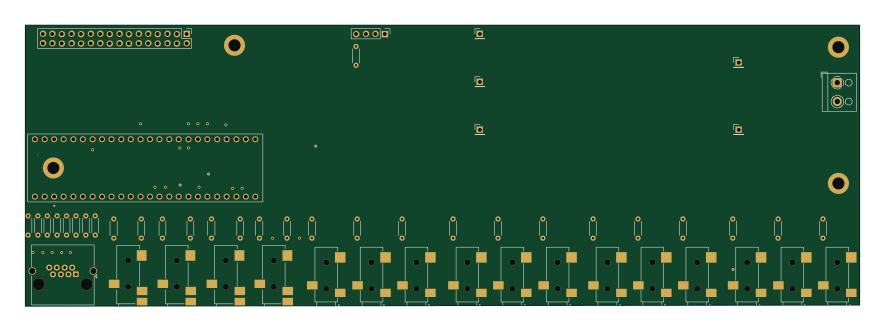
Relay ctrl lab
221 × 74.4 mm55 parts2LNo license1 NXP
NXPSsr cavity multiplexer
273.1 × 39.1 mm40 parts2LNo license1
16 input multiplexer
337.8 × 30.5 mm24 parts2LNo license1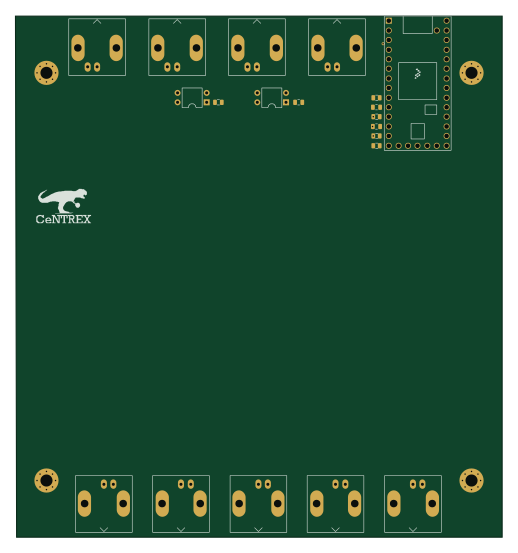 NXP
NXPTeensy dio
128.8 × 137.9 mm20 parts2LNo license1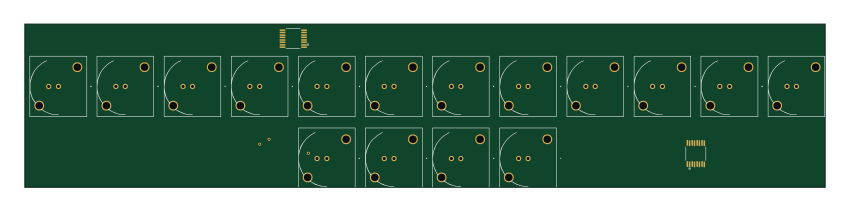
3 cavity multiplexer
212.1 × 43.2 mm19 parts2LNo license1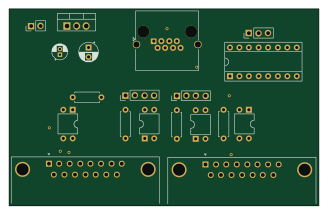
Relay ctrl compressor cabinet
81.9 × 52.1 mm17 parts2LNo license1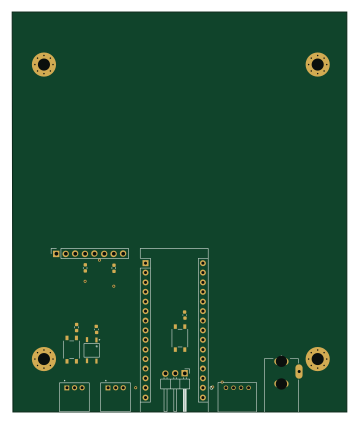 AVR/Arduino
Turbotronik NT 150 360 control
88.7 × 105.9 mm15 parts2LNo license1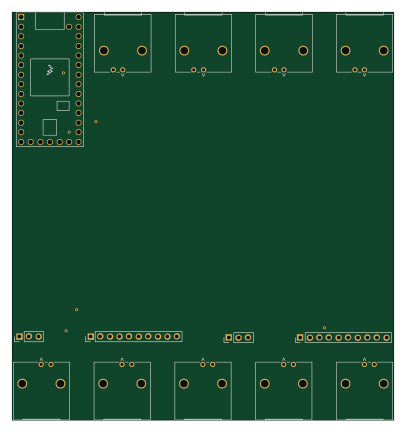 NXP
NXPTeensy ads1115
100.8 × 108 mm14 parts2LNo license1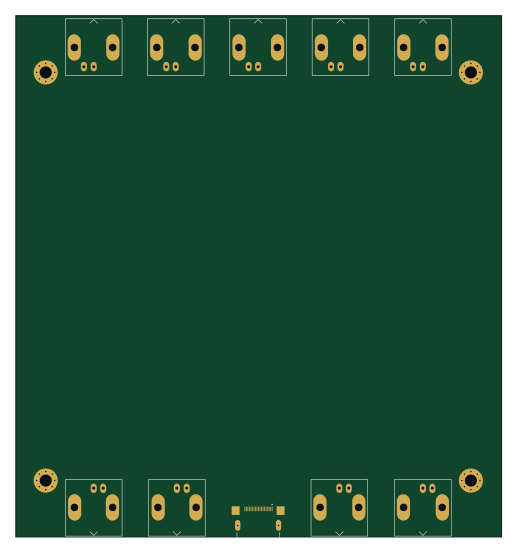
PXIe5171 PFI breakout
128.5 × 137.9 mm10 parts2LNo license1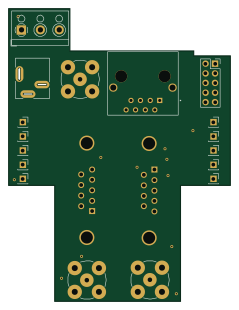
Hornet shield
58.7 × 77.5 mm7 parts2LNo license1
Labjack breakout
64.8 × 125.7 mm7 parts2LNo license1
Earlier revisions in the repo: NKT Basik single ended to differential modulation