
Pico32


About the Pico32 PCB
Pico32 is an open source RP2040/RP2350 PCB design by arnytrty, published on GitHub under the GPL-3.0 license. It is a 2-layer board measuring 13 × 13 mm, with 8 components from 6 distinct parts.
Its main chip is the ESP32-PICO-D4, from the RP2040/RP2350 family. Other key parts include the TPS79333-EP. By type, the board carries 4 capacitors, 2 ICs, 1 antenna and 1 resistor.
From the project
small open source board based on ESP32-PICO-D4
Pico32 is small (13mm*13mm) open source board based on ESP32-PICO-D4. It was designed for full use of the SoC package from Espressif & make it more accessible so you can simply handsolder without any special tools. It has a 4MB embedded flash (esp32-pico-d4 datasheet).
This board does not have USB to UART converter, you will need an external one to program it (they are pretty cheap). For a programming guide, check out FLASHING.md.
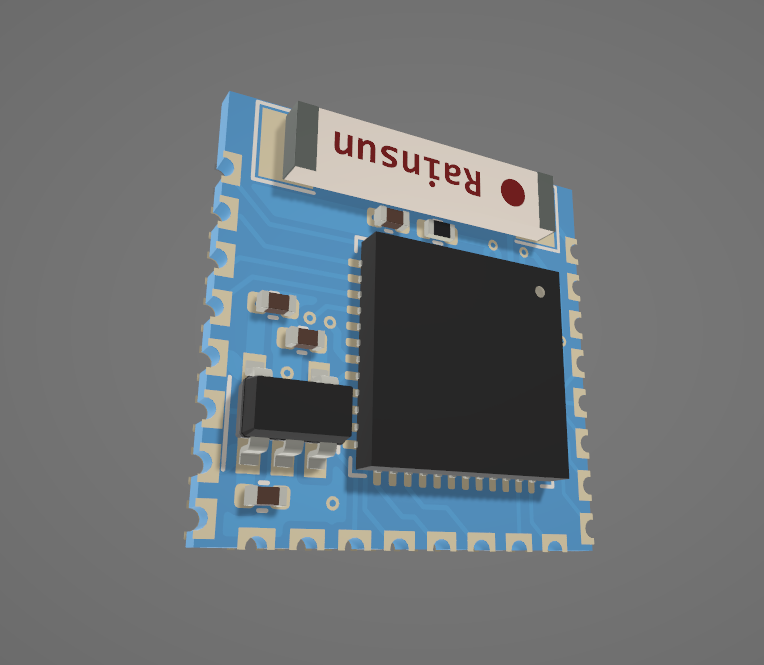
Main components on the Pico32
Pico32 bill of materials (BOM)
8 components, 6 distinct parts — part numbers from the project's BOM.
| Qty | Part | Footprint | Refs |
|---|---|---|---|
| 1 | TPS79333-EP | SOT-23-5 | U1 |
| 1 | ESP32-PICO-D4 | QFN-48-1EP_7x7mm_P0.5mm_EP5.3x5.3mm | U2 |
| 1 | Antenna | AN9520-245 | AE1 |
| 3 | 1uF | C_0402_1005Metric | C1, C2, C4 |
| 1 | 10nF | C_0402_1005Metric | C3 |
| 1 | 1k | R_0402_1005Metric | R1 |
Pico32 design files
The KiCad project lives in the arnytrty/pico32 repository on GitHub; these links point at the commit this page was built from.
Pico32: common questions
What microcontroller does the Pico32 use?
The Pico32 is built around the ESP32-PICO-D4, from the RP2040/RP2350 family.
How big is the Pico32 PCB?
The Pico32 measures 13 × 13 mm, has 2 copper layers and is 0.8 mm thick.
How many components are on the Pico32?
8 components, from 6 distinct parts, with part numbers taken from the project's own BOM. The full bill of materials is listed on this page.
Where can I download the Pico32 design files?
From the arnytrty/pico32 repository on GitHub, which has the KiCad layout and the BOM; the links under Design files point to each one.
Can I use the Pico32 design in my own project?
Yes, under the terms of its GPL-3.0 license, which arnytrty chose for the repository.
Can I test firmware for the Pico32 without the hardware?
Yes. HardLabs builds a simulation of the board from its netlist and BOM, so you can run and debug RP2040/RP2350 firmware against it before you order a PCB.
Similar boards
 RP2040/RP2350
Open Book Abridged Edition
joeycastillo
85 × 115 mm29 parts2LCC-BY-SA-4.08.1k RP2040/RP2350
Corne
foostan
277.2 × 107.5 mm164 parts2LCC-BY-4.07.7k RP2040/RP2350
Corne
277.2 × 107.5 mm164 parts2LCC-BY-4.07.7k RP2040/RP2350
Hid remapper
jfedor2
100 × 100 mm124 parts2LMIT1.7k RP2040/RP2350
Msa
Mentra-Community
47.8 × 9.4 mm53 parts2LMIT1.2k RP2040/RP2350
Open Source Smart Glasses
93 × 10.5 mm80 parts4LMIT1.2k