
HALPI2-HDMI-FPC

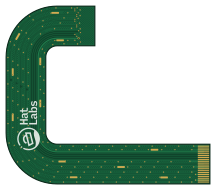
About the HALPI2-HDMI-FPC PCB
HALPI2-HDMI-FPC is an open source PCB design by hatlabs, published on GitHub. It is a 2-layer board measuring 54 × 47.1 mm, with 24 components from 1 distinct parts.
It belongs with the dev boards & breakouts and displays & leds designs in this gallery.
From the project
Impedance-controlled 20-pin flexible printed circuit (FPC) cable for HDMI connectivity between HALPI2 carrier board and waterproof HDMI panel connectors
Impedance-controlled 20-pin flexible printed circuit (FPC) cable for HDMI connectivity between the HALPI2 carrier board and waterproof HDMI panel connectors.
This FPC cable replaces the original non-impedance-controlled FFC (flat flexible cable) that caused compatibility issues with some display devices. By implementing proper impedance control for the high-speed HDMI differential pairs, this design ensures reliable operation across a wide range of displays.
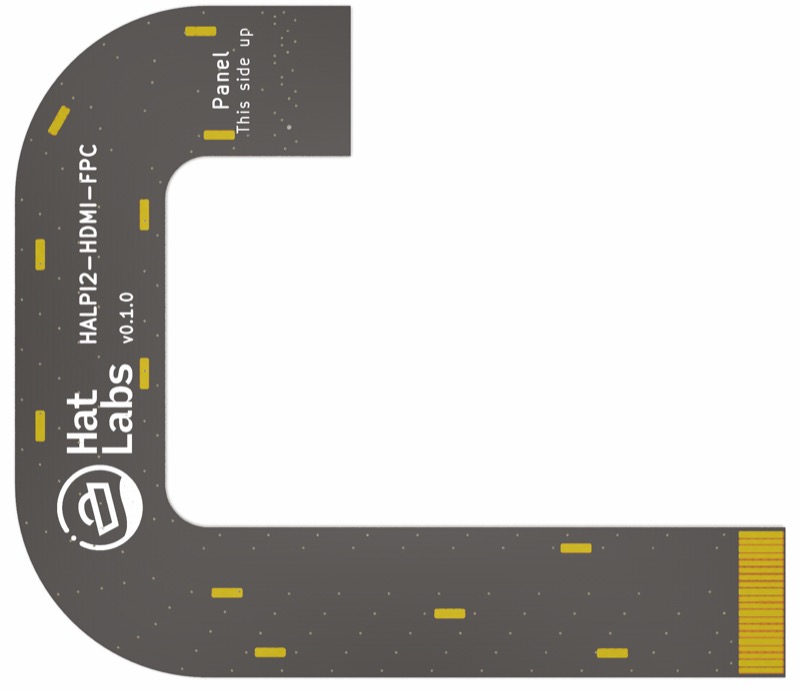
HALPI2-HDMI-FPC bill of materials (BOM)
24 components, 1 distinct parts.
| Qty | Part | Footprint | Refs |
|---|---|---|---|
| 24 | Conn_01x01 | GndPad_0.5x2.0mm | J3, J4, J5, J6, J7, J8, J9, J10 +16 |
HALPI2-HDMI-FPC design files
The KiCad project lives in the hatlabs/HALPI2-HDMI-FPC repository on GitHub; these links point at the commit this page was built from.
- LayoutHALPI2-HDMI-FPC.kicad_pcb
- SchematicHALPI2-HDMI-FPC.kicad_sch
HALPI2-HDMI-FPC: common questions
How big is the HALPI2-HDMI-FPC PCB?
The HALPI2-HDMI-FPC measures 54 × 47.1 mm, has 2 copper layers and is 0.104 mm thick.
How many components are on the HALPI2-HDMI-FPC?
24 components, from 1 distinct parts. The full bill of materials is listed on this page.
Where can I download the HALPI2-HDMI-FPC design files?
From the hatlabs/HALPI2-HDMI-FPC repository on GitHub, which has the KiCad layout and the schematic; the links under Design files point to each one.
Can I use the HALPI2-HDMI-FPC design in my own project?
The repository has no license, so all rights stay with hatlabs. Use it as a reference, and ask the author before reusing the design.
Similar boards

LevelShifterBreakout
scottbez1
15.2 × 20.3 mm5 parts2LApache-2.022.2k
View base
81.2 × 81.2 mm81 parts2LApache-2.022.2k
View screen
35 × 35 mm12 parts2LApache-2.022.2k
BM28B0.6-24DSBreakout
15.2 × 35.6 mm3 parts2LApache-2.022.2k
ChainlinkDriverTester
198.1 × 95.3 mm123 parts2LApache-2.04.2k
ChainlinkBase
98.4 × 190.5 mm119 parts2LApache-2.04.2k