
WiT

About the WiT PCB
WiT is an open source STM32 PCB design by notazizelse, published on GitHub. It is a board, with 1 components from 1 distinct parts.
Its main chip is the STM32F407VET6, from the STM32 family.
It belongs with the science & space, sensors and rf & radio designs in this gallery.
From the project
A CubeSat PCB for Women in Tech video
The flight computer for a 3U (100 × 100 × 300 mm) payload that goes up on a stratospheric balloon. It's one 4-layer, ~90 × 90 mm board around an STM32F407, with two 900 MHz radios for telemetry and a sensor set chosen so that every sensor answers a specific question about the flight.
Status: in design. The architecture, parts list, power budget, stackup and test plan are done (in assets/). Schematic capture in KiCad is next, so the files in wit/ are still empty.
Main components on the WiT
WiT bill of materials (BOM)
1 components, 1 distinct parts — part numbers from the project's BOM.
| Qty | Part | Footprint | Refs |
|---|---|---|---|
| 1 | STM32F407VET6 Cortex-M4F 168MHz 512KB Flash 192KB SRAM + 4KB backup SRAM STMicroelectronics | U1 |
WiT design files
The KiCad project lives in the notazizelse/WiT repository on GitHub; these links point at the commit this page was built from.
- Schematicwit/wit.kicad_sch
- BOMassets/bom/BOM_full.csv
WiT: common questions
What microcontroller does the WiT use?
The WiT is built around the STM32F407VET6, from the STM32 family.
How many components are on the WiT?
1 components, from 1 distinct parts, with part numbers taken from the project's own BOM. The full bill of materials is listed on this page.
Where can I download the WiT design files?
From the notazizelse/WiT repository on GitHub, which has the schematic and the BOM; the links under Design files point to each one.
Can I use the WiT design in my own project?
The repository has no license, so all rights stay with notazizelse. Use it as a reference, and ask the author before reusing the design.
Can I test firmware for the WiT without the hardware?
Yes. HardLabs builds a simulation of the board from its netlist and BOM, so you can run and debug STM32 firmware against it before you order a PCB.
Similar boards
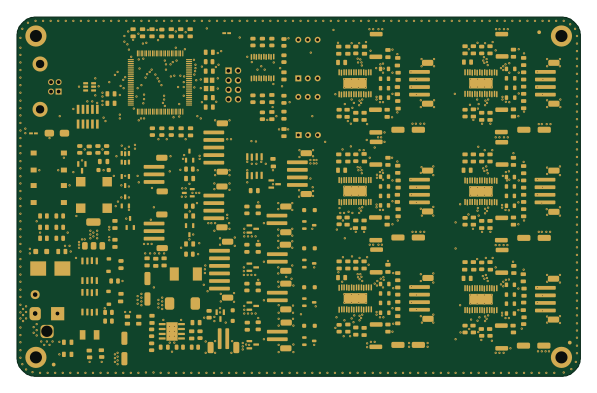 STM32
LumenPnP Motherboard
opulo-inc
149 × 95 mm296 parts4LCC-BY-SA-4.03.7k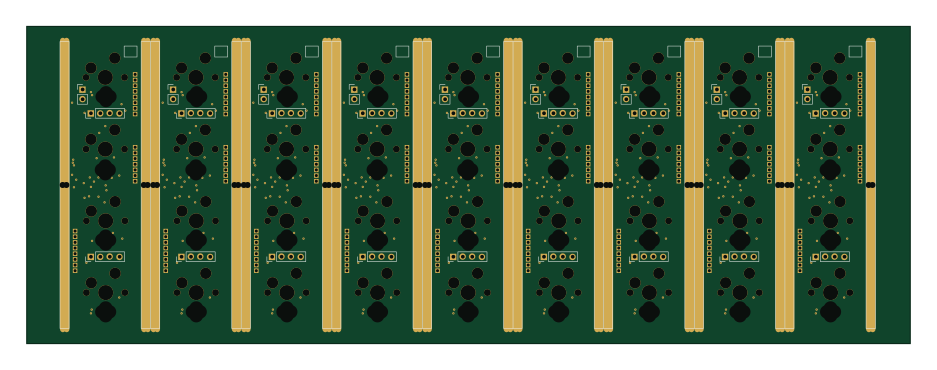 STM32
Main panel
google
234 × 84 mm26 parts4LApache-2.02.9k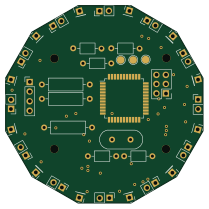 STM32
Base
52.3 × 52.3 mm36 parts2LApache-2.02.9k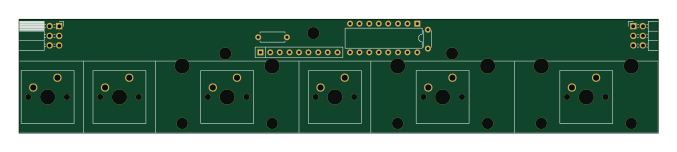 STM32
Type g
169 × 30 mm24 parts2LApache-2.02.9k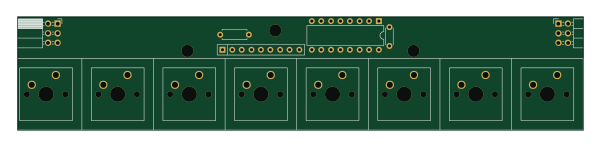 STM32
Type a
150 × 30 mm14 parts2LApache-2.02.9k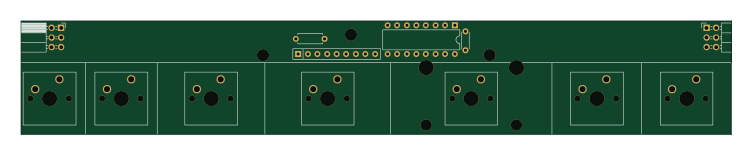 STM32
Type c
188 × 30 mm17 parts2LApache-2.02.9k