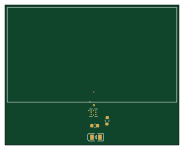
2032Charger

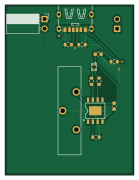
About the 2032Charger PCB
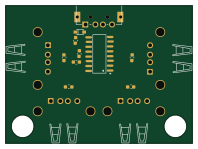
2032Charger is an open source PCB design by Pegoku, published on GitHub. It is a 2-layer board measuring 34 × 45 mm, with 14 components from 11 distinct parts.
Other key parts include the TP4056_C725790. By type, the board carries 6 resistors, 2 connectors, 2 capacitors, 1 IC, 1 battery holder and 1 LED.
From the project
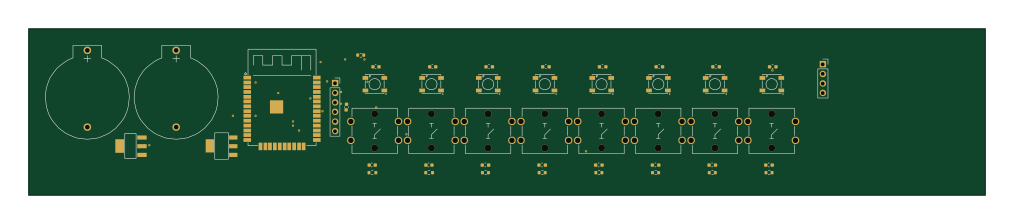
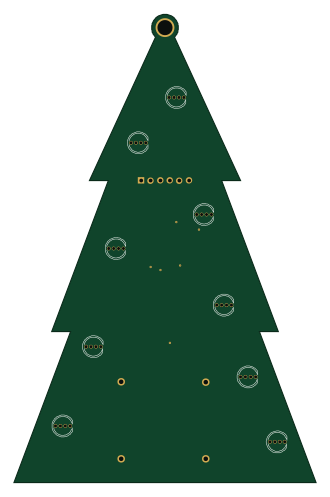
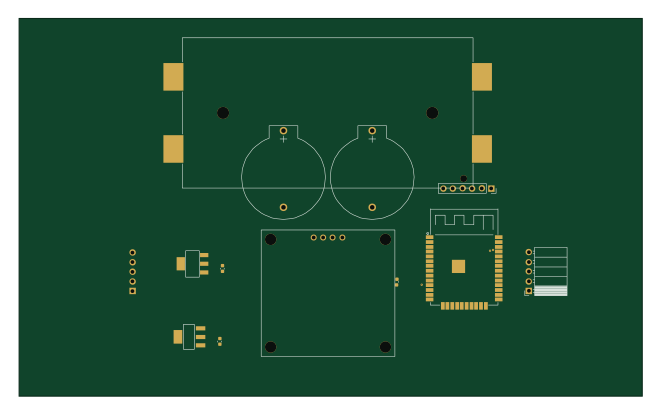
PCBs I did for a class presentation
Main components on the 2032Charger
2032Charger bill of materials (BOM)
14 components, 11 distinct parts — part numbers from the project's BOM.
| Qty | Part | Footprint | Refs |
|---|---|---|---|
| 1 | TP4056_C725790 | ESOP-8_L4.9-W3.9-P1.27-LS6.0-BL-EP | U1 |
| 1 | CONN_01X02 Conn_01x02 | PinSocket_1x02_P2.54mm_Horizontal | J1 |
| 1 | CONN_01X02 Conn_01x02 | PinHeader_1x02_P2.54mm_Horizontal | J2 |
| 1 | BS-05-A1BJ001 | BAT-TH_BS-05-A1BJ001 | BT1 |
| 1 | C668623 TYPE-C 6P(073) | TYPE-C-SMD_TYPE-C-6P_5 | USB1 |
| 1 | 18-225A/R6GHC-A01/3T | LED-SMD_4P-L1.6-W0.8-BR-RD | LED1 |
| 2 | 10UF 10uF | C_0603_1608Metric | C1, C2 |
| 2 | 1k | R_0603_1608Metric | R1, R2 |
| 2 | 5.11K 5.11k | R_0603_1608Metric | R3, R4 |
| 1 | 0.4 | R_0603_1608Metric | R5 |
| 1 | 100K 100k | R_0603_1608Metric | R6 |
2032Charger design files
The KiCad project lives in the Pegoku/ClassPCBs repository on GitHub; these links point at the commit this page was built from.
2032Charger: common questions
How big is the 2032Charger PCB?
The 2032Charger measures 34 × 45 mm, has 2 copper layers and is 1.6 mm thick.
How many components are on the 2032Charger?
14 components, from 11 distinct parts, with part numbers taken from the project's own BOM. The full bill of materials is listed on this page.
Where can I download the 2032Charger design files?
From the Pegoku/ClassPCBs repository on GitHub, which has the KiCad layout, the schematic and the BOM; the links under Design files point to each one.
Can I use the 2032Charger design in my own project?
The repository has no license, so all rights stay with Pegoku. Use it as a reference, and ask the author before reusing the design.