
TEE CAN (WCP-1824)

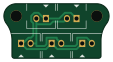
About the TEE CAN (WCP-1824) PCB
TEE CAN (WCP-1824) is an open source PCB design by RealtimeRoboticsGroup, published on GitHub under the SHL-2.1 license. It is a 2-layer board measuring 27.9 × 14.5 mm, with 5 components from 1 distinct parts.
From the project
This project is open-source hardware and is licensed under the Solderpad Hardware License v2.1 (the "License"), which is a permissive license based on the Apache License, Version 2.0.
This project is open-source hardware and is licensed under the Solderpad Hardware License v2.1 (the "License"), which is a permissive license based on the Apache License, Version 2.0.
You may use this work under the terms of the Solderpad Hardware License v2.1, or, at your option, under the terms of the Apache License, Version 2.0.
- Solderpad v2.1: Solderpad Hardware License v2.1 - Solderpad Hardware License
TEE CAN (WCP-1824) bill of materials (BOM)
5 components, 1 distinct parts — part numbers from the project's BOM.
| Qty | Part | Footprint | Refs |
|---|---|---|---|
| 5 | 0705430001 CAN | 70543-0001 | J1, J2, J3, J4, J5 |
TEE CAN (WCP-1824) design files
The KiCad project lives in the RealtimeRoboticsGroup/electrical repository on GitHub; these links point at the commit this page was built from.
TEE CAN (WCP-1824): common questions
How big is the TEE CAN (WCP-1824) PCB?
The TEE CAN (WCP-1824) measures 27.9 × 14.5 mm, has 2 copper layers and is 1.6 mm thick.
How many components are on the TEE CAN (WCP-1824)?
5 components, from 1 distinct parts, with part numbers taken from the project's own BOM. The full bill of materials is listed on this page.
Where can I download the TEE CAN (WCP-1824) design files?
From the RealtimeRoboticsGroup/electrical repository on GitHub, which has the KiCad layout, the schematic and the BOM; the links under Design files point to each one.
Can I use the TEE CAN (WCP-1824) design in my own project?
It is published under SHL-2.1, which limits how it may be reused; read the license before building on it.
More boards in electrical
 RP2040/RP2350
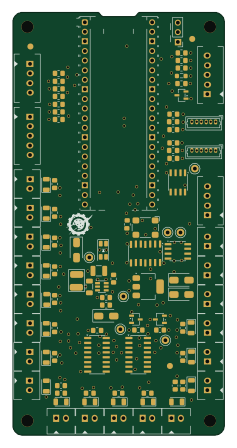
Pico Button Board
55.9 × 111.8 mm201 parts4LSHL-2.11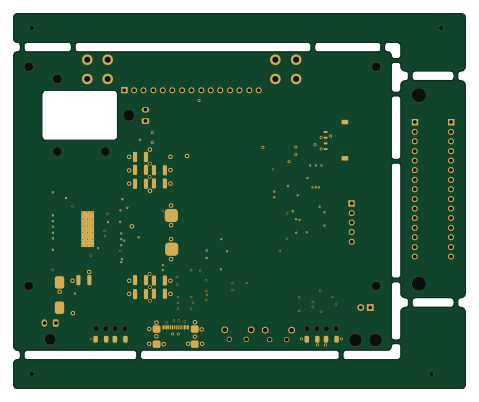 STM32
STM32NX J401 Adapter
119.6 × 99.2 mm127 parts4LSHL-2.11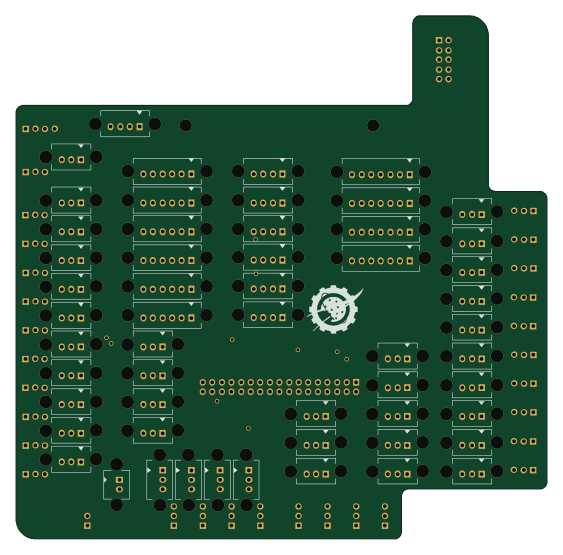
RoboRIO Interface
140.5 × 138.4 mm88 parts4LSHL-2.11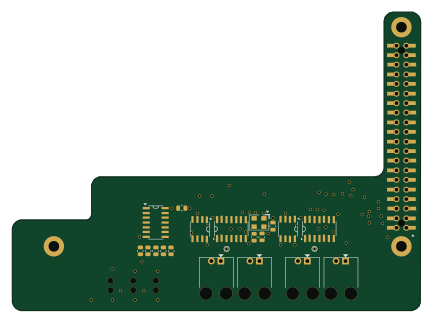
NX-IndicatorBoard V2
108.1 × 79 mm36 parts4LSHL-2.11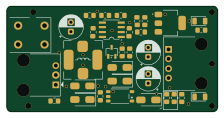 RP2040/RP2350
Beam Break Adapter
55.9 × 27.9 mm36 parts2LSHL-2.11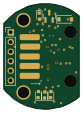
WCP Mag Encoder (WCP-2435)
19.9 × 27.8 mm22 parts4LSHL-2.11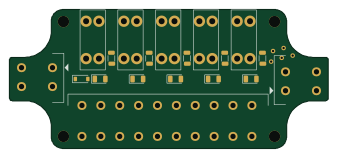
Mini Power Distribution Board (WCP-1823)
84.4 × 36.8 mm19 parts2LSHL-2.11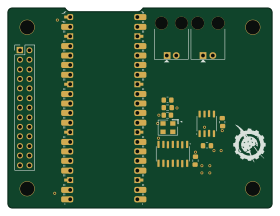 RP2040/RP2350
Pico CAN-FD Adapter
70 × 53 mm13 parts2LSHL-2.11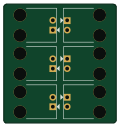
CAN Hub
29.8 × 31.5 mm6 parts2LSHL-2.11