
(PCB BAD)sss pv-2u v4 (1) (1)

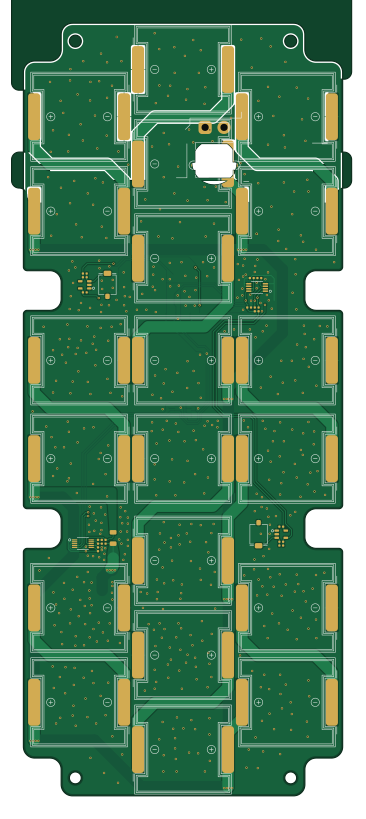
About the (PCB BAD)sss pv-2u v4 (1) (1)
(PCB BAD)sss pv-2u v4 (1) (1) is an open source PCB design by Space-and-Satellite-Systems-UC-Davis, published on GitHub. It is a 2-layer board measuring 84.5 × 204.5 mm, with 48 components from 13 distinct parts.
Other key parts include the LMV321, TMP275 and INA226. By type, the board carries 22 diodes, 9 capacitors, 9 resistors, 5 ICs and 3 connectors.
From the project
Collection of all the PCBs within SSS
Main components on the (PCB BAD)sss pv-2u v4 (1) (1)
(PCB BAD)sss pv-2u v4 (1) (1) bill of materials (BOM)
48 components, 13 distinct parts.
| Qty | Part | Footprint | Refs |
|---|---|---|---|
| 2 | LMV321 | Yu-SOT-23-5 | U1, U4 |
| 2 | TMP275 | Yu-SOP-8-3x3-0.65 | U2, U3 |
| 1 | INA226 | Yu-SOP-10-3x3-0.5 | U5 |
| 1 | J-SENS | Yu-J-Molex-Picoblade-1x08-SMD-H-532610871 | J1 |
| 1 | J-PWR | Yu-J-Molex-Picoblade-1x04-SMD-H-532610471 | J2 |
| 1 | xt30_2x | AMASS_XT30PW-M_1x02_P2.50mm_Horizontal | J14 |
| 20 | KXOB121K04F | Yu-D-PV-KXOB121K04F | D1, D2, D4, D5, D6, D7, D9, D10 +12 |
| 2 | SFH2430 | Yu-D-PD-Osram-SFH2430 | D3, D8 |
| 7 | 100nF | Yu-C-0402-mil | C1, C2, C3, C5, C7, C8, C9 |
| 2 | 100pF | Yu-C-0402-mil | C4, C6 |
| 6 | 10k | Yu-R-0402-mil | R1, R2, R3, R4, R5, R6 |
| 2 | 2.2 | Yu-R-0402-mil | R7, R9 |
| 1 | 68m | Yu-R-1206-mil | R8 |
(PCB BAD)sss pv-2u v4 (1) (1) design files
The KiCad project lives in the Space-and-Satellite-Systems-UC-Davis/PCBs repository on GitHub; these links point at the commit this page was built from.
(PCB BAD)sss pv-2u v4 (1) (1): common questions
How big is the (PCB BAD)sss pv-2u v4 (1) (1)?
The (PCB BAD)sss pv-2u v4 (1) (1) measures 84.5 × 204.5 mm, has 2 copper layers and is 1.6 mm thick.
How many components are on the (PCB BAD)sss pv-2u v4 (1) (1)?
48 components, from 13 distinct parts. The full bill of materials is listed on this page.
Where can I download the (PCB BAD)sss pv-2u v4 (1) (1) design files?
From the Space-and-Satellite-Systems-UC-Davis/PCBs repository on GitHub, which has the KiCad layout; the links under Design files point to each one.
Can I use the (PCB BAD)sss pv-2u v4 (1) (1) design in my own project?
The repository has no license, so all rights stay with Space-and-Satellite-Systems-UC-Davis. Use it as a reference, and ask the author before reusing the design.
More boards in PCBs
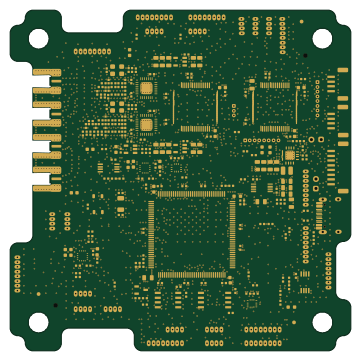 STM32
Sss opr3-v1 (1)
90 × 90 mm267 parts4LNo license0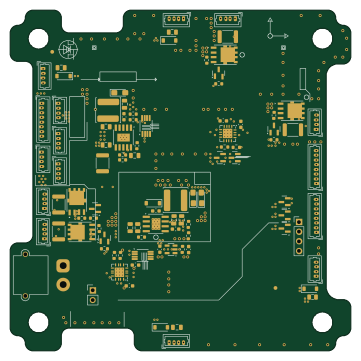
Realop1 powerdis bak1
90 × 90 mm95 parts4LNo license0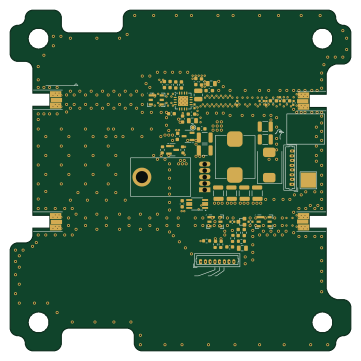
Realop1 rf 4 8 25
90 × 90 mm62 parts4LNo license0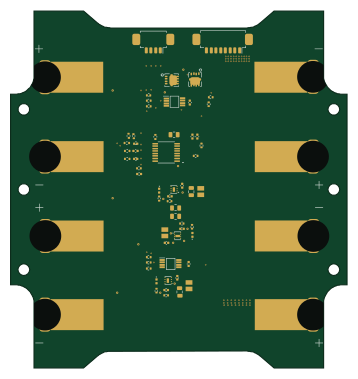
SSS BMS Rev.1 Final
89 × 94.5 mm62 parts2LNo license0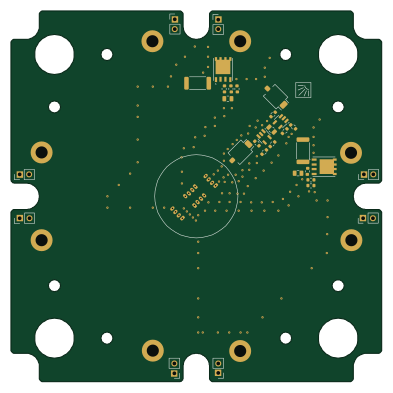
Realop1 burnwire top2
98 × 98 mm27 parts2LNo license0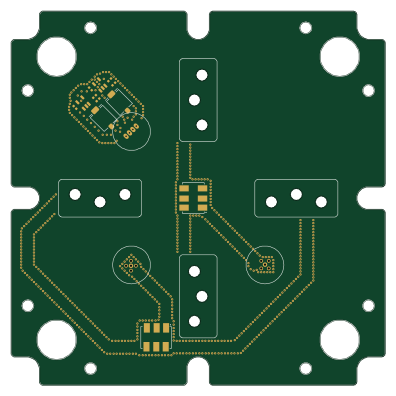
Sss ant
99 × 99 mm13 parts2LNo license0