
PaP

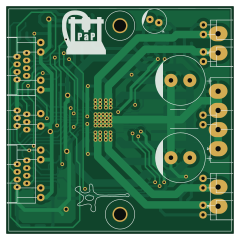
About the PaP PCB
PaP is an open source PCB design by brengi, published on GitHub. It is a 2-layer board measuring 60 × 60 mm, with 58 components from 31 distinct parts.
Other key parts include the powerstep01. By type, the board carries 19 diodes, 18 resistors, 13 capacitors, 6 connectors, 1 IC and 1 inductor.
From the project
Curso de Diseño de Circuitos Impresos de la Carrera de Especialización en Sistemas Embebidos
Driver motores paso a paso ===========================
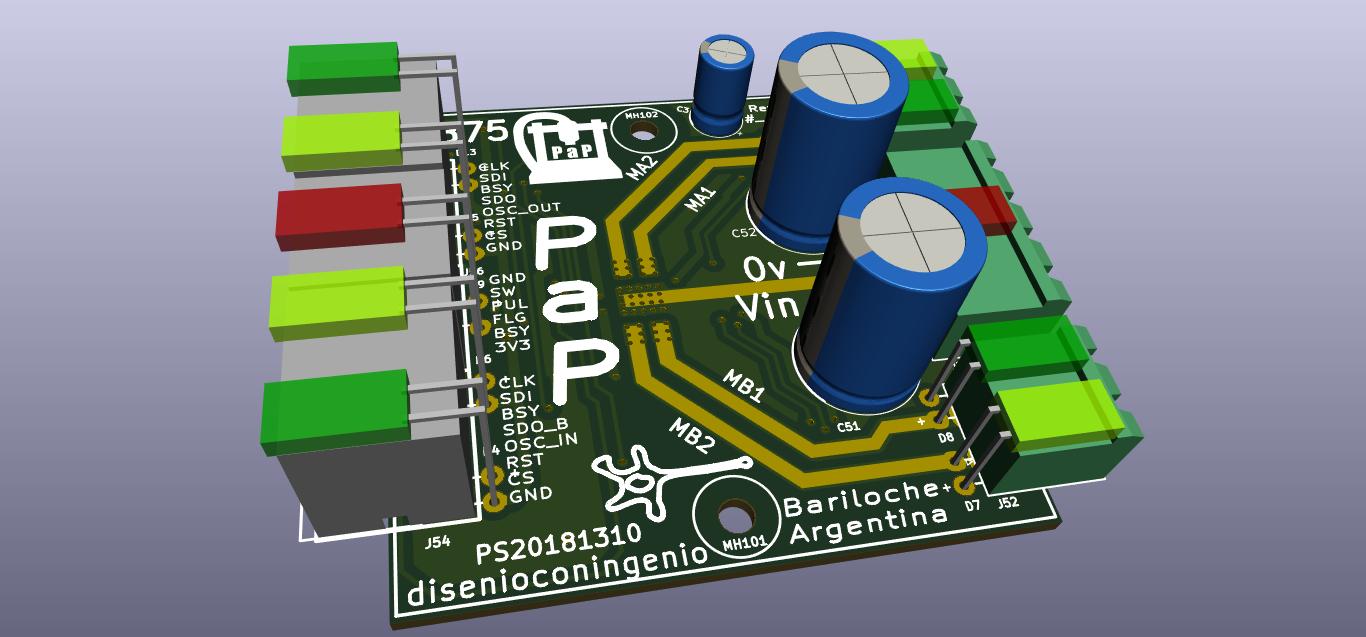
Main components on the PaP
PaP bill of materials (BOM)
58 components, 31 distinct parts — part numbers from the project's BOM.
| Qty | Part | Footprint | Refs |
|---|---|---|---|
| 1 | powerstep01 | powerstep | U1 |
| 1 | Conn_01x04 | PhoenixContact_MSTBA_2,5_4-G-5,08_1x04_P5.08mm_Horizontal | J51 |
| 2 | Conn_01x02 | PhoenixContact_MSTBA_2,5_2-G-5,08_1x02_P5.08mm_Horizontal | J52, J53 |
| 2 | RJ45 | rj45 | J54, J55 |
| 1 | RJ12 | rj12 | J56 |
| 2 | LED_SMD | Wo_Paste_LED_0805_2012Metric_Pad1.15x1.40mm_HandSolder | D1, D18 |
| 5 | LL4148 | D_MiniMELF | D2, D3, D15, D16, D17 |
| 2 | LED | led5x2_rj_verde | D4, D13 |
| 2 | LED | led5x2_rj_amarillo | D5, D6 |
| 1 | LED | led5x2_enchufable_amarillo | D7 |
| 1 | LED_I | led5x2_enchufable_verde | D8 |
| 1 | LED | led5x2_rj_rojo_abierto | D9 |
| 1 | LED_I | led5x2_enchufable_amarillo | D10 |
| 1 | LED | led5x2_enchufable_verde | D11 |
| 1 | 3v3 | D_MiniMELF | D12 |
| 1 | LED_I | led5x2_enchufable_rojo | D14 |
| 1 | SM4007 | D_SMA | D51 |
| 1 | logo_cnc | cnc | L104 |
| 1 | 10n | C_0805_2012Metric | C1 |
| 7 | 100n | C_0805_2012Metric | C2, C6, C7, C8, C9, C10, C11 |
Show 11 more
| Qty | Part | Footprint | Refs |
|---|---|---|---|
| 1 | 220uFx25v | CP_Radial_D6.3mm_P2.50mm | C3 |
| 2 | 220n | C_1206_3216Metric_Pad1.42x1.75mm_HandSolder | C4, C5 |
| 2 | 100uFx100v | CP_Radial_D13.0mm_P5.00mm | C51, C52 |
| 6 | 10k | R_0805_2012Metric | R1, R11, R12, R13, R14, R18 |
| 1 | 1k5 | Wo_Paste_R_0805_2012Metric_Pad1.15x1.40mm_HandSolder | R2 |
| 2 | 0.1e | R_2816_7142Metric_Pad3.20x4.45mm_HandSolder | R3, R4 |
| 1 | 100e | Wo_Paste_R_0805_2012Metric_Pad1.15x1.40mm_HandSolder | R5 |
| 1 | 100k | R_0805_2012Metric | R6 |
| 1 | 3k3 | R_0805_2012Metric | R7 |
| 5 | 100e | R_0805_2012Metric | R8, R9, R10, R16, R17 |
| 1 | R | R_0805_2012Metric | R15 |
PaP design files
The KiCad project lives in the brengi/CESE-PCB repository on GitHub; these links point at the commit this page was built from.
PaP: common questions
How big is the PaP PCB?
The PaP measures 60 × 60 mm, has 2 copper layers and is 1.6 mm thick.
How many components are on the PaP?
58 components, from 31 distinct parts, with part numbers taken from the project's own BOM. The full bill of materials is listed on this page.
Where can I download the PaP design files?
From the brengi/CESE-PCB repository on GitHub, which has the KiCad layout and the BOM; the links under Design files point to each one.
Can I use the PaP design in my own project?
The repository has no license, so all rights stay with brengi. Use it as a reference, and ask the author before reusing the design.
More boards in CESE-PCB
 NXP
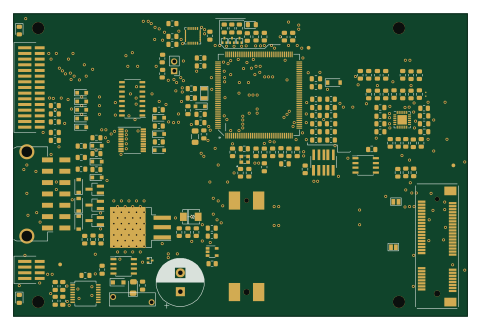
NXPEquipo AVL - vRaptor
120 × 80 mm160 parts2LNo license7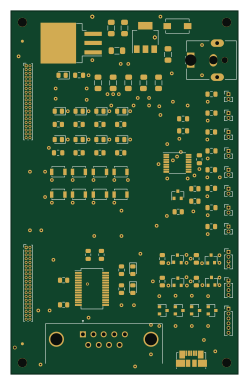
PBC TP Final - Tarjeta Expación GEO HCAL
60 × 96 mm141 parts2LNo license7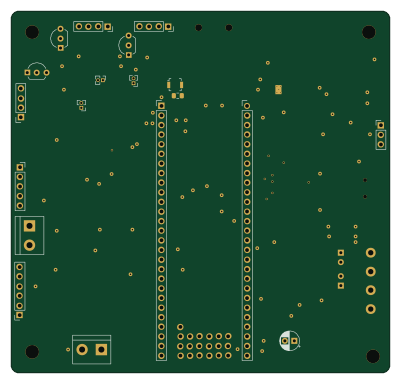
Prototipo 1 : Base LPCXpresso1769 - VOP24
100 × 95.5 mm112 parts2LNo license7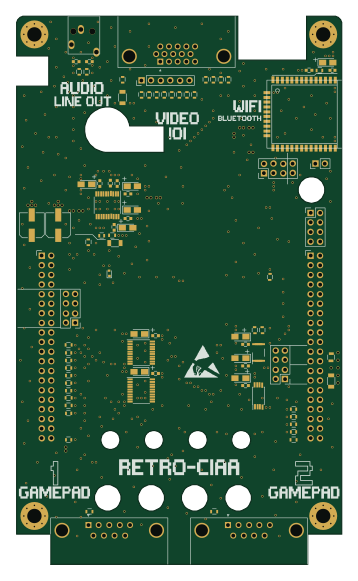 ESP32
ESP32RETRO-CIAA
86 × 145 mm101 parts2LNo license7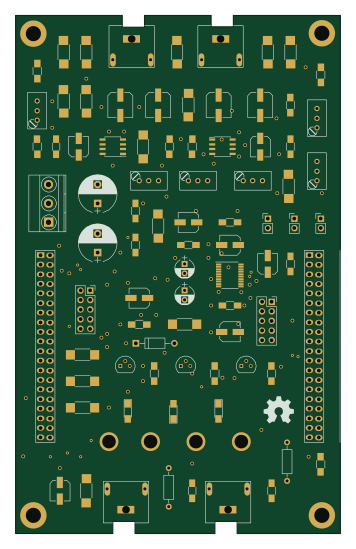
Poncho Procesador de Audio
85.9 × 137 mm83 parts2LNo license7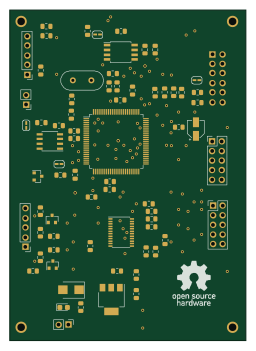 Microchip SAM
Same70
62.5 × 87.5 mm67 parts2LNo license7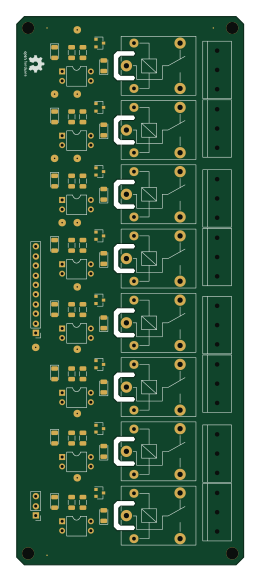
Replica Reles
60 × 145 mm66 parts2LNo license7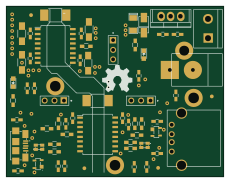
Aislador USB para uso industrial
57.4 × 45 mm59 parts2LNo license7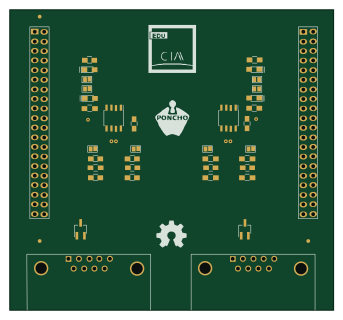
Poncho CAN
85.7 × 79.6 mm37 parts2LNo license7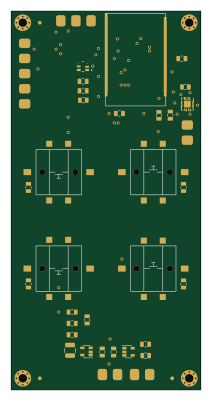
PCB Sistema de intercambio de mensajes de voz
50 × 100 mm35 parts2LNo license7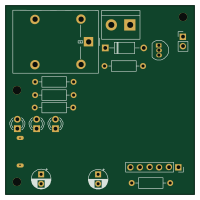 ESP32
ESP32PCB para Alarma IoT
50 × 50 mm19 parts2LNo license7