
Phone robot

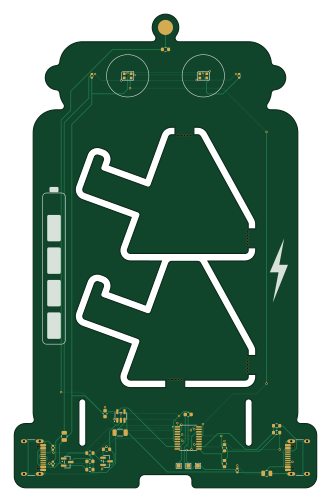
About the Phone robot PCB
Phone robot is an open source RISC-V PCB design by HeyPCB, published on GitHub under the CERN-OHL-S-2.0 license. It is a 2-layer board measuring 80 × 125.3 mm, with 27 components from 18 distinct parts.
Its main chip is the CH32V003F4P6, from the RISC-V family. Other key parts include the INA180A2IDBVR. By type, the board carries 12 resistors, 7 capacitors, 2 ICs, 2 transistors, 2 connectors and 2 diodes.
It belongs with the robotics & motion designs in this gallery.
From the project
Bolt, the phone stand robot: A little robot that holds your phone, charges it, and peeks over the top to tell you how it's eating. KiCad 10, heypcb.ai merch.
A little robot that holds your phone, charges it, and peeks over the top to tell you how it's eating.
Bolt is a matte-black robot phone stand with gold eyes. Two kickstands snap out of its belly and slot through its hips; they become the hands your phone sits on, in landscape, leaning back at 70 degrees. Your charger plugs into its left foot and your phone's cable into its right: a 5 V USB-C pass-through that powers the phone port only when a phone is attached, offers the phone what the charger can give (up to 1.5 A), and measures the charge current. Its two RGB eyes peek over the phone and…
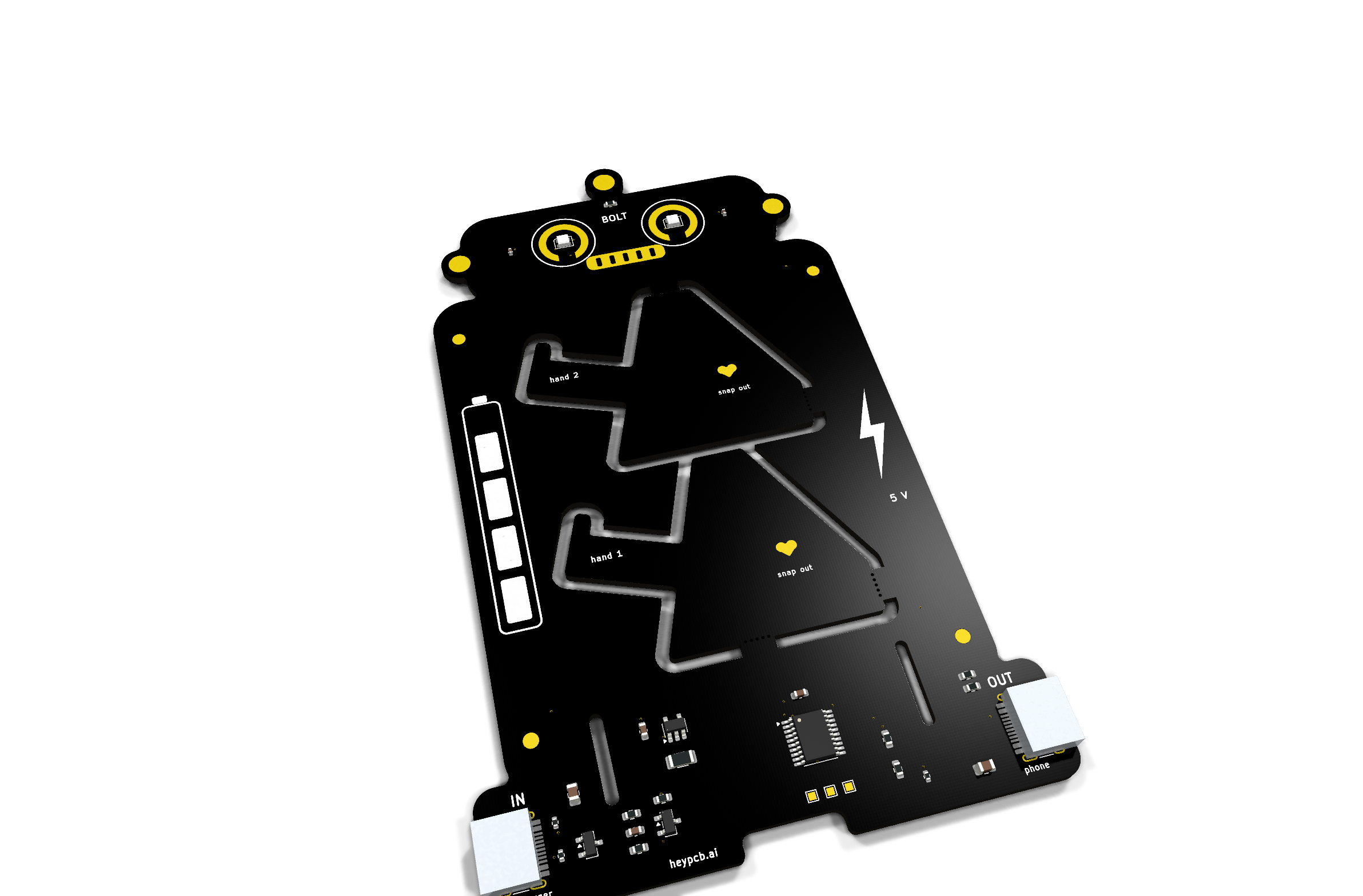
Main components on the Phone robot
Phone robot bill of materials (BOM)
27 components, 18 distinct parts — part numbers from the project's BOM.
| Qty | Part | Footprint | Refs |
|---|---|---|---|
| 1 | INA180A2IDBVR INA180A2 | SOT-23-5 | U1 |
| 1 | CH32V003F4P6 | TSSOP-20_4.4x6.5mm_P0.65mm | U2 |
| 1 | AO3401A | SOT-23 | Q1 |
| 1 | AO3400A | SOT-23 | Q2 |
| 1 | TYPE-C-31-M-12 USB-C | USB_C_Receptacle_HRO_TYPE-C-31-M-12 | J1 |
| 1 | TYPE-C-31-M-12 USB-C out | USB_C_Receptacle_HRO_TYPE-C-31-M-12 | J2 |
| 2 | WS2812C-2020-V1 | LED_WS2812B-2020_PLCC4_2.0x2.0mm | D1, D2 |
| 2 | CL21A106KAYNNNE 10uF | C_0805_2012Metric | C1, C4 |
| 1 | 0603B103K500NT 10nF | C_0603_1608Metric | C2 |
| 2 | CC0603KRX7R9BB104 100nF | C_0603_1608Metric | C3, C5 |
| 2 | CL05B104KO5NNNC 100nF | C_0402_1005Metric | C6, C7 |
| 2 | 0402WGF5101TCE 5.1k | R_0402_1005Metric | R1, R2 |
| 2 | 0603WAF1003T5E 100k | R_0603_1608Metric | R3, R5 |
| 3 | 0603WAF2202T5E 22k | R_0603_1608Metric | R4, R7, R8 |
| 1 | FRM121WFR020TM 20m | R_1206_3216Metric | R6 |
| 2 | 0603WAF5602T5E 56k | R_0603_1608Metric | R9, R10 |
| 1 | 0402WGF1002TCE 10k | R_0402_1005Metric | R11 |
| 1 | 0603WAF1001T5E 1k | R_0603_1608Metric | R12 |
Phone robot design files
The KiCad project lives in the HeyPCB/phone-robot repository on GitHub; these links point at the commit this page was built from.
Phone robot: common questions
What microcontroller does the Phone robot use?
The Phone robot is built around the CH32V003F4P6, from the RISC-V family.
How big is the Phone robot PCB?
The Phone robot measures 80 × 125.3 mm, has 2 copper layers and is 1.6 mm thick.
How many components are on the Phone robot?
27 components, from 18 distinct parts, with part numbers taken from the project's own BOM. The full bill of materials is listed on this page.
Where can I download the Phone robot design files?
From the HeyPCB/phone-robot repository on GitHub, which has the KiCad layout, the schematic and the BOM; the links under Design files point to each one.
Can I use the Phone robot design in my own project?
Yes, under the terms of its CERN-OHL-S-2.0 license, which HeyPCB chose for the repository.
Can I test firmware for the Phone robot without the hardware?
Yes. HardLabs builds a simulation of the board from its netlist and BOM, so you can run and debug RISC-V firmware against it before you order a PCB.
Similar boards
 RISC-V
Audio
byrantech
27.8 × 22.3 mm38 parts2LMIT4.3k RISC-V
Keybit
notaroomba
19.1 × 19.1 mm19 parts2LNo license438 RISC-V
Workbench-1 Controller
Quchaosheng
160 × 130 mm106 parts8LApache-2.0212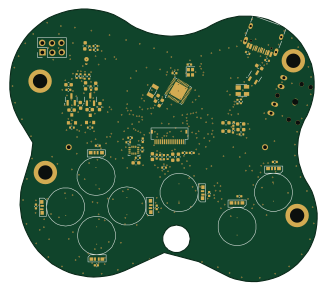 RISC-V
Froggyswadge
cnlohr
81.5 × 72.2 mm92 parts2LMIT105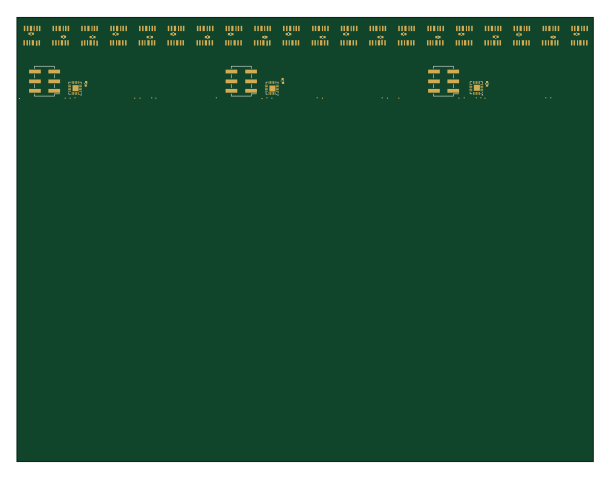 RISC-V
Keytartouch
152.5 × 117.5 mm69 parts2LMIT105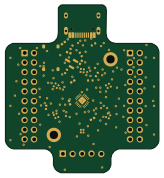 RISC-V
Ch32v003f4u6 with wsled
40.6 × 44.5 mm26 parts2LMIT105