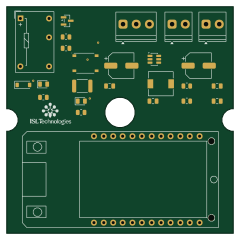
ISLKey

About the ISLKey PCB
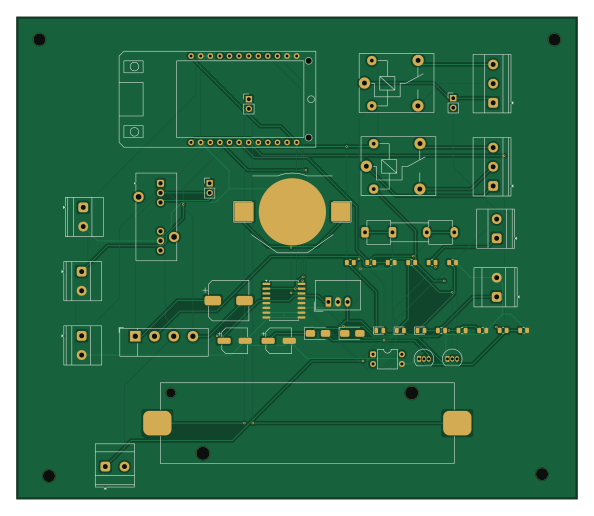
ISLKey is an open source PCB design by ISLKey, published on GitHub. It is a 2-layer board measuring 148.3 × 127.5 mm, with 43 components from 32 distinct parts.
Other key parts include the PC817, TMR10-2412WIR, TSR-1-2450 and DS3231M. By type, the board carries 11 connectors, 8 resistors, 6 capacitors, 5 diodes, 4 ICs and 2 transistors.
From the project
ISLKey access-control platform — ESP32 firmware, Electron flasher, Flutter app, KiCad schematic (ISL Technologies)
Access-control platform by ISL Technologies — ESP32-based door controllers with a Windows flasher/commissioning tool and a companion mobile app.
- Firmware: cd islkey-firmware && python -m platformio run (per-env in platformio.ini). After a rebuild, regenerate the merged images with esptool mergebin (see below) — the flasher writes a merged full-flash image at 0x0; a raw app image boot-loops the board. - Flasher: cd islkey-flasher && npm install && npm start (or npm run build for the installer). - App: cd islkey-app && flutter pub get && flutter run.
Main components on the ISLKey
ISLKey bill of materials (BOM)
43 components, 32 distinct parts — part numbers from the project's BOM.
| Qty | Part | Footprint | Refs |
|---|---|---|---|
| 1 | PC817 | DIP-4_W7.62mm | U1 |
| 1 | TMR10-2412WIR | Converter_DCDC_TRACO_TMR10-24xxWIR_48xxWIR_72xxWIR_THT | U3 |
| 1 | TSR-1-2450 | Converter_DCDC_TRACO_TSR-1_THT | U4 |
| 1 | DS3231M | SOIC-16W_7.5x10.3mm_P1.27mm | U5 |
| 1 | TTGO T-Display | TTGO_ESP32_TDisplay_v1.1 | M1 |
| 2 | PN2222A | TO-92_Inline | Q1, Q2 |
| 1 | Exit btn | TerminalBlock_Phoenix_MKDS-1,5-2-5.08_1x02_P5.08mm_Horizontal | J3 |
| 1 | Door contact | TerminalBlock_Phoenix_MKDS-1,5-2-5.08_1x02_P5.08mm_Horizontal | J4 |
| 1 | Tamper | TerminalBlock_Phoenix_MKDS-1,5-2-5.08_1x02_P5.08mm_Horizontal | J5 |
| 1 | LOCK COM/NO/NC | TerminalBlock_Phoenix_MKDS-1,5-3-5.08_1x03_P5.08mm_Horizontal | J6 |
| 1 | AUX COM/NO/NC | TerminalBlock_Phoenix_MKDS-1,5-3-5.08_1x03_P5.08mm_Horizontal | J7 |
| 1 | Fire volt-free | TerminalBlock_Phoenix_MKDS-1,5-2-5.08_1x02_P5.08mm_Horizontal | J8 |
| 1 | Fire link COM-Fire | PinHeader_1x02_P2.54mm_Vertical | J9 |
| 1 | 5-60V AC/DC IN | TerminalBlock_Phoenix_MKDS-3-2-5.08_1x02_P5.08mm_Horizontal | J10 |
| 1 | 12V OUT (lock/aux) | TerminalBlock_Phoenix_MKDS-3-2-5.08_1x02_P5.08mm_Horizontal | J11 |
| 1 | TTGO batt pads | PinHeader_1x02_P2.54mm_Vertical | J13 |
| 1 | DCDC ON | PinHeader_1x02_P2.54mm_Vertical | J15 |
| 1 | KBU4M (4A) | Diode_Bridge_Vishay_KBU | BR1 |
| 1 | 18650 | BatteryHolder_Keystone_1042_1x18650 | BT1 |
| 1 | CR2032 | BatteryHolder_Keystone_3002_1x2032 | BT3 |
Show 12 more
| Qty | Part | Footprint | Refs |
|---|---|---|---|
| 1 | T2A | Fuseholder_Clip-5x20mm_Keystone_3512_Inline_P23.62x7.27mm_D1.02x1.57mm_Horizontal | F1 |
| 2 | SRD-05VDC-SL-C | Relay_SPDT_SANYOU_SRD_Series_Form_C | K1, K2 |
| 2 | 1N4007 | D_SMA | D1, D2 |
| 1 | PWR | LED_0805_2012Metric | D3 |
| 2 | GRN | LED_0805_2012Metric | D4, D5 |
| 1 | 100uF/16V | CP_Elec_6.3x5.3 | C1 |
| 3 | 100nF | C_0805_2012Metric | C2, C3, C6 |
| 1 | 100uF/100V | CP_Elec_10x10.5 | C4 |
| 1 | 100uF/25V | CP_Elec_6.3x5.3 | C5 |
| 5 | 1k | R_0805_2012Metric | R1, R3, R6, R7, R8 |
| 2 | 10k | R_0805_2012Metric | R2, R4 |
| 1 | 2k2 | R_0805_2012Metric | R5 |
ISLKey design files
The KiCad project lives in the ISLKey/islkey repository on GitHub; these links point at the commit this page was built from.
ISLKey: common questions
How big is the ISLKey PCB?
The ISLKey measures 148.3 × 127.5 mm, has 2 copper layers and is 1.6 mm thick.
How many components are on the ISLKey?
43 components, from 32 distinct parts, with part numbers taken from the project's own BOM. The full bill of materials is listed on this page.
Where can I download the ISLKey design files?
From the ISLKey/islkey repository on GitHub, which has the KiCad layout, the schematic and the BOM; the links under Design files point to each one.
Can I use the ISLKey design in my own project?
The repository has no license, so all rights stay with ISLKey. Use it as a reference, and ask the author before reusing the design.