
Make Music

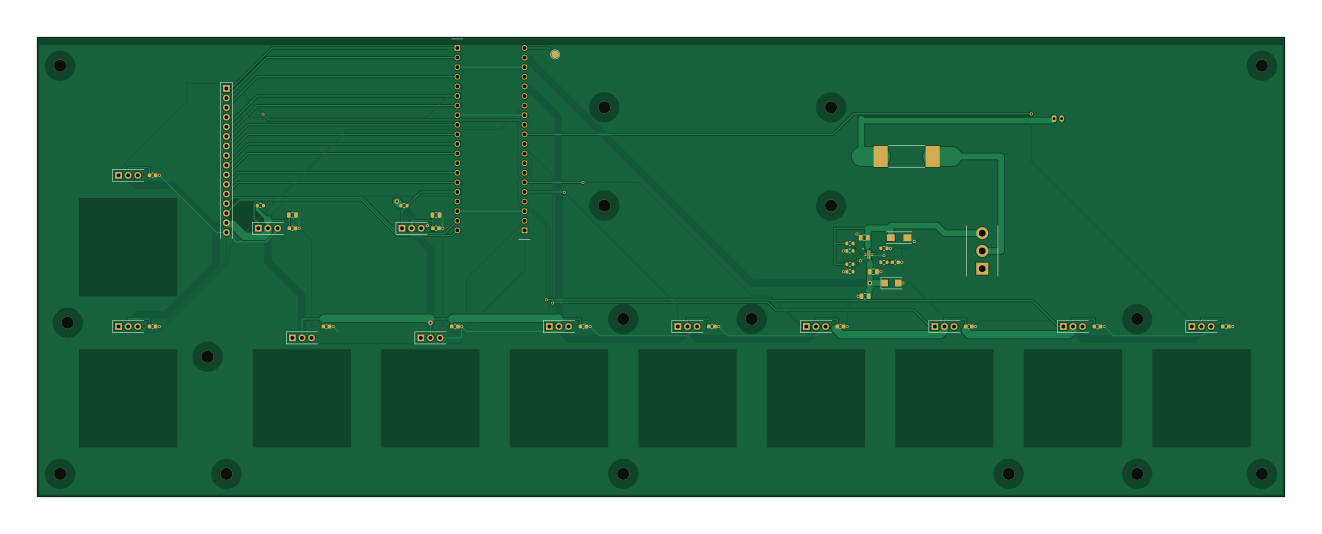
About the Make Music PCB
Make Music is an open source RP2040/RP2350 PCB design by John-ODell, published on GitHub. It is a 2-layer board measuring 330 × 121.5 mm, with 47 components from 31 distinct parts.
Its main chip is the SSQ-120-01-G-S, from the RP2040/RP2350 family. Other key parts include the TPS259474LRPWR. By type, the board carries 18 capacitors, 15 connectors, 8 resistors, 2 diodes, 1 IC and 1 fuse.
It belongs with the power & battery designs in this gallery.
From the project
Using a Passive Buzzer, we can control the frequencies and make music. Using the Raspberry Pi Pico or an Arduino Uno plug and play with pre defined notes.
Open makemusic.kicadpro in KiCad 10, then open the schematic. The project-local MakeMusic.kicadsym library and sym-lib-table resolve all symbols. fp-lib-table registers socket, carrier and power libraries plus installed KiCad 10 ConnectorJST, ResistorSMD, CapacitorSMD and TestPoint libraries. The schematic is the editable source of truth; do not regenerate it from the review PDF.
Main components on the Make Music
Make Music bill of materials (BOM)
47 components, 31 distinct parts — part numbers from the project's BOM.
| Qty | Part | Footprint | Refs |
|---|---|---|---|
| 1 | TPS259474LRPWR Texas Instruments | TI_RPW0010A_TPS259474_2x2mm | U2 |
| 1 | SSQ-120-01-G-S LEFT / Pico 1-20 Samtec | Samtec_SSQ-120-01-G-S_1x20_P2.54mm | J1 |
| 1 | SSQ-120-01-G-S RIGHT / Pico 21-40 Samtec | Samtec_SSQ-120-01-G-S_1x20_P2.54mm | J2 |
| 1 | M20-9990346 C4 / GP16 Harwin | Harwin_M20-9990346_1x3_P2.54mm | J3 |
| 1 | M20-9990346 D4 / GP17 Harwin | Harwin_M20-9990346_1x3_P2.54mm | J4 |
| 1 | M20-9990346 E4 / GP18 Harwin | Harwin_M20-9990346_1x3_P2.54mm | J5 |
| 1 | M20-9990346 F4 / GP19 Harwin | Harwin_M20-9990346_1x3_P2.54mm | J6 |
| 1 | M20-9990346 G4 / GP20 Harwin | Harwin_M20-9990346_1x3_P2.54mm | J7 |
| 1 | M20-9990346 A4 / GP21 Harwin | Harwin_M20-9990346_1x3_P2.54mm | J8 |
| 1 | M20-9990346 B4 / GP22 Harwin | Harwin_M20-9990346_1x3_P2.54mm | J9 |
| 1 | M20-9990346 C5 / GP26 Harwin | Harwin_M20-9990346_1x3_P2.54mm | J10 |
| 1 | M20-9990346 Semitone up / GP27 Harwin | Harwin_M20-9990346_1x3_P2.54mm | J11 |
| 1 | M20-9990346 Octave up / GP28 Harwin | Harwin_M20-9990346_1x3_P2.54mm | J12 |
| 1 | M20-9990346 Buzzer 1 / PWM / GP13 Harwin | Harwin_M20-9990346_1x3_P2.54mm | J13 |
| 1 | M20-9990346 Buzzer 2 / PWM / GP12 Harwin | Harwin_M20-9990346_1x3_P2.54mm | J14 |
| 1 | M20-9991646 GPIO / Harwin 16-way Harwin | Harwin_M20-9991646_1x16_P2.54mm | J15 |
| 1 | 3403.0275.23 1.25A T SCHURTER | Schurter_UMT-H_3403-0275-23 | F1 |
| 1 | B2B-PH-K-S(LF)(SN) JST PH battery JST | JST_PH_B2B-PH-K_1x02_P2.00mm_Vertical | H1 |
| 1 | MN12SS1W03 NKK | NKK_MN12SS1W03_TerminalPattern_Candidate | S1 |
| 1 | SS14-E3/61T Vishay | Vishay_SS14_SMA_K1_A2 | D2 |
Show 11 more
| Qty | Part | Footprint | Refs |
|---|---|---|---|
| 1 | SMAJ5.0CA Littelfuse | Littelfuse_SMAJ5-0CA_DO-214AC | D3 |
| 12 | C0603C104K5RACTU 100n KEMET | KEMET_C0603_1608_LevelB | C1, C2, C3, C4, C5, C6, C7, C8 +4 |
| 3 | C2012X7R1E475K125AB 4u7 / 25V TDK | C_0805_2012Metric | C13, C14, C16 |
| 1 | C1608C0G1H103J080AA 10n / 50V TDK | C_0603_1608Metric | C15 |
| 2 | C2012X7R1A106K125AC 10u / 10V TDK | C_0805_2012Metric | C17, C18 |
| 2 | RC0603FR-0710KL 10k Yageo | R_0603_1608Metric | R1, R2 |
| 1 | RC0603FR-07649KL 649k Yageo | R_0603_1608Metric | R3 |
| 2 | RC0603FR-07332KL 332k Yageo | R_0603_1608Metric | R4, R6 |
| 1 | RC0603FR-071M05L 1.05M Yageo | R_0603_1608Metric | R5 |
| 1 | RC0603FR-073K32L 3.32k Yageo | R_0603_1608Metric | R7 |
| 1 | RC0603FR-07100RL 100 Yageo | R_0603_1608Metric | R8 |
Make Music design files
The KiCad project lives in the John-ODell/Make_Music repository on GitHub; these links point at the commit this page was built from.
Make Music: common questions
What microcontroller does the Make Music use?
The Make Music is built around the SSQ-120-01-G-S, from the RP2040/RP2350 family.
How big is the Make Music PCB?
The Make Music measures 330 × 121.5 mm, has 2 copper layers and is 1.6 mm thick.
How many components are on the Make Music?
47 components, from 31 distinct parts, with part numbers taken from the project's own BOM. The full bill of materials is listed on this page.
Where can I download the Make Music design files?
From the John-ODell/Make_Music repository on GitHub, which has the KiCad layout, the schematic and the BOM; the links under Design files point to each one.
Can I use the Make Music design in my own project?
The repository has no license, so all rights stay with John-ODell. Use it as a reference, and ask the author before reusing the design.
Can I test firmware for the Make Music without the hardware?
Yes. HardLabs builds a simulation of the board from its netlist and BOM, so you can run and debug RP2040/RP2350 firmware against it before you order a PCB.
Similar boards
 RP2040/RP2350
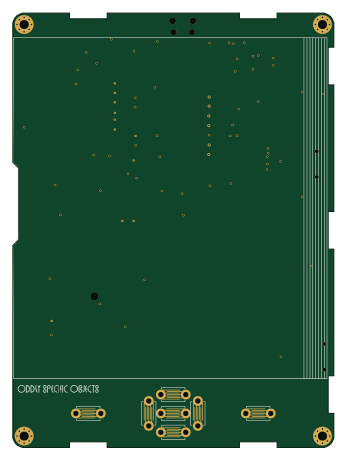
Open Book Abridged Edition
joeycastillo
85 × 115 mm29 parts2LCC-BY-SA-4.08.1k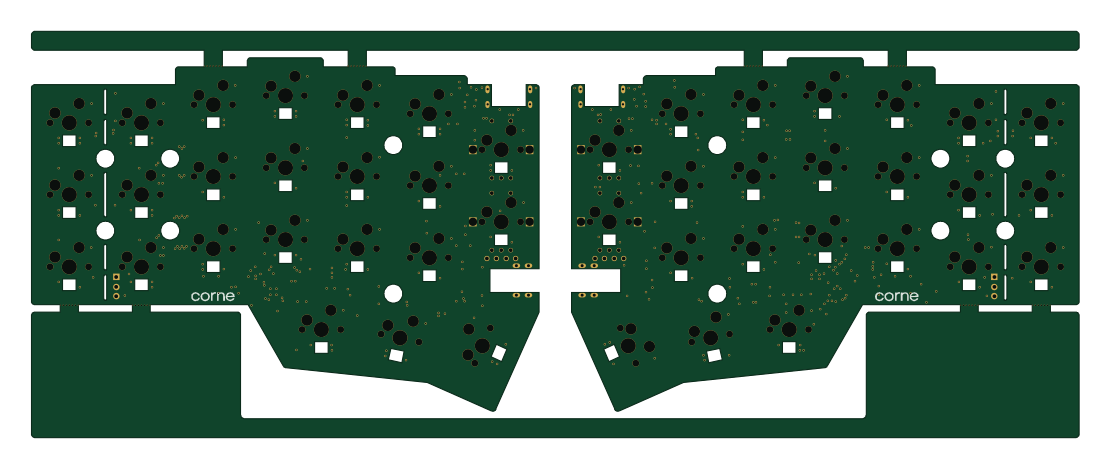 RP2040/RP2350
Corne
foostan
277.2 × 107.5 mm164 parts2LCC-BY-4.07.7k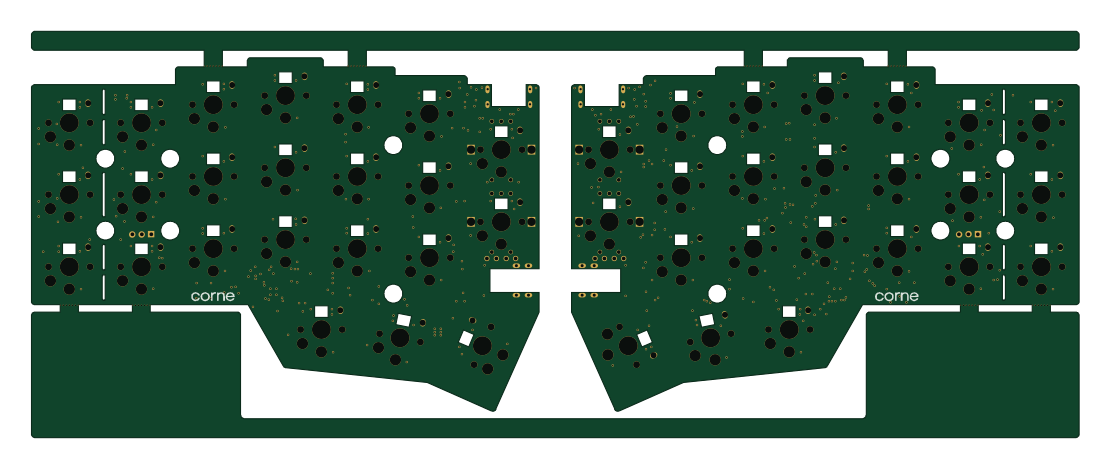 RP2040/RP2350
Corne
277.2 × 107.5 mm164 parts2LCC-BY-4.07.7k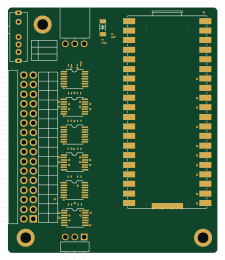 RP2040/RP2350
Jitx design
gusmanb
55.5 × 65 mm26 parts4LGPL-3.05.0k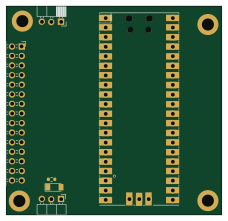 RP2040/RP2350
LogicAnalyzer
57 × 55.2 mm6 parts2LGPL-3.05.0k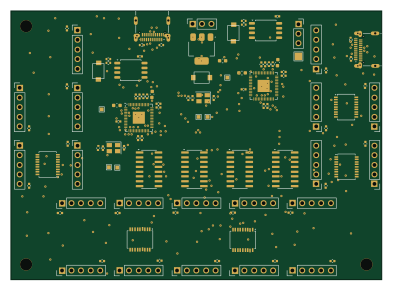 RP2040/RP2350
Main
google
98 × 71 mm102 parts2LApache-2.02.9k