
RPi hat breakout

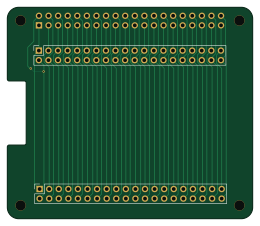
About the RPi hat breakout
RPi hat breakout is an open source PCB design by manhoosbilli1, published on GitHub. It is a 2-layer board measuring 65 × 56 mm, with 3 components from 1 distinct parts.
It belongs with the dev boards & breakouts designs in this gallery.
From the project
A breakout board for raspberry pi that duplicates the pins on two sides for easy access.
Raspberry Pi 40-pin HAT pin breakout - duplicates GPIO pins on two sides for easy probing/wiring
- Status: Routed - Board size: 65 x 56 mm - Layers: 2 - Components: 7
- Pure passive breakout: routes the Raspberry Pi 40-pin GPIO header out to two parallel pin headers (one each side of the HAT) so multiple jumpers/probes can land on the same GPIO without crowding the original header. - No active components - just the connector geometry and traces.
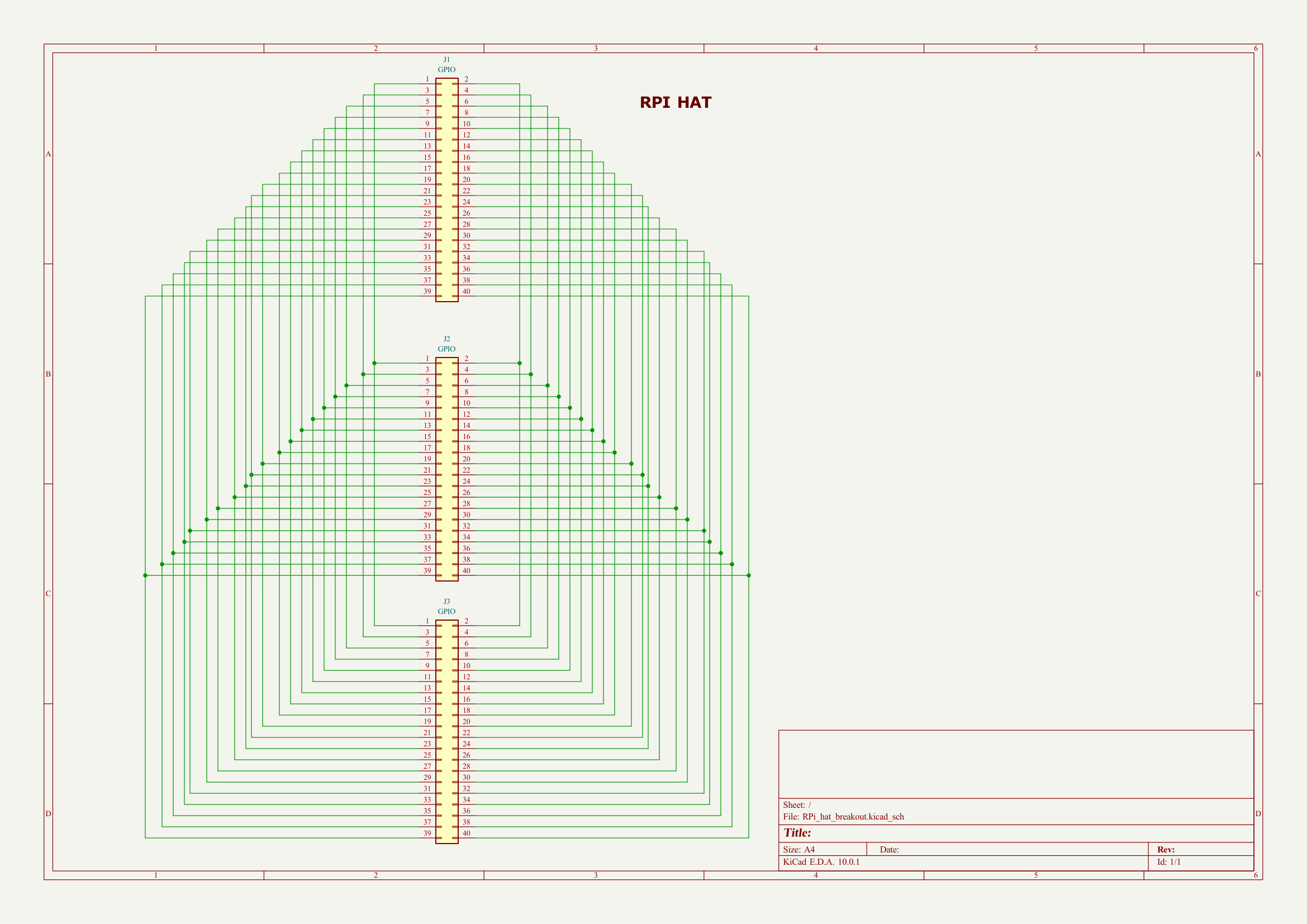
RPi hat breakout bill of materials (BOM)
3 components, 1 distinct parts — part numbers from the project's BOM.
| Qty | Part | Footprint | Refs |
|---|---|---|---|
| 3 | GPIO | PinSocket_2x20_P2.54mm_Vertical | J1, J2, J3 |
RPi hat breakout design files
The KiCad project lives in the manhoosbilli1/RPi_hat_breakout repository on GitHub; these links point at the commit this page was built from.
- LayoutRPi_hat_breakout.kicad_pcb
- SchematicRPi_hat_breakout.kicad_sch
- BOMreports/bom.csv
RPi hat breakout: common questions
How big is the RPi hat breakout?
The RPi hat breakout measures 65 × 56 mm, has 2 copper layers and is 1.6 mm thick.
How many components are on the RPi hat breakout?
3 components, from 1 distinct parts, with part numbers taken from the project's own BOM. The full bill of materials is listed on this page.
Where can I download the RPi hat breakout design files?
From the manhoosbilli1/RPi_hat_breakout repository on GitHub, which has the KiCad layout, the schematic and the BOM; the links under Design files point to each one.
Can I use the RPi hat breakout design in my own project?
The repository has no license, so all rights stay with manhoosbilli1. Use it as a reference, and ask the author before reusing the design.
Similar boards
Radioberry juice
pa3gsb
65 × 56 mm87 parts2LNo license675
Radioberry preamp
65 × 56 mm137 parts2LNo license675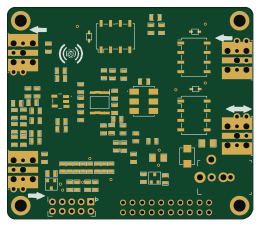
Hat
65 × 56 mm81 parts2LNo license675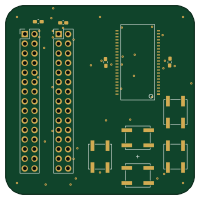
Sram dev board
Wren6991
50 × 50 mm12 parts2LNo license508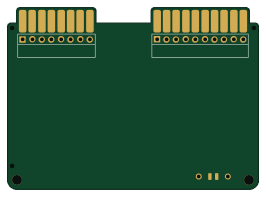
ESP32
Chrismettal
66.4 × 48.1 mm20 parts2LCC-BY-SA-4.0446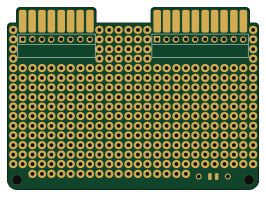
ESP32
66.4 × 48.1 mm20 parts2LCC-BY-SA-4.0446