
New-Keeb

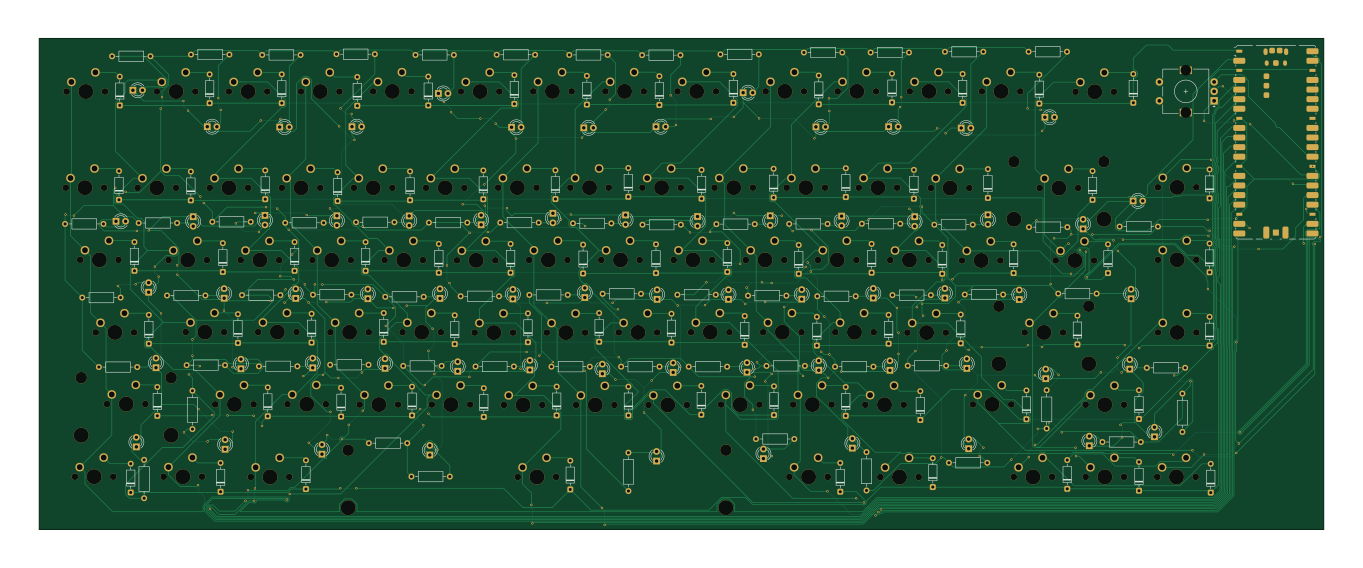
About the New-Keeb PCB
New-Keeb is an open source RP2040/RP2350 PCB design by Osaidii, published on GitHub under the Apache-2.0 license. It is a 2-layer board measuring 340.1 × 130 mm, with 298 components from 9 distinct parts.
Its main chip is the RaspberryPi_Pico, from the RP2040/RP2350 family. By type, the board carries 85 switches, 80 diodes, 66 inductors, 66 resistors and 1 module.
It belongs with the keyboards designs in this gallery.
From the project
A DIY Fully Customizable Keyboard (Not Completed)
Main components on the New-Keeb
New-Keeb bill of materials (BOM)
298 components, 9 distinct parts — part numbers from the project's BOM.
| Qty | Part | Footprint | Refs |
|---|---|---|---|
| 1 | RaspberryPi_Pico | RaspberryPi_Pico_SMD | A1 |
| 1 | MX_stab | STAB_MX_6.25u | S1 |
| 1 | MX_stab | STAB_MX_2.25u | S2 |
| 2 | MX_stab | STAB_MX_2u | S3, S4 |
| 80 | SW_Push | SW_MX_1u | SW1, SW2, SW3, SW4, SW5, SW6, SW7, SW8 +72 |
| 1 | RotaryEncoder | RotaryEncoder_Alps_EC11E-Switch_Vertical_H20mm | SW81 |
| 80 | 1N4148 | D_DO-35_SOD27_P7.62mm_Horizontal | D1, D2, D3, D4, D5, D6, D7, D8 +72 |
| 66 | LED | LED_D3.0mm | L1, L2, L3, L4, L5, L6, L7, L8 +58 |
| 66 | R | R_Axial_DIN0207_L6.3mm_D2.5mm_P10.16mm_Horizontal | R1, R2, R3, R4, R5, R6, R7, R8 +58 |
New-Keeb design files
The KiCad project lives in the Osaidii/New-Keeb repository on GitHub; these links point at the commit this page was built from.
- LayoutPCB.kicad_pcb
- BOMJLCPCB BOM.csv
New-Keeb: common questions
What microcontroller does the New-Keeb use?
The New-Keeb is built around the RaspberryPi_Pico, from the RP2040/RP2350 family.
How big is the New-Keeb PCB?
The New-Keeb measures 340.1 × 130 mm, has 2 copper layers and is 1.6 mm thick.
How many components are on the New-Keeb?
298 components, from 9 distinct parts, with part numbers taken from the project's own BOM. The full bill of materials is listed on this page.
Where can I download the New-Keeb design files?
From the Osaidii/New-Keeb repository on GitHub, which has the KiCad layout and the BOM; the links under Design files point to each one.
Can I use the New-Keeb design in my own project?
Yes, under the terms of its Apache-2.0 license, which Osaidii chose for the repository.
Can I test firmware for the New-Keeb without the hardware?
Yes. HardLabs builds a simulation of the board from its netlist and BOM, so you can run and debug RP2040/RP2350 firmware against it before you order a PCB.
Similar boards
 RP2040/RP2350
Open Book Abridged Edition
joeycastillo
85 × 115 mm29 parts2LCC-BY-SA-4.08.1k RP2040/RP2350
Corne
foostan
277.2 × 107.5 mm164 parts2LCC-BY-4.07.7k RP2040/RP2350
Corne
277.2 × 107.5 mm164 parts2LCC-BY-4.07.7k RP2040/RP2350
LogicAnalyzer
gusmanb
57 × 55.2 mm6 parts2LGPL-3.05.0k RP2040/RP2350
Jitx design
55.5 × 65 mm26 parts4LGPL-3.05.0k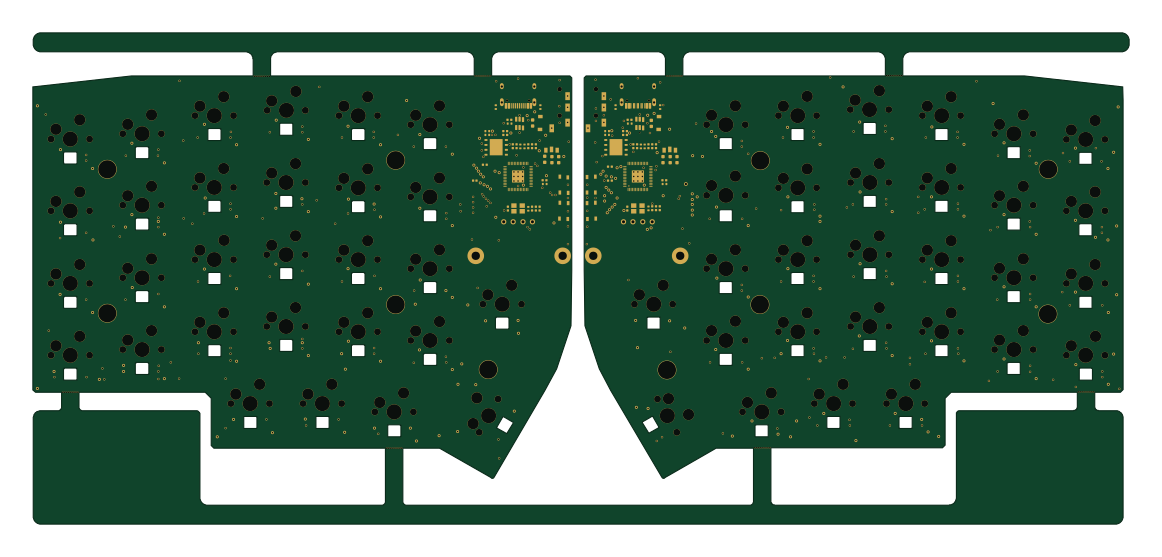 RP2040/RP2350
Pro V2
kata0510
290.1 × 130 mm270 parts2LMIT2.3k