
Ripple tank

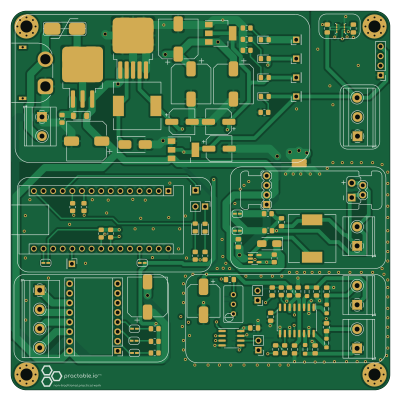
About the Ripple tank PCB
Ripple tank is an open source AVR/Arduino PCB design by practable, published on GitHub under the AGPL-3.0 license. It is a 4-layer board measuring 100 × 100 mm, with 89 components from 54 distinct parts.
Its main chip is the Arduino_Nano_IoT33, from the AVR/Arduino family. Other key parts include the C92489, C5122557, C6187, C347222 and femtoBuck_LED_driver. By type, the board carries 19 resistors, 17 connectors, 16 capacitors, 9 diodes, 8 ICs and 6 inductors.
It belongs with the robotics & motion designs in this gallery.
From the project
Software and documentation for the ripple tank remote lab project
All other jumpers remain in initial state >>>>>>> develop
Main components on the Ripple tank
Ripple tank bill of materials (BOM)
89 components, 54 distinct parts — part numbers from the project's BOM.
| Qty | Part | Footprint | Refs |
|---|---|---|---|
| 1 | C92489 BME280 | Bosch_LGA-8_2.5x2.5mm_P0.65mm_ClockwisePinNumbering | U1 |
| 1 | C5122557 PAM8403 | SO-16_5.3x10.2mm_P1.27mm | U2 |
| 1 | C6187 AMS1117-5.0 | SOT-223-3_TabPin2 | U3 |
| 1 | C347222 AMS1117-3.3 | SOT-223-3_TabPin2 | U5 |
| 1 | femtoBuck_LED_driver | femtoBuck | U6 |
| 1 | C125330 AL8860 | TSOT-23-5 | U7 |
| 1 | C636034 MCP4151-104E-ML | SOIC-8_3.9x4.9mm_P1.27mm | U8 |
| 1 | C5276750 LM2596S-5 | TO-263-5_TabPin3 | U10 |
| 1 | Arduino_Nano_IoT33 | Arduino_Nano | A1 |
| 1 | DRV8825 StepperDriver | DRV8825 Stepper Motor Module | A2 |
| 1 | C5355716 IRF5305S_PBF_smd | TO-263-3_TabPin2 | Q1 |
| 1 | XT60_60A_male | AMASS_XT60PW-M_1x02_P7.20mm_Horizontal | J1 |
| 1 | Spare Audio CH | TerminalBlock_medium_5.008mm | J2 |
| 1 | 5V MCU | PinHeader_1x01_P2.54mm_Vertical | J3 |
| 1 | 3V3 | PinHeader_1x01_P2.54mm_Vertical | J4 |
| 1 | D9 | PinHeader_1x01_P2.54mm_Vertical | J5 |
| 1 | pwr-amp-ext-ch1 | PinHeader_1x02_P2.54mm_Vertical | J6 |
| 1 | Wave Generator | TerminalBlock_medium_5.008mm | J7 |
| 1 | LED 660mA | TerminalBlock_medium_5.008mm | J8 |
| 1 | 12v Power In | TerminalBlock_medium_5.008mm | J9 |
Show 34 more
| Qty | Part | Footprint | Refs |
|---|---|---|---|
| 1 | Pump | TerminalBlock_Phoenix_MKDS-1,5-4-5.08_1x04_P5.08mm_Horizontal | J10 |
| 1 | pwr-amp-ext-ch2 | PinHeader_1x02_P2.54mm_Vertical | J11 |
| 1 | A1 | PinHeader_1x01_P2.54mm_Vertical | J12 |
| 1 | DO | PinHeader_1x02_P2.54mm_Vertical | J13 |
| 1 | Moisture Sensor | TerminalBlock_01_03_medium_5.008mm | J14 |
| 1 | i2c-header-A | i2c-pin-header-A | J15 |
| 1 | 5V Audio | PinHeader_1x01_P2.54mm_Vertical | J23 |
| 1 | 12V | PinHeader_1x01_P2.54mm_Vertical | J24 |
| 3 | C2827940 220uF - 16v | CP_Elec_6.3x7.7 | EC1, EC6, EC7 |
| 4 | C88818 220uF - 50v | CP_Elec_10x10 | EC2, EC3, EC4, EC5 |
| 1 | 220uF - 50v | CP_Elec_10x10 | EC8 |
| 1 | C3341 470uF - 16v | CP_Elec_8x10.5 | EC10 |
| 1 | C187515 3.5A | littlefuse-154-nano-block-holster | F1 |
| 1 | 10k | Potentiometer_Bourns-pot | PT1 |
| 1 | C94741 12v | D_0805_2012Metric_Pad1.15x1.40mm_HandSolder | D1 |
| 1 | C2891751 BZV55B10-500mA-10v | D_MiniMELF | D2 |
| 1 | C84261 5v Audio | D_0805_2012Metric_Pad1.15x1.40mm_HandSolder | D3 |
| 1 | C5875740 5v MCU | D_0805_2012Metric_Pad1.15x1.40mm_HandSolder | D4 |
| 1 | C84259 3v3 | D_0805_2012Metric_Pad1.15x1.40mm_HandSolder | D5 |
| 1 | C84261 LED1 | D_0805_2012Metric_Pad1.15x1.40mm_HandSolder | D6 |
| 1 | C26178 MBRA340 | D_SMA | D7 |
| 1 | C84259 LED2 | D_0805_2012Metric_Pad1.15x1.40mm_HandSolder | D8 |
| 1 | C2898361 1N5821_equ_SMB | D_SMB_Handsoldering | D9 |
| 4 | C1009 FB | L_0805_2012Metric_Pad1.05x1.20mm_HandSolder | FB1, FB2, FB3, FB4 |
| 2 | C339951 33uH | L_12x12mm_H8mm | L1, L2 |
| 4 | C49678 100nF | C_0805_2012Metric_Pad1.18x1.45mm_HandSolder | C1, C11, C12, C16 |
| 4 | C107145 220pF | C_0805_2012Metric_Pad1.18x1.45mm_HandSolder | C2, C5, C6, C7 |
| 7 | C28323 1uF | C_0805_2012Metric_Pad1.18x1.45mm_HandSolder | C3, C4, C8, C9, C10, C13, C14 |
| 1 | C19110 2.2uF | C_0805_2012Metric_Pad1.18x1.45mm_HandSolder | C15 |
| 1 | C17630 330r | R_0805_2012Metric_Pad1.20x1.40mm_HandSolder | R1 |
| 3 | C17673 4k7 | R_0805_2012Metric_Pad1.20x1.40mm_HandSolder | R2, R5, R6 |
| 7 | C17513 1k | R_0805_2012Metric_Pad1.20x1.40mm_HandSolder | R3, R4, R11, R12, R13, R14, R21 |
| 5 | C17414 10k | R_0805_2012Metric_Pad1.20x1.40mm_HandSolder | R7, R8, R18, R19, R20 |
| 3 | C247157 0.3r | R_0805_2012Metric_Pad1.20x1.40mm_HandSolder | R15, R16, R17 |
Ripple tank design files
The KiCad project lives in the practable/ripple-tank repository on GitHub; these links point at the commit this page was built from.
Ripple tank: common questions
What microcontroller does the Ripple tank use?
The Ripple tank is built around the Arduino_Nano_IoT33, from the AVR/Arduino family.
How big is the Ripple tank PCB?
The Ripple tank measures 100 × 100 mm, has 4 copper layers and is 1.6 mm thick.
How many components are on the Ripple tank?
89 components, from 54 distinct parts, with part numbers taken from the project's own BOM. The full bill of materials is listed on this page.
Where can I download the Ripple tank design files?
From the practable/ripple-tank repository on GitHub, which has the KiCad layout, the schematic and the BOM; the links under Design files point to each one.
Can I use the Ripple tank design in my own project?
Yes, under the terms of its AGPL-3.0 license, which practable chose for the repository.
Can I test firmware for the Ripple tank without the hardware?
Yes. HardLabs builds a simulation of the board from its netlist and BOM, so you can run and debug AVR/Arduino firmware against it before you order a PCB.
Similar boards
 AVR/Arduino
Magspoof
samyk
35 × 29 mm11 parts2LNo license4.2k AVR/Arduino
Redox keyboard
mattdibi
162.2 × 126.5 mm77 parts2LMIT2.0k AVR/Arduino
Labrador
espotek-org
36.8 × 34.7 mm75 parts2LNo license1.2k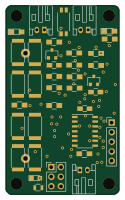 AVR/Arduino
V4
stuartpittaway
30 × 50 mm38 parts2LCC-BY-NC-4.01.1k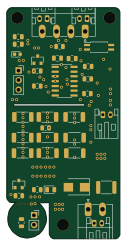 AVR/Arduino
ModuleV450
30 × 61.4 mm39 parts2LCC-BY-NC-4.01.1k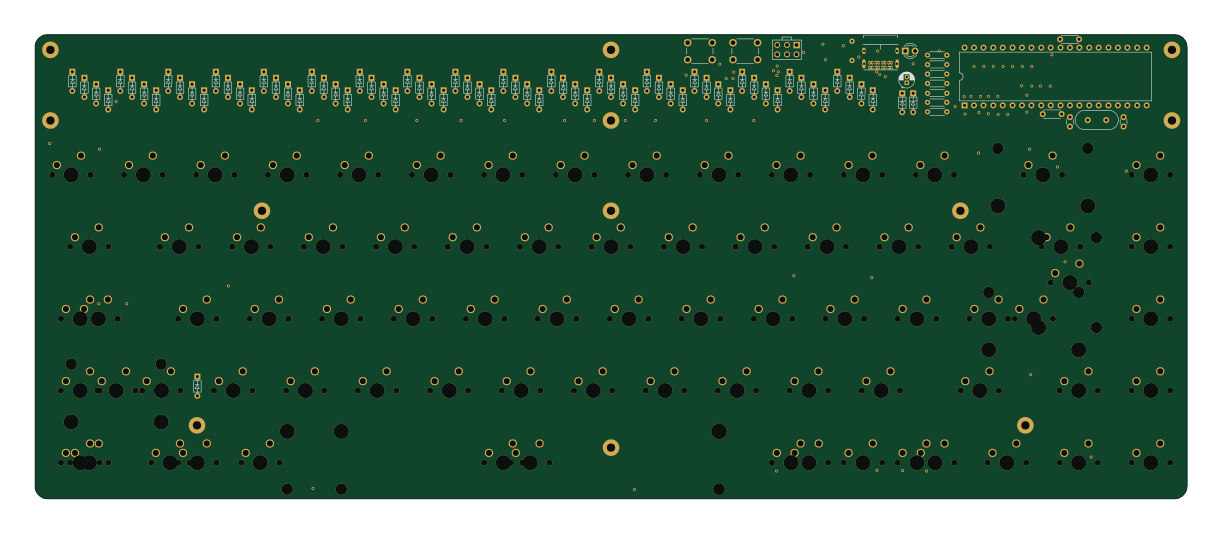 AVR/Arduino
Discipline
coseyfannitutti
304.9 × 122.8 mm170 parts2LCC-BY-NC-4.01.0k