
EE256Project

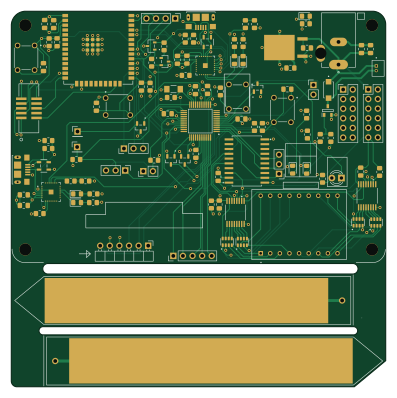
About the EE256Project PCB
EE256Project is an open source ESP32 PCB design by satomm1, published on GitHub under the MIT license. It is a 4-layer board measuring 99 × 99.3 mm, with 110 components from 51 distinct parts.
Its main chip is the 1965-ESP32-WROOM-32E-N8, from the ESP32 family. Other key parts include the 150-PIC32MK0128MCA048-I/Y8X, AZ1084CD-3.3TRG1DI, SoilProbe1, 336-5890-1 and 296-1070-1. By type, the board carries 36 resistors, 23 capacitors, 13 connectors, 12 ICs, 10 diodes and 7 transistors.
From the project
Project for EE256 at Stanford University, Autumn 2023
This folder contains the electrical schematic and PCB layout of the project. The project is available as a KiCad file.
My board produces the soil moisture probes on the PCB. These are cut from the PCB after production via a notcher.
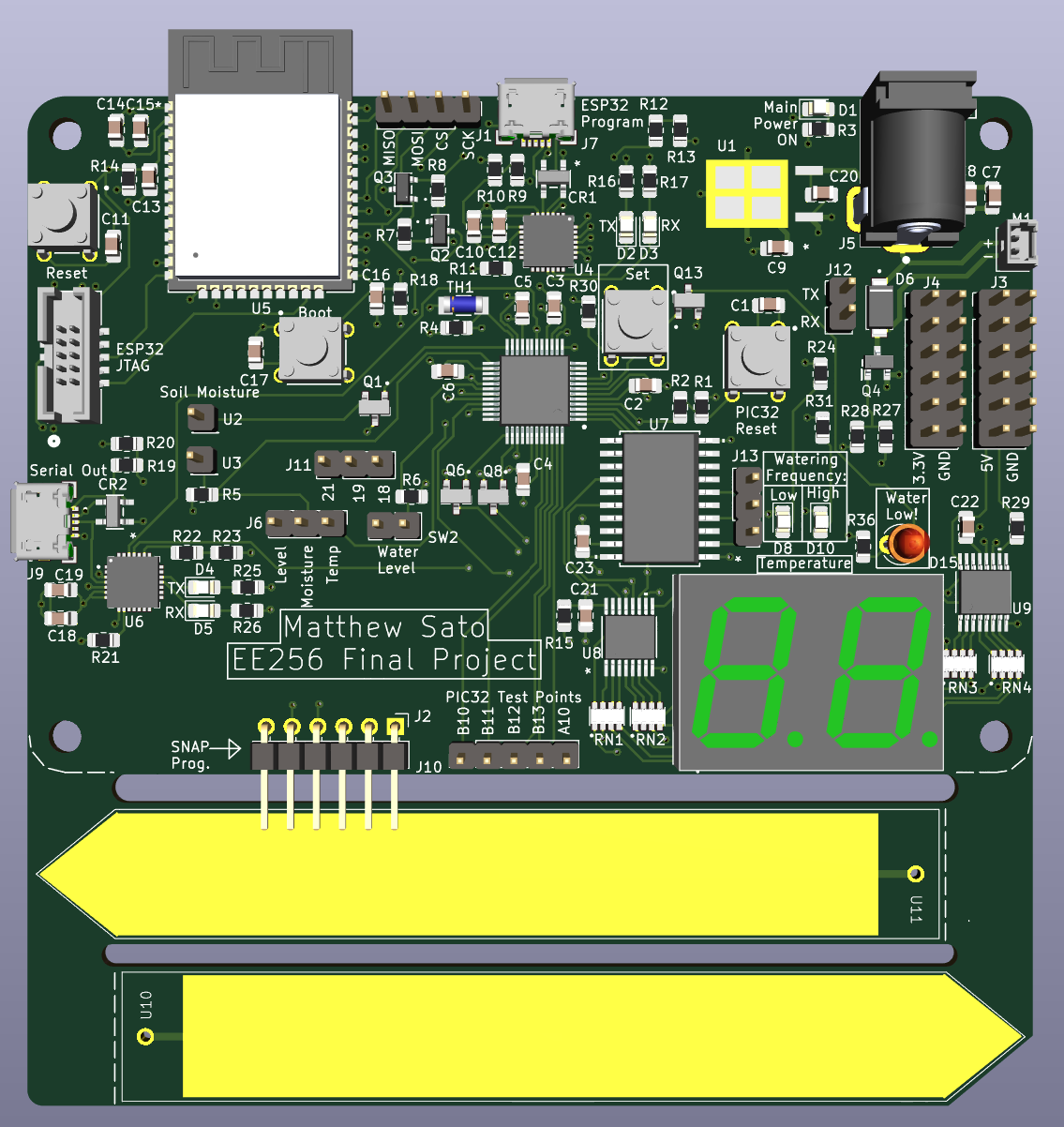
Main components on the EE256Project
EE256Project bill of materials (BOM)
110 components, 51 distinct parts — part numbers from the project's BOM.
| Qty | Part | Footprint | Refs |
|---|---|---|---|
| 1 | 150-PIC32MK0128MCA048-I/Y8X PIC32MK0128MCA048-I_Y8X | PIC32MK0128MCA048-I_Y8X__QFP50P900X900X120-48M | IC1 |
| 1 | AZ1084CD-3.3TRG1DI AZ1084CD-3.3TRG1 | TO-252-3_6P6X6P1_DIO-M | U1 |
| 2 | SoilProbe1 | PinHeader_1x01_P2.54mm_Vertical | U2, U3 |
| 2 | 336-5890-1 CP2102N-A02-GQFN28R | CP2102-28__IC_CP2102N-A02-GQFN28R | U4, U6 |
| 1 | 1965-ESP32-WROOM-32E-N8 ESP32-WROOM-32E-N8 | ESP32WROOM32E_EXP | U5 |
| 1 | 296-1070-1 SN74ACT244DWR | DW20-M | U7 |
| 2 | 296-SN74HCS595PWR SN74HCS595PWR | TSSOP16_PW_TEX-M | U8, U9 |
| 2 | ~ | SoilMoistureProbe | U10, U11 |
| 1 | WM1731 Water Pump | MOLEX_53047-0210 | M1 |
| 4 | 4878-2N7002 2N7002 | 2N7002__SOT95P240X111-3N | Q1, Q6, Q8, Q13 |
| 2 | 641-1790-1 SS8050-G | SS8050-G__TRAN_SS8050-G_CIP-L | Q2, Q3 |
| 1 | FDN335N | FDN335N__SOT95P251X112-3N | Q4 |
| 1 | 10129378-910001BLF SPI1 Test Point | PinHeader_1x04_P2.54mm_Vertical | J1 |
| 1 | 2057-PH1RB-06-UA Programmer | PinHeader_1x06_P2.54mm_Horizontal | J2 |
| 1 | 10129381-912001BLF 5V Supply Points | PinHeader_2x06_P2.54mm_Vertical | J3 |
| 1 | 10129381-912001BLF 3.3V Supply Points | PinHeader_2x06_P2.54mm_Vertical | J4 |
| 1 | CP-002A Barrel_Jack | CUI_PJ-002A | J5 |
| 1 | Sensor Test Points | PinHeader_1x03_P2.54mm_Vertical | J6 |
| 2 | 609-4616-1 USB_B_Micro | AMPHENOL_10118193-0001LF | J7, J9 |
| 1 | 1175-1735 3221-10-0300-00 | JTAG__CONN10_3221-10-0300-00_CNC | J8 |
Show 31 more
| Qty | Part | Footprint | Refs |
|---|---|---|---|
| 1 | 10129378-910001BLF PIC32 Test Points | PinHeader_1x05_P2.54mm_Vertical | J10 |
| 1 | 10129378-910001BLF ESP32 Test Points | PinHeader_1x03_P2.54mm_Vertical | J11 |
| 1 | UART Test Point | PinHeader_1x02_P2.54mm_Vertical | J12 |
| 1 | 10129378-910001BLF Shift Register Test Point | PinHeader_1x03_P2.54mm_Vertical | J13 |
| 2 | F2715 SP0503BAHTG | TVS-SP05_LTF-M | CR1, CR2 |
| 4 | SW402 B3F-1020 | SW_B3F-1000_OMR | SW1, SW3, SW4, SW5 |
| 1 | P10865S Water Level | PinHeader_1x02_P2.54mm_Vertical | SW2 |
| 1 | F11794 10k @ 25 C | SM_USS-M | TH1 |
| 1 | 732-4984-1 Main Power On | LED_0805_2012Metric_Pad1.15x1.40mm_HandSolder | D1 |
| 2 | 732-4984-1 LED | LED_0805_2012Metric_Pad1.15x1.40mm_HandSolder | D2, D3 |
| 1 | 732-4984-1 TX Indicator | LED_0805_2012Metric_Pad1.15x1.40mm_HandSolder | D4 |
| 1 | 732-4984-1 RX Indicator | LED_0805_2012Metric_Pad1.15x1.40mm_HandSolder | D5 |
| 1 | 1801-RS2MAL RS2MAL | SODFL5226X100N | D6 |
| 1 | 516-1209-5 HDSP-523G | LED_HDSP-523G | D7 |
| 1 | 732-4984-1 Set Level 1 | LED_0805_2012Metric_Pad1.15x1.40mm_HandSolder | D8 |
| 1 | 732-4984-1 Set Level 2 | LED_0805_2012Metric_Pad1.15x1.40mm_HandSolder | D10 |
| 1 | 732-11401 Water Level Low | LED_D3.0mm | D15 |
| 17 | 1276-1003-1 0.1 uF | C_0805_2012Metric_Pad1.18x1.45mm_HandSolder | C1, C2, C3, C4, C5, C6, C7, C10 +9 |
| 2 | 1276-1096-1 10 uF | C_0805_2012Metric_Pad1.18x1.45mm_HandSolder | C8, C20 |
| 2 | 1276-1100-1 22 uF | C_0805_2012Metric_Pad1.18x1.45mm_HandSolder | C9, C14 |
| 2 | 1276-1244-1 4.7 uF | C_0805_2012Metric_Pad1.18x1.45mm_HandSolder | C12, C19 |
| 7 | RMCF0805FT10K0 10k | R_0805_2012Metric_Pad1.20x1.40mm_HandSolder | R1, R4, R5, R7, R8, R14, R18 |
| 9 | RMCF0805FT1K00 1k | R_0805_2012Metric_Pad1.20x1.40mm_HandSolder | R2, R6, R11, R12, R15, R21, R22, R29 +1 |
| 7 | RMCF0805FT100R 100R | R_0805_2012Metric_Pad1.20x1.40mm_HandSolder | R3, R16, R17, R24, R25, R26, R31 |
| 2 | RMCF0805FT22K1 22.1k | R_0805_2012Metric_Pad1.20x1.40mm_HandSolder | R9, R19 |
| 2 | RMCF0805FT47K5 47.5k | R_0805_2012Metric_Pad1.20x1.40mm_HandSolder | R10, R20 |
| 2 | RMCF0805ZT0R00 0R | R_0805_2012Metric_Pad1.20x1.40mm_HandSolder | R13, R23 |
| 1 | RMCF0805FT220R 220R | R_0805_2012Metric_Pad1.20x1.40mm_HandSolder | R27 |
| 1 | RMCF0805FT220K 220k | R_0805_2012Metric_Pad1.20x1.40mm_HandSolder | R28 |
| 1 | 738-RMCF0805FT27R0 27R | R_0805_2012Metric_Pad1.20x1.40mm_HandSolder | R36 |
| 4 | 118-CAY16-301J4LF CAY16-301J4LF | RESCAF80P320X160X60-8N | RN1, RN2, RN3, RN4 |
EE256Project design files
The KiCad project lives in the satomm1/EE256Project repository on GitHub; these links point at the commit this page was built from.
EE256Project: common questions
What microcontroller does the EE256Project use?
The EE256Project is built around the 1965-ESP32-WROOM-32E-N8, from the ESP32 family.
How big is the EE256Project PCB?
The EE256Project measures 99 × 99.3 mm, has 4 copper layers and is 1.769872 mm thick.
How many components are on the EE256Project?
110 components, from 51 distinct parts, with part numbers taken from the project's own BOM. The full bill of materials is listed on this page.
Where can I download the EE256Project design files?
From the satomm1/EE256Project repository on GitHub, which has the KiCad layout, the schematic and the BOM; the links under Design files point to each one.
Can I use the EE256Project design in my own project?
Yes, under the terms of its MIT license, which satomm1 chose for the repository.
Can I test firmware for the EE256Project without the hardware?
Yes. HardLabs builds a simulation of the board from its netlist and BOM, so you can run and debug ESP32 firmware against it before you order a PCB.
Similar boards
 ESP32
OSO-BOOK-B1
joeycastillo
85 × 115 mm65 parts2LCC-BY-SA-4.08.1k ESP32
Powertrain
byrantech
64 × 45.4 mm171 parts4LMIT4.3k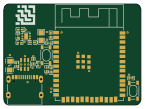 ESP32
Esp32 minimal
atopile
36.2 × 26.8 mm20 parts2LMIT4.0k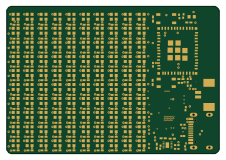 ESP32
Badge
56.3 × 39 mm239 parts4LMIT4.0k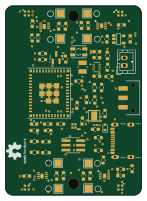 ESP32
Racer
StuckAtPrototype
36 × 50.2 mm70 parts4LApache-2.03.8k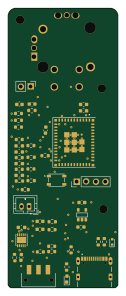 ESP32
Controller
29 × 74 mm58 parts4LApache-2.03.8k