
Dancing dots

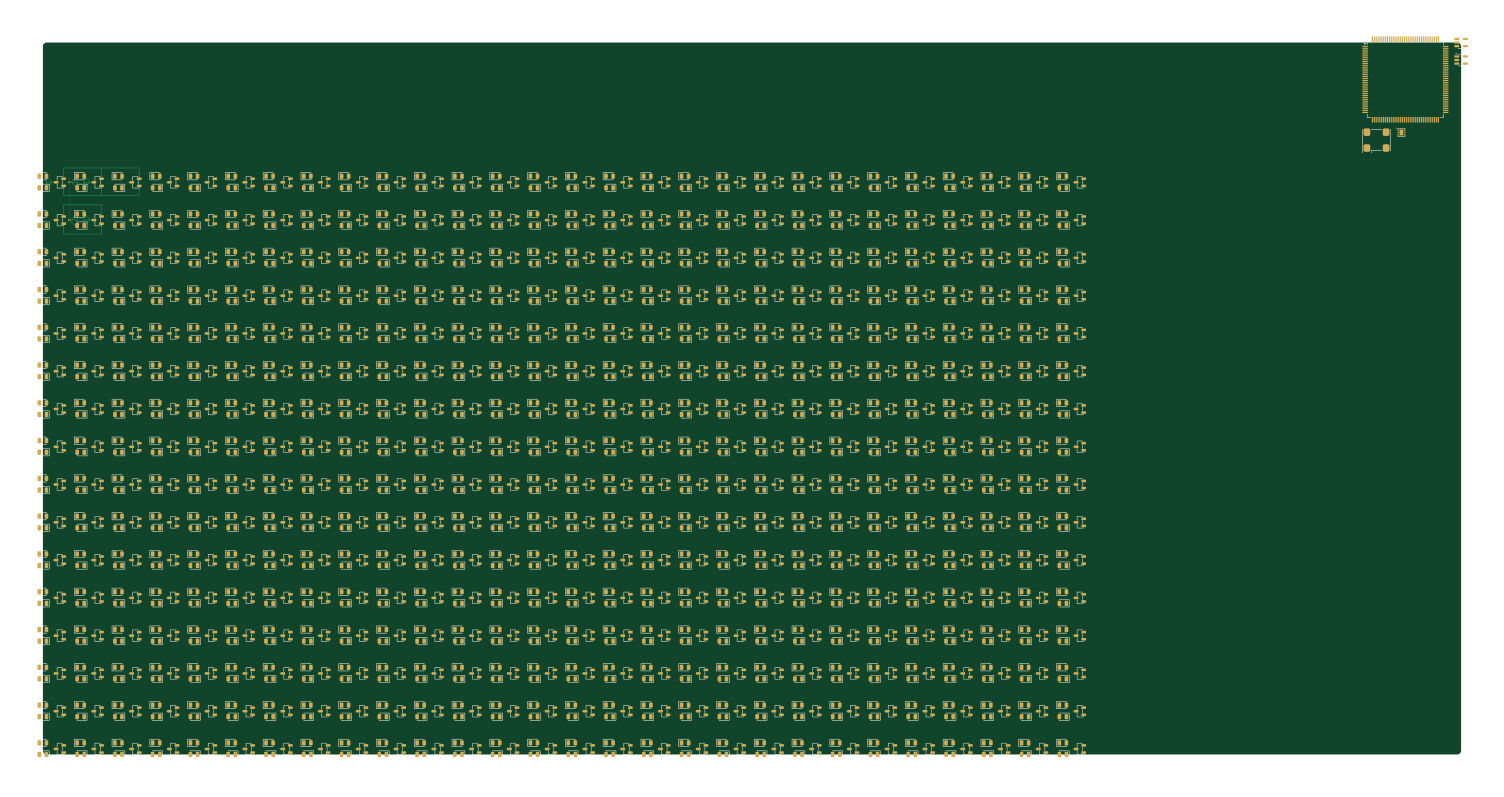
About the Dancing dots PCB
Dancing dots is an open source FPGA PCB design by softminus, published on GitHub. It is a 2-layer board measuring 375.4 × 188.5 mm, with 1349 components from 8 distinct parts.
Its main chip is the ICE40HX4K-TQ144, from the FPGA family. Other key parts include the TLV75733PDRV, TLV75712PDBV and TLV75725PDBV. By type, the board carries 4 ICs and 1 crystal.
From the project
The Fastest Flip Dot in the West
cargo run --release 28x16 bad_apple.yuv --no-gui
Main components on the Dancing dots
Dancing dots bill of materials (BOM)
1349 components, 8 distinct parts.
| Qty | Part | Footprint | Refs |
|---|---|---|---|
| 1 | TLV75733PDRV | WSON-6-1EP_2x2mm_P0.65mm_EP1x1.6mm | U1 |
| 1 | TLV75712PDBV | SOT-23-5 | U2 |
| 1 | ICE40HX4K-TQ144 | TQFP-144_20x20mm_P0.5mm | U3 |
| 1 | TLV75725PDBV | SOT-23-5 | U4 |
| 1 | SG-8002CA | Oscillator_SMD_SeikoEpson_SG8002CA-4Pin_7.0x5.0mm | Y1 |
| 448 | Green Hubei KENTO Elec | D_0805 | DG1, DG2, DG3, DG4, DG5, DG6, DG7, DG8 +440 |
| 448 | Red Foshan NationStar Optoelectronics | D_0805 | DR1, DR2, DR3, DR4, DR5, DR6, DR7, DR8 +440 |
| 448 | BAT54S_C7420333 hongjiacheng | SOT-23-3_L2.9-W1.3-P1.90-LS2.4-BR | DS1, DS2, DS3, DS4, DS5, DS6, DS7, DS8 +440 |
Dancing dots design files
The KiCad project lives in the softminus/dancing_dots repository on GitHub; these links point at the commit this page was built from.
Dancing dots: common questions
What microcontroller does the Dancing dots use?
The Dancing dots is built around the ICE40HX4K-TQ144, from the FPGA family.
How big is the Dancing dots PCB?
The Dancing dots measures 375.4 × 188.5 mm, has 2 copper layers and is 1.6 mm thick.
How many components are on the Dancing dots?
1349 components, from 8 distinct parts. The full bill of materials is listed on this page.
Where can I download the Dancing dots design files?
From the softminus/dancing_dots repository on GitHub, which has the KiCad layout and the schematic; the links under Design files point to each one.
Can I use the Dancing dots design in my own project?
The repository has no license, so all rights stay with softminus. Use it as a reference, and ask the author before reusing the design.
Can I test firmware for the Dancing dots without the hardware?
Yes. HardLabs builds a simulation of the board from its netlist and BOM, so you can run and debug FPGA firmware against it before you order a PCB.
Similar boards
 FPGA
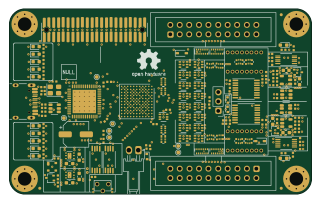
FPGABase board
GlasgowEmbedded
80 × 49 mm222 parts4L0BSD2.2k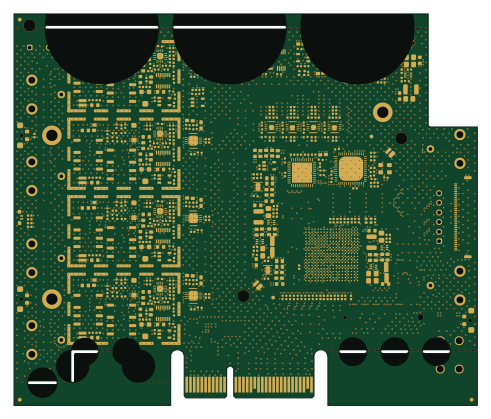 FPGA
FPGAThunderscope Rev5.3
EEVengers
122.5 × 103.5 mm817 parts6LMIT1.3k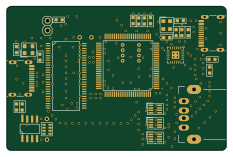 FPGA
FPGAUsb sniffer
ataradov
58.2 × 38.1 mm86 parts2LBSD-3-Clause1.3k FPGA
FPGATomu, I'm
theacodes
13 × 9.4 mm40 parts4LMIT1.1k FPGA
FPGAIcepi zero
cheyao
65 × 30 mm143 parts4LSHL-2.1828 FPGA
FPGAGcvideo
ikorb
49 × 30 mm44 parts4LNo license765