
Icepi zero

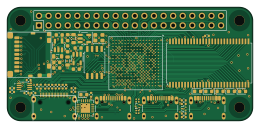
About the Icepi zero PCB
Icepi zero is an open source FPGA PCB design by cheyao, published on GitHub under the SHL-2.1 license. It is a 4-layer board measuring 65 × 30 mm, with 143 components from 31 distinct parts.
Its main chip is the ECP5-CABGA256, from the FPGA family. Other key parts include the TLV62569DBV, TPD2EUSB30A, PCA9306DC1, FT231XQ and W9825G6KH. By type, the board carries 54 capacitors, 51 resistors, 14 diodes, 12 ICs, 5 connectors and 4 inductors.
It belongs with the dev boards & breakouts and usb & debug tools designs in this gallery.
From the project
An ECP5 FPGA Dev Board in a Pi Zero form
If you are a student/educational institute, send me an email at cyao at duck.com and I'll give an educational discount of $65!
We also got a Discord server! Feel free to ask any questions here.
The Icepi Zero is an FPGA development board in the popular Raspberry Pi Zero form factor. It carries a Lattice ECP5 25F, enabling powerful designs while keeping a small portable size. It also has a GPDI mini (General Purpose Display Interface, same as the one on the Pi Zero) port allowing easy digital video output.
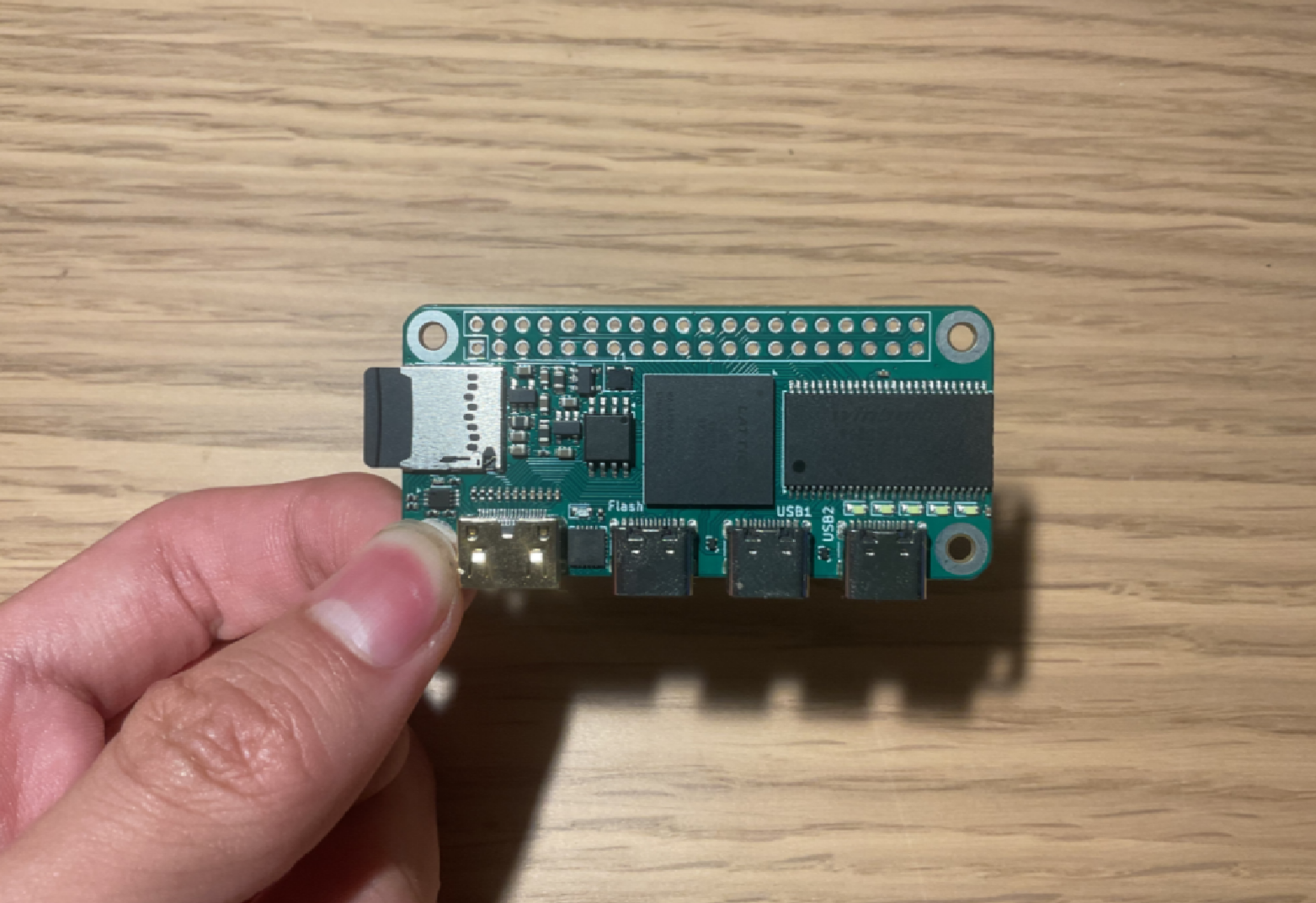
Main components on the Icepi zero
Icepi zero bill of materials (BOM)
143 components, 31 distinct parts — part numbers from the project's BOM.
| Qty | Part | Footprint | Refs |
|---|---|---|---|
| 1 | ECP5-CABGA256 | BGA-256_14.0x14.0mm_Layout16x16_P0.8mm_Ball0.45mm_Pad0.32mm_NSMD | U1 |
| 3 | TLV62569DBV | SOT-23-5 | U2, U3, U4 |
| 4 | TPD2EUSB30A | Texas_DRT-3 | U5, U7, U8, U10 |
| 1 | PCA9306DC1 | VSSOP-8_2.3x2mm_P0.5mm | U6 |
| 1 | FT231XQ | QFN-20-1EP_4x4mm_P0.5mm_EP2.5x2.5mm | U9 |
| 1 | W9825G6KH | TSOP-II-54_22.2x10.16mm_P0.8mm | U11 |
| 1 | W25Q128JVS | SOIC-8_5.3x5.3mm_P1.27mm | U12 |
| 1 | C390526 SG-8018CG 50.000000MHz | Oscillator_SMD_SiT_PQFN-4Pin_2.5x2.0mm | Y1 |
| 1 | GPDI_C_1.3 | XKB Connection A71-05H4-111N1 | J2 |
| 3 | USB_C_RECEPTACLE_USB2.0_14P USB_C_Receptacle_USB2.0_14P | USB_C_Receptacle_GCT_USB4105-xx-A_16P_TopMnt_Horizontal | J3, J4, J5 |
| 1 | MICRO_SD_CARD_DET2 Micro_SD_Card_Det2 | microSD_HC_SOFNG_TF-008 | J6 |
| 2 | SW_Push | switch_button_TS-1088-AR02016 | SW1, SW2 |
| 5 | C2290 WHITE | LED_0603_1608Metric | D1, D2, D3, D4, D5 |
| 8 | 1N914WT | D_SOD-523 | D6, D7, D8, D9, D10, D11, D12, D13 |
| 1 | C2286 RED | LED_0603_1608Metric | D14 |
| 1 | C74480 100R@100MHz | L_0805_2012Metric | FB1 |
| 3 | 2.2UH 2.2uH | L_0805_2012Metric | L1, L2, L3 |
| 26 | 100NF 100nF | C_0402_1005Metric | C1, C5, C6, C7, C8, C9, C10, C14 +18 |
| 13 | 10UF 10uF | C_0603_1608Metric | C2, C3, C4, C15, C21, C22, C23, C30 +5 |
| 7 | 22UF 22uF | C_0603_1608Metric | C11, C12, C13, C18, C19, C33, C45 |
Show 11 more
| Qty | Part | Footprint | Refs |
|---|---|---|---|
| 8 | 22NF 22nF | C_0402_1005Metric | C36, C37, C38, C39, C40, C41, C42, C43 |
| 10 | 1.1K 1.1k | R_0402_1005Metric | R1, R2, R3, R4, R5, R20, R21, R32 +2 |
| 6 | 10K 10k | R_0402_1005Metric | R6, R13, R44, R45, R46, R47 |
| 1 | 12K 12k | R_0402_1005Metric | R7 |
| 8 | 15K 15k | R_0402_1005Metric | R8, R10, R22, R23, R34, R35, R49, R50 |
| 9 | 4.7K 4.7k | R_0402_1005Metric | R9, R16, R17, R38, R39, R40, R41, R43 +1 |
| 3 | 3.3K 3.3k | R_0402_1005Metric | R11, R18, R19 |
| 3 | 470 | R_0402_1005Metric | R12, R14, R51 |
| 1 | 100K 100k | R_0402_1005Metric | R15 |
| 6 | 5.1K 5.1k | R_0402_1005Metric | R24, R25, R26, R29, R36, R37 |
| 4 | 27 | R_0201_0603Metric | R27, R28, R30, R31 |
Icepi zero design files
The KiCad project lives in the cheyao/icepi-zero repository on GitHub; these links point at the commit this page was built from.
Icepi zero: common questions
What microcontroller does the Icepi zero use?
The Icepi zero is built around the ECP5-CABGA256, from the FPGA family.
How big is the Icepi zero PCB?
The Icepi zero measures 65 × 30 mm, has 4 copper layers and is 1.6458 mm thick.
How many components are on the Icepi zero?
143 components, from 31 distinct parts, with part numbers taken from the project's own BOM. The full bill of materials is listed on this page.
Where can I download the Icepi zero design files?
From the cheyao/icepi-zero repository on GitHub, which has the KiCad layout, the schematic and the BOM; the links under Design files point to each one.
Can I use the Icepi zero design in my own project?
It is published under SHL-2.1, which limits how it may be reused; read the license before building on it.
Can I test firmware for the Icepi zero without the hardware?
Yes. HardLabs builds a simulation of the board from its netlist and BOM, so you can run and debug FPGA firmware against it before you order a PCB.
Similar boards
 FPGA
Base board
GlasgowEmbedded
80 × 49 mm222 parts4L0BSD2.2k FPGA
Thunderscope Rev5.3
EEVengers
122.5 × 103.5 mm817 parts6LMIT1.3k FPGA
Usb sniffer
ataradov
58.2 × 38.1 mm86 parts2LBSD-3-Clause1.3k FPGA
Tomu, I'm
theacodes
13 × 9.4 mm40 parts4LMIT1.1k FPGA
Gcvideo
ikorb
49 × 30 mm44 parts4LNo license765 FPGA
Sd2snes
mrehkopf
101.5 × 83 mm147 partsGPL-2.0717