
SUMO

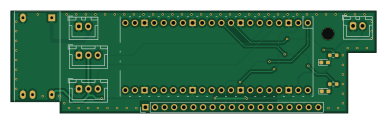
About the SUMO PCB
SUMO is an open source RP2040/RP2350 PCB design by TsutsumiHiroki, published on GitHub. It is a 2-layer board measuring 96.5 × 26.9 mm, with 13 components from 8 distinct parts.
Its main chip is the Pico, from the RP2040/RP2350 family. By type, the board carries 5 connectors, 4 diodes, 2 ICs and 2 resistors.
From the project
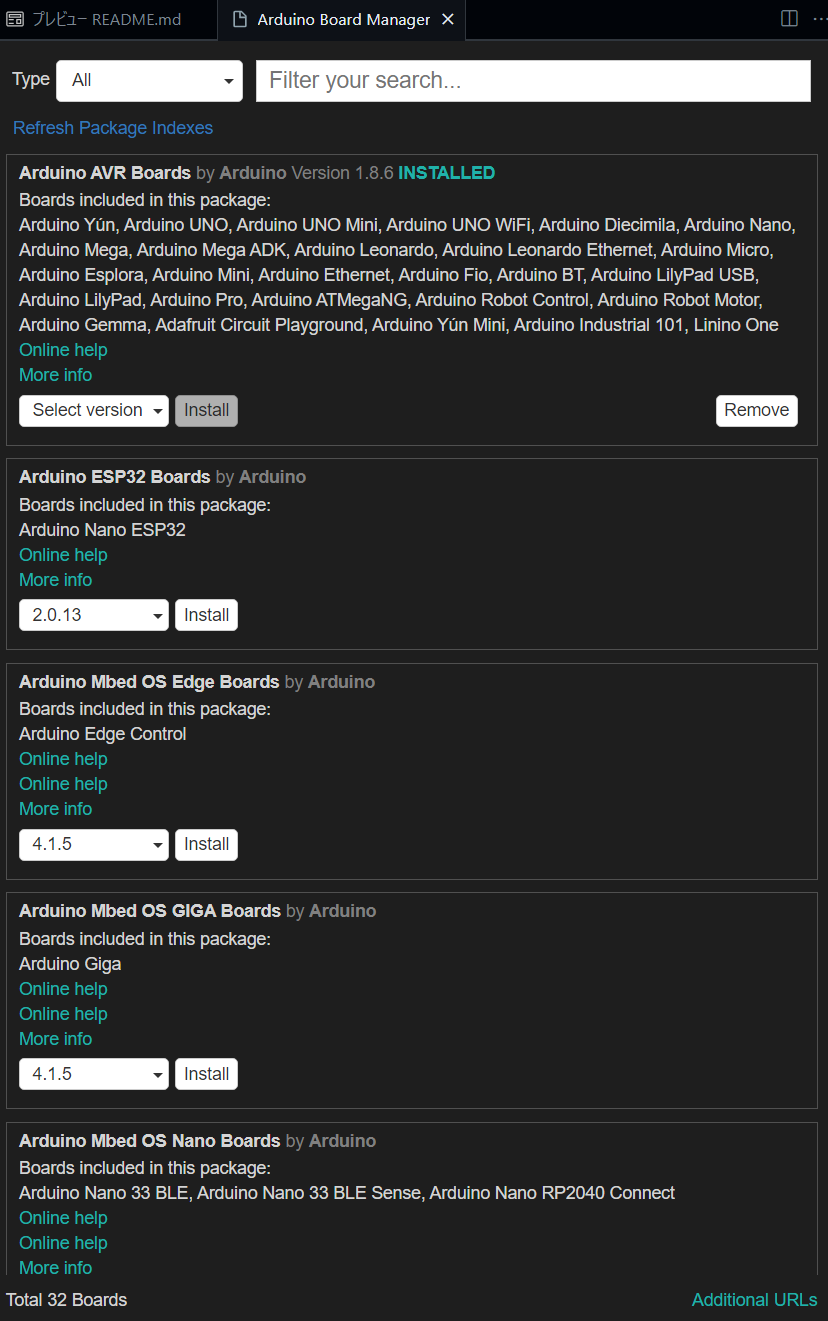
Ctrl + Shift + P でコマンドパレットを呼び出し,「Arduino: Board Manager」を検索し,選択
Ctrl + Shift + P でコマンドパレットを呼び出し,「Arduino: Board Manager」を検索し,選択
2. Additional URLs に Arduino Pico を追加 1. 右下,Additional URLs を選択 2. 「項目の追加」を選択
https://github.com/earlephilhower/arduino-pico/releases/download/global/packagerp2040index.json
3. Raspberry Pi Pico/RP2040 を追加 1. 再度,Arduino Board Manager を選択 2. 画像と同じ Raspberry Pi Pico/RP2040 をインストール
4. Arduino Board Configuration の設定 1. Ctrl + Shift + P でコマンドパレットを呼び出し,「Arduino: Board Config」を検索し,選択 2. 「Selected Board」に「Pico」と検索し「Raspberry Pi Pico」を選択.少し待つとその他設定が現れるが特に初期設定からいじる必要はない.
Main components on the SUMO
SUMO bill of materials (BOM)
13 components, 8 distinct parts — part numbers from the project's BOM.
| Qty | Part | Footprint | Refs |
|---|---|---|---|
| 1 | ~ | 0AS1R5-4805 | U1 |
| 1 | Pico | RPi_Pico_SMD_TH | U2 |
| 2 | CONN_01X03 Conn_01x03 | JST_XH_B3B-XH-A_1x03_P2.50mm_Vertical | J1, J4 |
| 2 | CONN_01X02 Conn_01x02 | JST_XH_B2B-XH-A_1x02_P2.50mm_Vertical | J3, J6 |
| 1 | CONN_01X19_PIN Conn_01x19_Pin | PinHeader_1x19_P2.54mm_Vertical | J7 |
| 2 | D | D_SMA_Handsoldering | D1, D4 |
| 2 | LED | LED_0603_1608Metric_Pad1.05x0.95mm_HandSolder | D2, D3 |
| 2 | R | R_0603_1608Metric_Pad0.98x0.95mm_HandSolder | R1, R2 |
SUMO design files
The KiCad project lives in the TsutsumiHiroki/SUMO repository on GitHub; these links point at the commit this page was built from.
SUMO: common questions
What microcontroller does the SUMO use?
The SUMO is built around the Pico, from the RP2040/RP2350 family.
How big is the SUMO PCB?
The SUMO measures 96.5 × 26.9 mm, has 2 copper layers and is 1.6 mm thick.
How many components are on the SUMO?
13 components, from 8 distinct parts, with part numbers taken from the project's own BOM. The full bill of materials is listed on this page.
Where can I download the SUMO design files?
From the TsutsumiHiroki/SUMO repository on GitHub, which has the KiCad layout, the schematic and the BOM; the links under Design files point to each one.
Can I use the SUMO design in my own project?
The repository has no license, so all rights stay with TsutsumiHiroki. Use it as a reference, and ask the author before reusing the design.
Can I test firmware for the SUMO without the hardware?
Yes. HardLabs builds a simulation of the board from its netlist and BOM, so you can run and debug RP2040/RP2350 firmware against it before you order a PCB.
Similar boards
 RP2040/RP2350
Open Book Abridged Edition
joeycastillo
85 × 115 mm29 parts2LCC-BY-SA-4.08.1k RP2040/RP2350
Corne
foostan
277.2 × 107.5 mm164 parts2LCC-BY-4.07.7k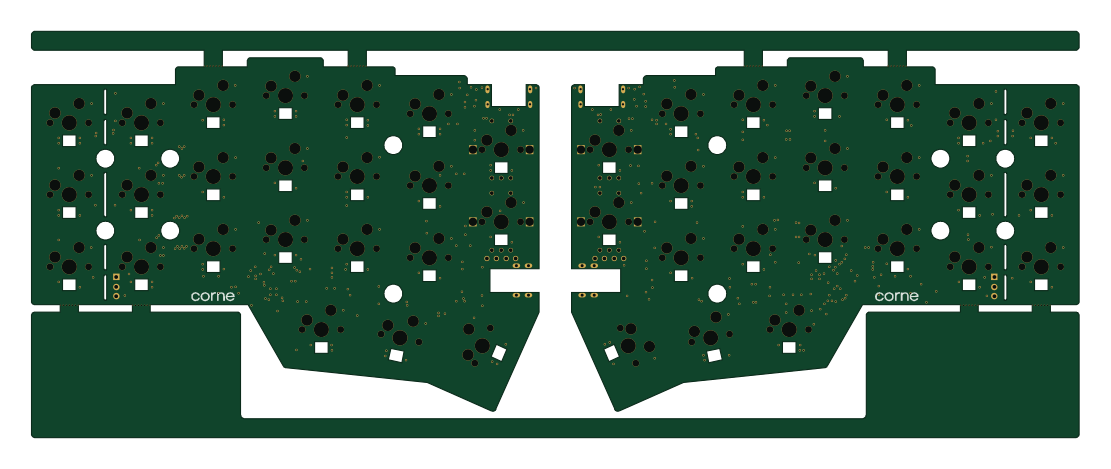 RP2040/RP2350
Corne
277.2 × 107.5 mm164 parts2LCC-BY-4.07.7k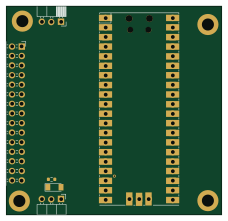 RP2040/RP2350
LogicAnalyzer
gusmanb
57 × 55.2 mm6 parts2LGPL-3.05.0k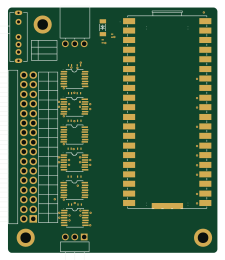 RP2040/RP2350
Jitx design
55.5 × 65 mm26 parts4LGPL-3.05.0k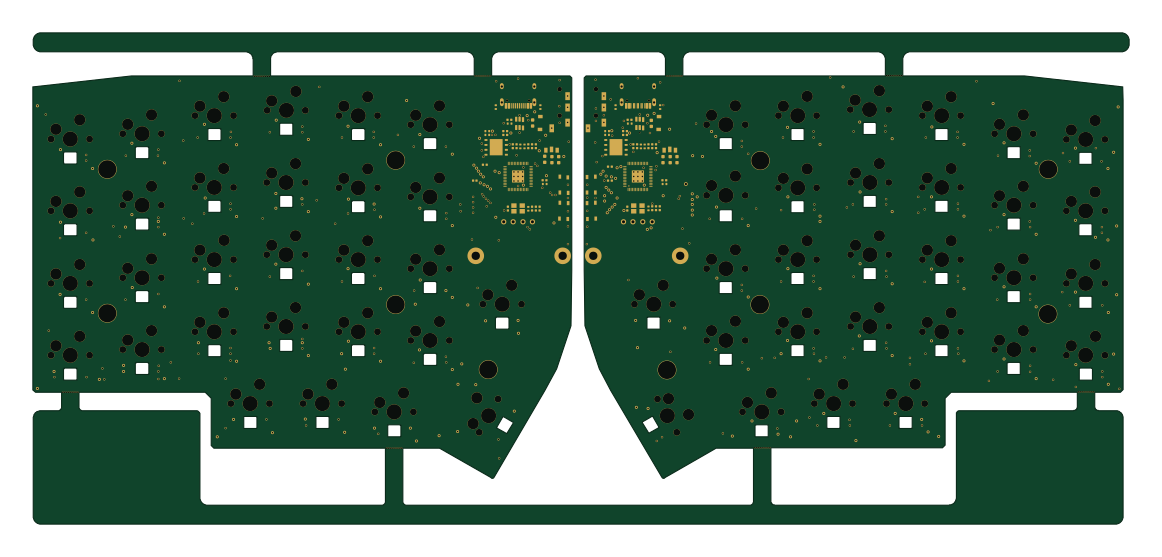 RP2040/RP2350
Pro V2
kata0510
290.1 × 130 mm270 parts2LMIT2.3k