Backplane

About the Backplane PCB
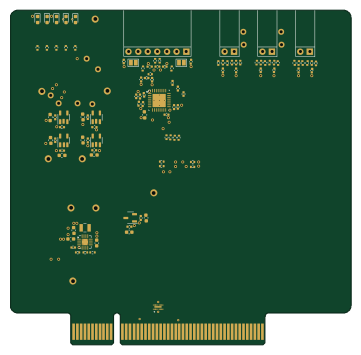
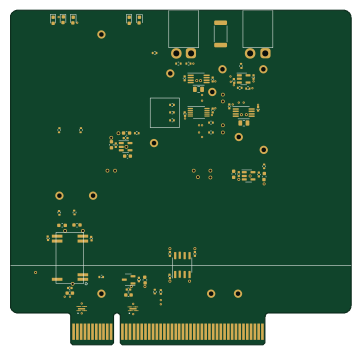
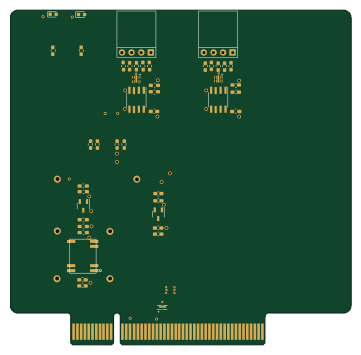
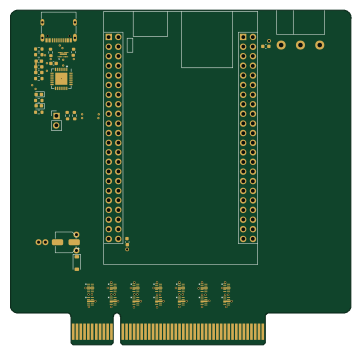
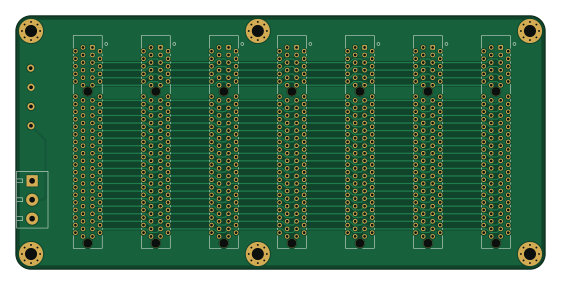
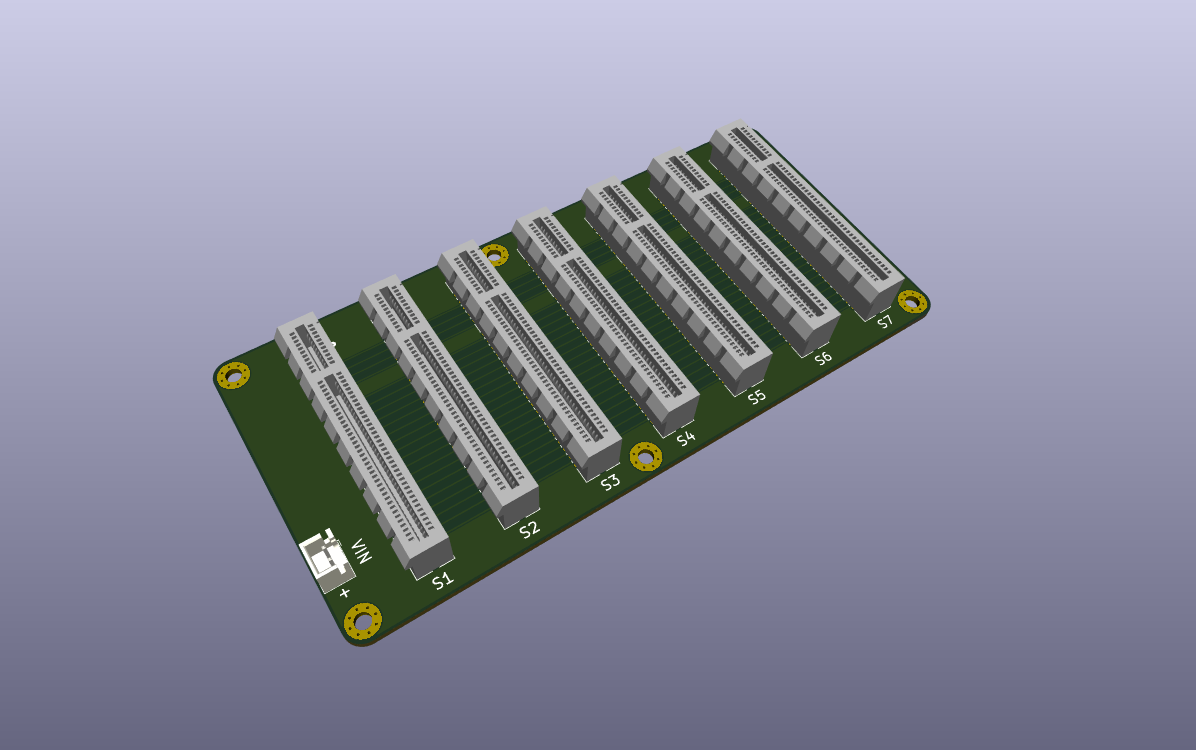
Backplane is an open source PCB design by zapta, published on GitHub. It is a 4-layer board measuring 140 × 67 mm, with 12 components from 3 distinct parts.
By type, the board carries 7 switches, 4 test points and 1 connector.
From the project
A modular data acquisition system.
The backplane is is a passive motherboard that accepts plugin boards with the functionality of the DAQ system.
Passive design, all active components are on plugin boards. Using common and inexpensive PCIE X8 connectors (98 pins). However, the power and signals are not compatible with PCIE. Symmetric slots. Slots are interchangeable and boards can be plugged in any slot. When applicable, conflict resolution is delegated to the plugin boards, e.g. using configuration jumpers. Scalable. Versions with higher/lower number of slots can be easily derived. 12-24VDC Power is provided via an on board…
Backplane bill of materials (BOM)
12 components, 3 distinct parts — part numbers from the project's BOM.
| Qty | Part | Footprint | Refs |
|---|---|---|---|
| 1 | CONN_01X07_PIN Conn_01x02_Pin | TerminalBlock_3P_7.62mm | J1 |
| 7 | pcie_98 | pcie_98_socket | S1, S2, S3, S4, S5, S6, S7 |
| 4 | TestPoint | Test_Pad | TP1, TP2, TP3, TP4 |
Backplane design files
The KiCad project lives in the zapta/daq repository on GitHub; these links point at the commit this page was built from.
Backplane: common questions
How big is the Backplane PCB?
The Backplane measures 140 × 67 mm, has 4 copper layers and is 1.6 mm thick.
How many components are on the Backplane?
12 components, from 3 distinct parts, with part numbers taken from the project's own BOM. The full bill of materials is listed on this page.
Where can I download the Backplane design files?
From the zapta/daq repository on GitHub, which has the KiCad layout, the schematic and the BOM; the links under Design files point to each one.
Can I use the Backplane design in my own project?
The repository has no license, so all rights stay with zapta. Use it as a reference, and ask the author before reusing the design.