
AAQuad-Evolution

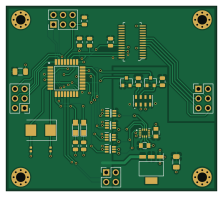
About the AAQuad-Evolution PCB
AAQuad-Evolution is an open source AVR/Arduino PCB design by Fberbari, published on GitHub under the MIT license. It is a 2-layer board measuring 55.6 × 48.8 mm, with 43 components from 22 distinct parts.
Its main chip is the ATMEGA328PB, from the AVR/Arduino family. Other key parts include the BMX160, MPL3115A2, levelShifter and PCA9685PW_112. By type, the board carries 17 capacitors, 8 ICs, 8 resistors, 4 connectors, 2 transistors and 2 diodes.
It belongs with the robotics & motion, power & battery and sensors designs in this gallery.
From the project
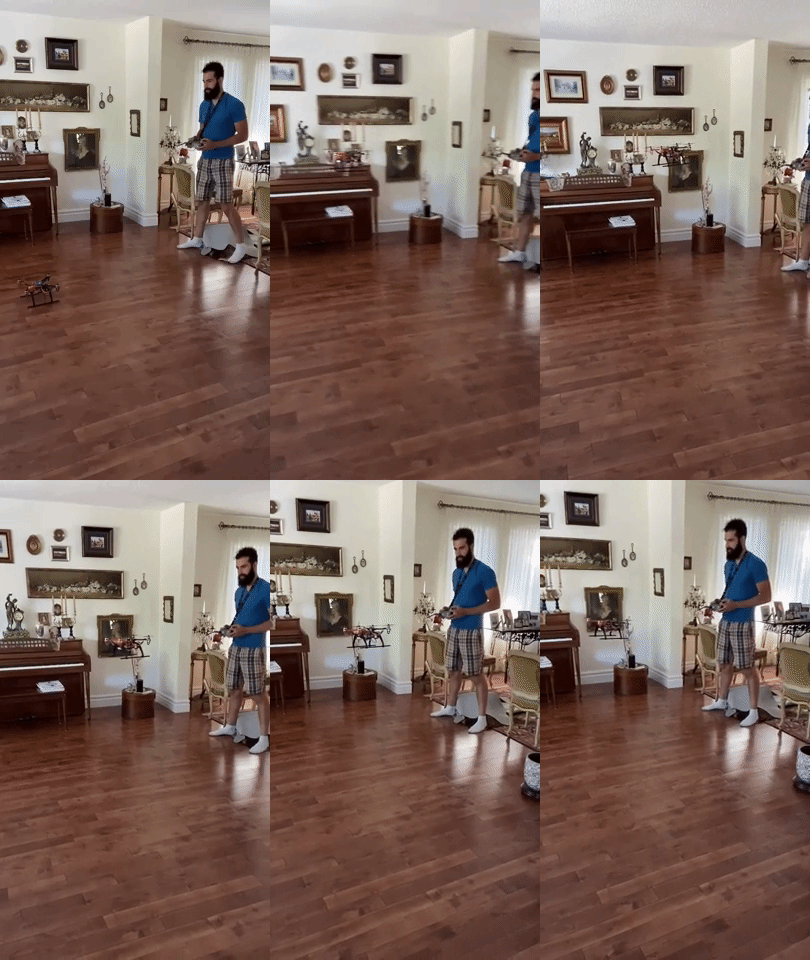
An original, "from scratch" quadcopter flight computer that was my favorite pet project for some time. Used it to learn all about flight and embedded development. It took a couple years but I eventually learned enough (and crashed enough) to get it working :) .
The AAQuad-Evolution is a flight computer I've designed to control a quadcopter. The computer takes care of continued stabilization in flight while leaving the pilot free to command roll, pitch, and yaw angles as well as altitude. The project is made up of a custom PCB, all the bare-metal C code that runs on the Atmega328pb processor and Matlab simulations used to design and tune the PID algorithms. This is very much a bare bones flight computer that is in no way as feature rich as BetaFlight or any of the other famous FOS flight controllers. Its advantage lies in its simplicity. Anyone with…
Main components on the AAQuad-Evolution
AAQuad-Evolution bill of materials (BOM)
43 components, 22 distinct parts — part numbers from the project's BOM.
| Qty | Part | Footprint | Refs |
|---|---|---|---|
| 1 | BMX160 | bmx160 | IC1 |
| 1 | MPL3115A2 | MPL3115A2 | IC2 |
| 4 | levelShifter | 74LVC1T45GW_125 | IC3, IC4, IC5, IC6 |
| 1 | ATMEGA328PB Atmega328pb | ATMEGA328PB-ANR | U1 |
| 1 | PCA9685PW_112 | TSSOP-28_W4.40mm | U2 |
| 2 | BSS138 | SOT-23 | Q1, Q2 |
| 1 | Crystal | Crystal_SMD_7050-2pin_7.0x5.0mm | Y1 |
| 1 | programmer | PinHeader_2x03_P2.54mm_Vertical | J1 |
| 1 | Receiver_Output | PinHeader_2x03_P2.54mm_Vertical | J2 |
| 1 | ESC_Input | PinHeader_2x03_P2.54mm_Vertical | J3 |
| 1 | ultrasonic | PinHeader_2x02_P2.54mm_Vertical | J4 |
| 1 | SPX1117M3-L-5-0_TR | SOT230P700X170-4N | PS1 |
| 1 | green | LED_0805_HandSoldering | D1 |
| 1 | red | LED_0805_HandSoldering | D2 |
| 6 | 0.1UF 0.1uF | C_0805 | C1, C3, C6, C7, C12, C13 |
| 3 | 10UF 10uF | C_0805 | C2, C4, C8 |
| 2 | 100UF 100uF | C_1206_3216Metric | C5, C9 |
| 2 | 33PF 33pF | C_0402_1005Metric | C10, C11 |
| 4 | 10UF 10uF | C_0805_2012Metric | C14, C15, C16, C17 |
| 4 | 10K | R_0805_2012Metric | R1, R5, R6, R7 |
Show 2 more
| Qty | Part | Footprint | Refs |
|---|---|---|---|
| 2 | 2K | R_0805_2012Metric | R2, R8 |
| 2 | 300 | R_0805_2012Metric | R3, R4 |
AAQuad-Evolution design files
The KiCad project lives in the Fberbari/AAQuad-Evolution repository on GitHub; these links point at the commit this page was built from.
AAQuad-Evolution: common questions
What microcontroller does the AAQuad-Evolution use?
The AAQuad-Evolution is built around the ATMEGA328PB, from the AVR/Arduino family.
How big is the AAQuad-Evolution PCB?
The AAQuad-Evolution measures 55.6 × 48.8 mm, has 2 copper layers and is 1.6 mm thick.
How many components are on the AAQuad-Evolution?
43 components, from 22 distinct parts, with part numbers taken from the project's own BOM. The full bill of materials is listed on this page.
Where can I download the AAQuad-Evolution design files?
From the Fberbari/AAQuad-Evolution repository on GitHub, which has the KiCad layout and the BOM; the links under Design files point to each one.
Can I use the AAQuad-Evolution design in my own project?
Yes, under the terms of its MIT license, which Fberbari chose for the repository.
Can I test firmware for the AAQuad-Evolution without the hardware?
Yes. HardLabs builds a simulation of the board from its netlist and BOM, so you can run and debug AVR/Arduino firmware against it before you order a PCB.
Similar boards
 AVR/Arduino
Magspoof
samyk
35 × 29 mm11 parts2LNo license4.2k AVR/Arduino
Redox keyboard
mattdibi
162.2 × 126.5 mm77 parts2LMIT2.0k AVR/Arduino
Labrador
espotek-org
36.8 × 34.7 mm75 parts2LNo license1.2k AVR/Arduino
V4
stuartpittaway
30 × 50 mm38 parts2LCC-BY-NC-4.01.1k AVR/Arduino
ModuleV450
30 × 61.4 mm39 parts2LCC-BY-NC-4.01.1k AVR/Arduino
Discipline
coseyfannitutti
304.9 × 122.8 mm170 parts2LCC-BY-NC-4.01.0k