
Fuzzyduckv1

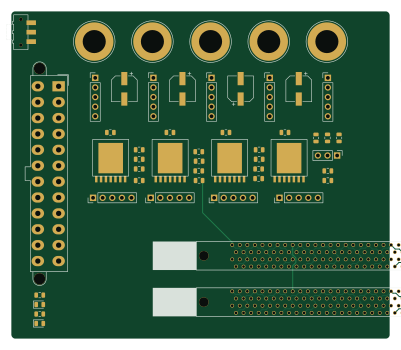
About the Fuzzyduckv1 PCB
Fuzzyduckv1 is an open source FPGA PCB design by Jegeva, published on GitHub. It is a 6-layer board measuring 100 × 86.5 mm, with 156 components from 46 distinct parts.
Its main chip is the XC7A35T-CSG324, from the FPGA family. Other key parts include the DIMM-240-DDR3, MIC69502, FT2232HQ, IS25LP128F and SiT8008B-100MHz. By type, the board carries 79 capacitors, 37 resistors, 23 connectors, 10 ICs, 3 diodes and 2 inductors.
From the project
If it quacks like a duck, and is fuzzy to the touch...
Main components on the Fuzzyduckv1
Fuzzyduckv1 bill of materials (BOM)
156 components, 46 distinct parts.
| Qty | Part | Footprint | Refs |
|---|---|---|---|
| 2 | DIMM-240-DDR3 | TE-1932000-DIMM-240 | U1, U6 |
| 4 | MIC69502 | MIC69502 | U2, U3, U4, U5 |
| 1 | XC7A35T-CSG324 | BGA-324_15.0x15.0mm_Layout18x18_P0.8mm_Ball0.5mm_Pad0.4mm_NSMD | U7 |
| 1 | FT2232HQ | VQFN-56-ftdi2232h-56q | U8 |
| 1 | IS25LP128F | SOIJ-8_5.3x5.3mm_P1.27mm | U9 |
| 1 | SiT8008B-100MHz | Crystal_SMD_EuroQuartz_MJ-4Pin_5.0x3.2mm | U10 |
| 1 | Crystal | Crystal_SMD_HC49-SD | Y1 |
| 1 | Conn_02x12_Top_Bottom | Molex_Mini-Fit_Jr_5566-24A2_2x12_P4.20mm_Vertical | J1 |
| 5 | Conn_01x01_Male | Banana_Jack_1Pin | J2, J4, J5, J8, J9 |
| 9 | Conn_01x05 | PinHeader_1x05_P2.54mm_Vertical | J3, J6, J7, J10, J11, J20, J21, J24 +1 |
| 1 | USB_B_Micro | USB_Micro-B_Molex_47346-0001 | J12 |
| 1 | Conn_02x32_Odd_Even | PinHeader_2x32_P2.54mm_Vertical | J13 |
| 4 | Conn_02x03_Odd_Even | PinHeader_2x03_P2.54mm_Vertical | J14, J15, J16, J19 |
| 1 | Conn_01x03_Male | PinHeader_1x03_P2.54mm_Vertical | J17 |
| 1 | Conn_01x02_Male | PinHeader_1x02_P2.54mm_Vertical | J18 |
| 1 | SW_SPDT | SW_SPDT_CK-JS102011SAQN | SW1 |
| 3 | LED | LED_0805_2012Metric | D1, D2, D3 |
| 2 | 600R/100MHz | L_0805_2012Metric | L1, L2 |
| 8 | 200uF Electrolytic | CP_Elec_6.3x5.4_Nichicon | C1, C2, C3, C4, C5, C6, C7, C8 |
| 4 | 47uF X7R | C_0805_2012Metric | C9, C10, C11, C77 |
Show 26 more
| Qty | Part | Footprint | Refs |
|---|---|---|---|
| 5 | 10uF X7R | C_0805_2012Metric | C12, C70, C71, C72, C73 |
| 4 | 1uF X7R | C_0805_2012Metric | C13, C14, C15, C16 |
| 28 | 100nF X7R | C_0805_2012Metric | C17, C18, C19, C20, C21, C22, C23, C24 +20 |
| 17 | 10nF X7R | C_0805_2012Metric | C45, C46, C47, C48, C49, C50, C51, C52 +9 |
| 2 | 4.7uF TA | C_0805_2012Metric | C61, C64 |
| 3 | 100nF | C_0805_2012Metric | C62, C65, C75 |
| 3 | 10nF | C_0805_2012Metric | C63, C66, C74 |
| 2 | 20pF | C_0805_2012Metric | C67, C68 |
| 1 | 3.3uF | C_0805_2012Metric | C69 |
| 1 | 470nF X7R | C_0805_2012Metric | C76 |
| 1 | 0.1uF X7R | C_0805_2012Metric | C79 |
| 4 | 100k | R_0805_2012Metric | R1, R2, R3, R4 |
| 5 | 10K 0.1% | R_0805_2012Metric | R5, R6, R7, R9, R11 |
| 1 | 3.83K 0.1% | R_0805_2012Metric | R8 |
| 1 | 7.15K 0.1% | R_0805_2012Metric | R10 |
| 1 | 5K 0.5% | R_0805_2012Metric | R12 |
| 2 | 220 | R_0805_2012Metric | R13, R14 |
| 1 | 12k | R_0805_2012Metric | R15 |
| 5 | 1k | R_0805_2012Metric | R16, R34, R35, R36, R37 |
| 1 | 10k | R_0805_2012Metric | R17 |
| 1 | 5.9K 0.5% | R_0805_2012Metric | R18 |
| 2 | 120 | R_0805_2012Metric | R19, R22 |
| 3 | 100 | R_0805_2012Metric | R20, R30, R31 |
| 1 | 180 | R_0805_2012Metric | R21 |
| 8 | 4.7k | R_0805_2012Metric | R23, R24, R25, R26, R27, R28, R32, R33 |
| 1 | 50 | R_0805_2012Metric | R29 |
Fuzzyduckv1 design files
The KiCad project lives in the Jegeva/FuzzyDuck repository on GitHub; these links point at the commit this page was built from.
Fuzzyduckv1: common questions
What microcontroller does the Fuzzyduckv1 use?
The Fuzzyduckv1 is built around the XC7A35T-CSG324, from the FPGA family.
How big is the Fuzzyduckv1 PCB?
The Fuzzyduckv1 measures 100 × 86.5 mm, has 6 copper layers and is 1.6 mm thick.
How many components are on the Fuzzyduckv1?
156 components, from 46 distinct parts. The full bill of materials is listed on this page.
Where can I download the Fuzzyduckv1 design files?
From the Jegeva/FuzzyDuck repository on GitHub, which has the KiCad layout; the links under Design files point to each one.
Can I use the Fuzzyduckv1 design in my own project?
The repository has no license, so all rights stay with Jegeva. Use it as a reference, and ask the author before reusing the design.
Can I test firmware for the Fuzzyduckv1 without the hardware?
Yes. HardLabs builds a simulation of the board from its netlist and BOM, so you can run and debug FPGA firmware against it before you order a PCB.
More boards in FuzzyDuck
A64-OlinuXino Rev E
90 × 62.5 mm412 parts6LNo license0 FPGA
FPGAFD.02-01-2021
100 × 139 mm274 parts1LNo license0 FPGA
FPGAFD new testblock2
100 × 139 mm273 parts1LNo license0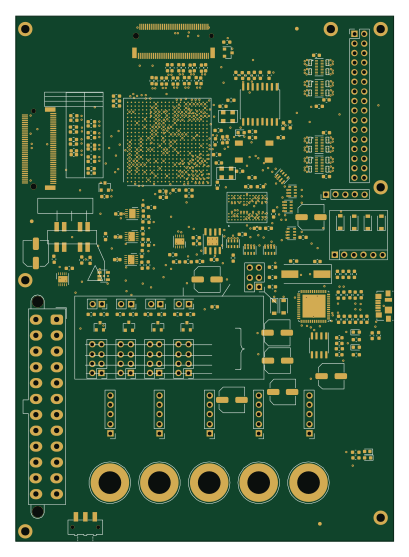 FPGA
FPGAFD-checkver
100 × 139 mm270 parts1LNo license0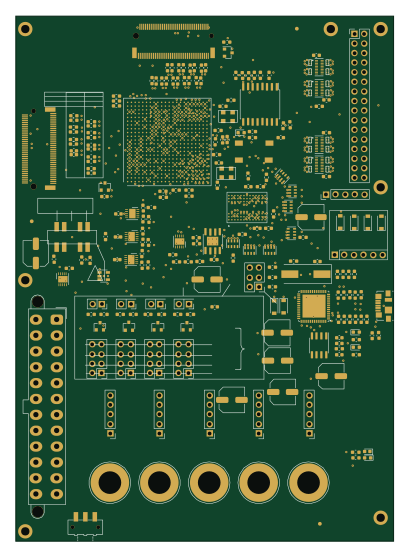 FPGA
FPGAFD
100 × 139 mm270 parts6LNo license0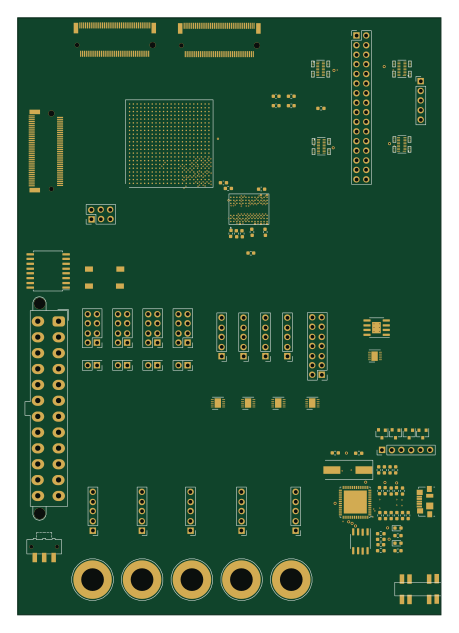 FPGA
FPGAFD2
112 × 158 mm263 parts4LNo license0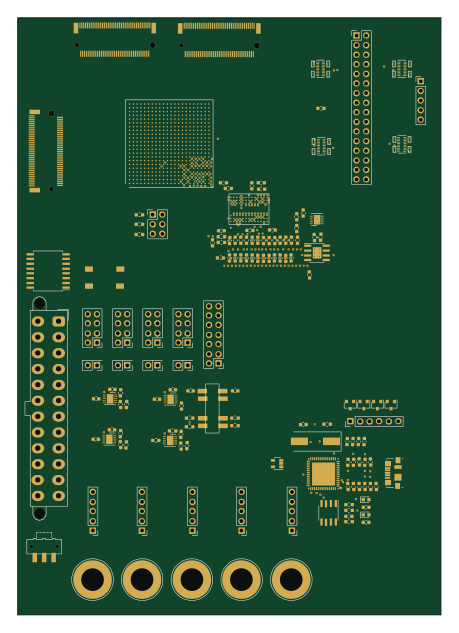 FPGA
FPGAFD3
112 × 158 mm259 parts4LNo license0 FPGA
FPGAFD-TUNEDDDR+TERM@x+500
112 × 158 mm239 parts1LNo license0
Similar boards
 FPGA
FPGABase board
GlasgowEmbedded
80 × 49 mm222 parts4L0BSD2.2k FPGA
FPGAThunderscope Rev5.3
EEVengers
122.5 × 103.5 mm817 parts6LMIT1.3k FPGA
FPGAUsb sniffer
ataradov
58.2 × 38.1 mm86 parts2LBSD-3-Clause1.3k FPGA
FPGATomu, I'm
theacodes
13 × 9.4 mm40 parts4LMIT1.1k FPGA
FPGAIcepi zero
cheyao
65 × 30 mm143 parts4LSHL-2.1828 FPGA
FPGASd2snes
mrehkopf
101.5 × 83 mm147 partsGPL-2.0717