
CM5IO

About the CM5IO PCB
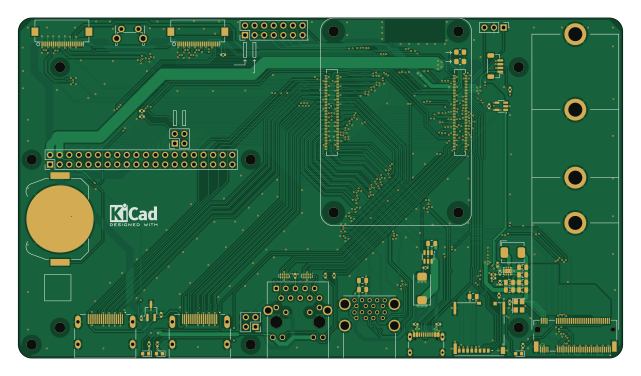
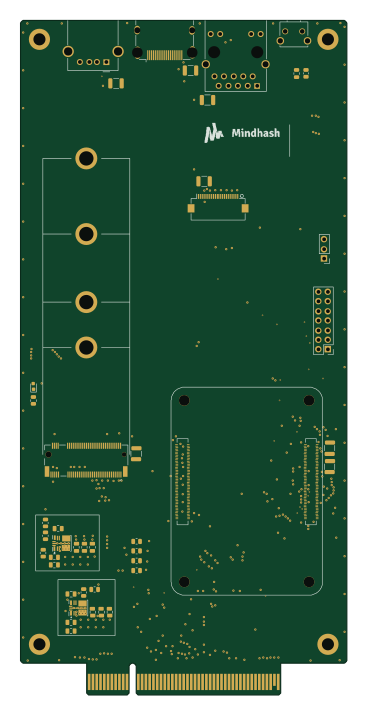
CM5IO is an open source Raspberry Pi PCB design by mindhashnl, published on GitHub. It is a 4-layer board measuring 160 × 90 mm, with 63 components from 42 distinct parts.
Its main chip is the ComputeModule5-CM5, from the Raspberry Pi family. Other key parts include the TPSM33625RDNR, 74HC595, TCA9416DDFR and TMUX1511RSVR. By type, the board carries 19 capacitors, 16 resistors, 13 connectors, 8 ICs, 3 diodes and 1 battery holder.
From the project
Yggdrasil is an open-source, modular hardware-in-the-loop (HIL) testing framework designed for continuous integration (CI/CD) of embedded systems. It allows developers to test firmware automatically on real microcontrollers (MCUs) at scale.
Yggdrasil is an open-source, modular hardware-in-the-loop (HIL) testing framework designed for continuous integration (CI/CD) of embedded systems. It allows developers to test firmware automatically on real microcontrollers (MCUs) at scale.
The physical architecture is designed to fit inside a standard 19-inch 3U server rack and consists of a primary control board, a multiplexing backplane, and hot-swappable target testing blades.
Main components on the CM5IO
CM5IO bill of materials (BOM)
63 components, 42 distinct parts — part numbers from the project's BOM.
| Qty | Part | Footprint | Refs |
|---|---|---|---|
| 2 | TPSM33625RDNR TPD4EUSB30 | USON-10_2.5x1.0mm_P0.5mm | U1, U2 |
| 1 | 74HC595 MagJack-A70-112-331N126 | TRJG0926HENL | U3 |
| 1 | TCA9416DDFR AP22653W6 | SOT-23-6 | U6 |
| 1 | TCA9416DDFR ASEK-32.768KHZ-L-R-T | Crystal_SMD_3225-4Pin_3.2x2.5mm | U7 |
| 1 | TMUX1511RSVR AP3441SHE-7B | DFN-8-1EP_2x2mm_P0.5mm_EP1.05x1.75mm | U8 |
| 1 | TMUX1511RSVR RT9742SNGV | TSOT-23_HandSoldering | U12 |
| 1 | TMUX1511RSVR RT9742GGJ5 | SOT-23-5 | U18 |
| 1 | BUS_PCI_EXPRESS_X8 Conn_02x07_Odd_Even | PinHeader_2x07_P2.54mm_Vertical | J2 |
| 1 | BUS_PCI_EXPRESS_X16_BLADE Bus_M.2_Socket_M | M.2 M Key socket | J4 |
| 2 | Conn_01x22_Female | Hirose_FH12-22S-0.5SH_1x22-1MP_P0.50mm_Horizontal | J5, J16 |
| 2 | THD-02-R | PinHeader_2x02_P2.54mm_Vertical | J6, J9 |
| 1 | Micro_SD_Card_Det | SDCARD_MOLEX_503398-1892 | J7 |
| 1 | THD-20-R | PinHeader_2x20_P2.54mm_Vertical | J8 |
| 2 | 690-019-298-412 | EDAC 690-019-298-412 | J10, J22 |
| 1 | BUS_PCI_EXPRESS_X16_BLADE USB_C_Receptacle_USB2.0 | USB_C_Receptacle_GCT_USB4105-xx-A_16P_TopMnt_Horizontal | J11 |
| 1 | USB3_A | MTCONN_UBAF30-D2011 | J12 |
| 1 | JST_SHBM04B-SRSS-TB | JST_SH_BM04B-SRSS-TB_1x04-1MP_P1.00mm_Vertical | J14 |
| 1 | Battery_Cell | BatteryHolder_Keystone_3034_1x20mm | BT1 |
| 1 | ComputeModule5-CM5 | Raspberry-Pi-5-Compute-Module | Module1 |
| 1 | Right angle Tact button | SW_Tactile_SPST_Angled_PTS645Vx58-2LFS | SW1 |
Show 22 more
| Qty | Part | Footprint | Refs |
|---|---|---|---|
| 1 | LED Red | LED_0603_1608Metric | D1 |
| 2 | LED Green | LED_0603_1608Metric | D2, D3 |
| 1 | 2.2uH | L_Bourns_SRP5030CC | L1 |
| 1 | 4.7UF 100n | C_0402_1005Metric | C1 |
| 1 | 4.7UF 10u | C_0805_2012Metric | C2 |
| 1 | 100NF 100uF | CP_EIA-7343-31_Kemet-D | C3 |
| 3 | 100NF 10u | C_0805_2012Metric | C4, C16, C17 |
| 2 | 1UF 10u | C_0805_2012Metric | C5, C6 |
| 2 | 22UF 10u | C_0805_2012Metric | C7, C8 |
| 3 | 22UF 100n | C_0402_1005Metric | C9, C10, C12 |
| 1 | 22UF 4.7nF | C_0402_1005Metric | C11 |
| 3 | 100NF 100n | C_0402_1005Metric | C13, C18, C19 |
| 2 | 10u | C_0805_2012Metric | C14, C15 |
| 1 | 20KOHM 1k | R_0402_1005Metric | R1 |
| 1 | 23.2KOHM 470R | R_0402_1005Metric | R2 |
| 1 | 10KOHM 470R | R_0402_1005Metric | R3 |
| 1 | 10KOHM 0R | R_0805_2012Metric_Pad1.20x1.40mm_HandSolder | R5 |
| 5 | 5.1K 2.2K 1% | R_0402_1005Metric | R6, R7, R8, R9, R16 |
| 2 | 5.1K 1k | R_0402_1005Metric | R10, R17 |
| 3 | 5.1K 10K 1% | R_0402_1005Metric | R11, R13, R15 |
| 1 | 5.1K 15K 1% | R_0402_1005Metric | R12 |
| 1 | 5.1K 100K 1% | R_0402_1005Metric | R14 |
CM5IO design files
The KiCad project lives in the mindhashnl/yggdrasil repository on GitHub; these links point at the commit this page was built from.
CM5IO: common questions
What microcontroller does the CM5IO use?
The CM5IO is built around the ComputeModule5-CM5, from the Raspberry Pi family.
How big is the CM5IO PCB?
The CM5IO measures 160 × 90 mm, has 4 copper layers and is 1.6 mm thick.
How many components are on the CM5IO?
63 components, from 42 distinct parts, with part numbers taken from the project's own BOM. The full bill of materials is listed on this page.
Where can I download the CM5IO design files?
From the mindhashnl/yggdrasil repository on GitHub, which has the KiCad layout, the schematic and the BOM; the links under Design files point to each one.
Can I use the CM5IO design in my own project?
The repository has no license, so all rights stay with mindhashnl. Use it as a reference, and ask the author before reusing the design.
Can I test firmware for the CM5IO without the hardware?
Yes. HardLabs builds a simulation of the board from its netlist and BOM, so you can run and debug Raspberry Pi firmware against it before you order a PCB.
More boards in yggdrasil
Similar boards
 Raspberry Pi
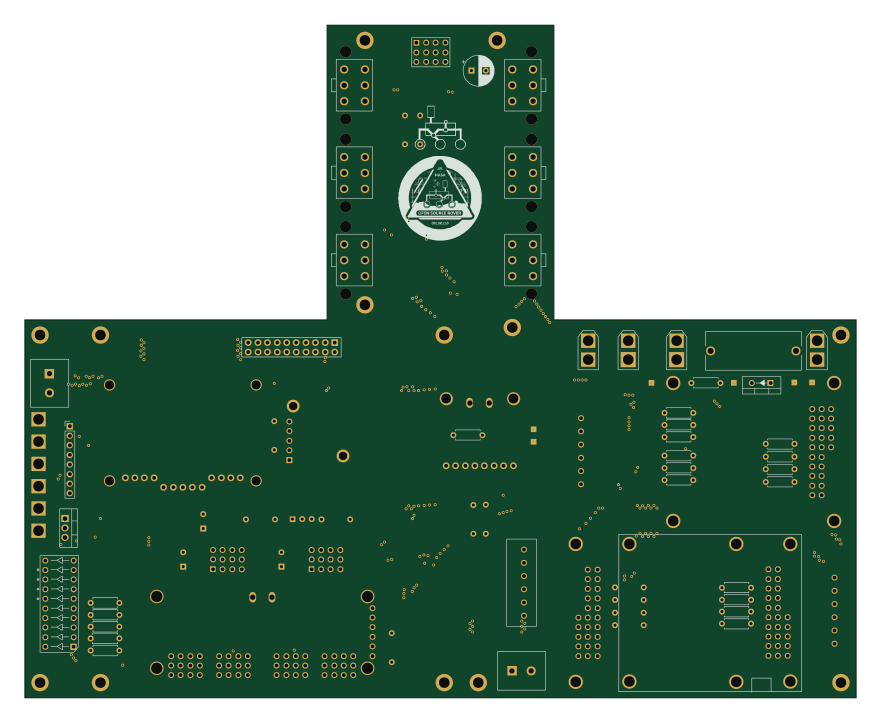
Open source rover
nasa-jpl
220 × 178 mm144 parts2LApache-2.09.7k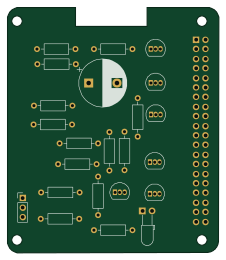 Raspberry Pi
Iot
dotnet
56 × 65 mm24 parts2LMIT2.4k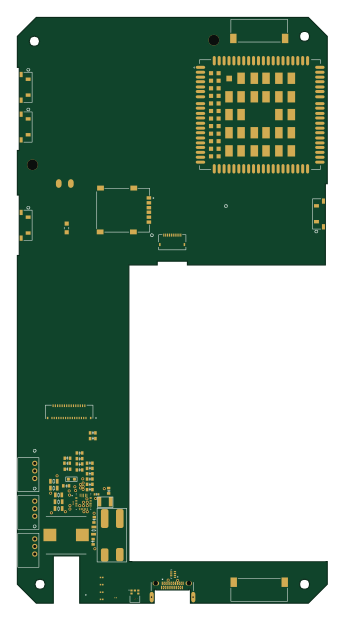 Raspberry Pi
SPIRIT
SPIRIT-org
82 × 155 mm130 parts6LCERN-OHL-S-2.01.3k Raspberry Pi
CM5RevEng
schlae
55 × 40 mm417 parts10LNo license1.0k Raspberry Pi
Haxo hw
cardonabits
102.4 × 211.3 mm38 parts2LCustom license672 Raspberry Pi
Phased
Neumi
75 × 100 mm71 parts2LNo license507