
Freewheel shift

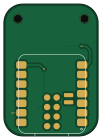
About the Freewheel shift PCB
Freewheel shift is an open source ESP32 PCB design by pgmcgee, published on GitHub under the MIT license. It is a 2-layer board measuring 25 × 35 mm, with 3 components from 2 distinct parts.
Its main chip is the XIAO-ESP32-S3-SMD, from the ESP32 family. By type, the board carries 2 switches and 1 IC.
It belongs with the iot & wireless designs in this gallery.
From the project
ESP32-based virtual shifter for Wahoo smart trainers. Provides physical gear buttons that send virtual shifting commands directly to your trainer via BLE, giving you 24 virtual gears without needing a bike with electronic shifting.
ESP32-based virtual shifter for Wahoo smart trainers. Provides physical gear buttons that send virtual shifting commands directly to your trainer via BLE, giving you 24 virtual gears without needing a bike with electronic shifting.
- 24 Virtual Gears: Full range of virtual gears (1-24) mapped to physical buttons - Direct Trainer Control: Sends gear commands directly to Wahoo trainers via BLE - Wi-Fi Provisioning: Easy network setup via captive portal - Web UI for Trainer Selection: Scan and select your trainer from a browser - Persistent Settings: Selected trainer stored, reconnects…
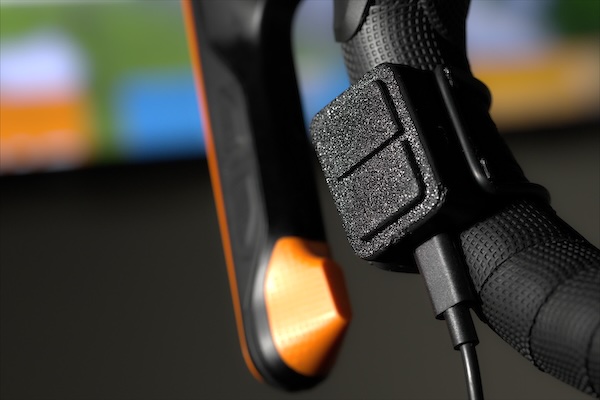
Main components on the Freewheel shift
Freewheel shift bill of materials (BOM)
3 components, 2 distinct parts.
| Qty | Part | Footprint | Refs |
|---|---|---|---|
| 1 | XIAO-ESP32-S3-SMD | XIAO-ESP32S3-SMD | U1 |
| 2 | PTS645SK43SMTR92LFS | PTS645SK43SMTR92LFS | S1, S2 |
Freewheel shift design files
The KiCad project lives in the pgmcgee/freewheel-shift repository on GitHub; these links point at the commit this page was built from.
Freewheel shift: common questions
What microcontroller does the Freewheel shift use?
The Freewheel shift is built around the XIAO-ESP32-S3-SMD, from the ESP32 family.
How big is the Freewheel shift PCB?
The Freewheel shift measures 25 × 35 mm, has 2 copper layers and is 1.6002 mm thick.
How many components are on the Freewheel shift?
3 components, from 2 distinct parts. The full bill of materials is listed on this page.
Where can I download the Freewheel shift design files?
From the pgmcgee/freewheel-shift repository on GitHub, which has the KiCad layout and the schematic; the links under Design files point to each one.
Can I use the Freewheel shift design in my own project?
Yes, under the terms of its MIT license, which pgmcgee chose for the repository.
Can I test firmware for the Freewheel shift without the hardware?
Yes. HardLabs builds a simulation of the board from its netlist and BOM, so you can run and debug ESP32 firmware against it before you order a PCB.
Similar boards
 ESP32
ESP32Open Book Abridged Edition
joeycastillo
85 × 115 mm65 parts2LCC-BY-SA-4.08.1k ESP32
ESP32Badge
atopile
56.3 × 39 mm239 parts4LMIT4.0k ESP32
ESP32Esp32 minimal
36.2 × 26.8 mm20 parts2LMIT4.0k ESP32
ESP32Racer
StuckAtPrototype
36 × 50.2 mm70 parts4LApache-2.03.8k ESP32
ESP32Controller
29 × 74 mm58 parts4LApache-2.03.8k ESP32
ESP32Bitaxe
skot
56.5 × 99.8 mm86 parts4LCERN-OHL-S-2.01.4k