
Pico-HABakuk

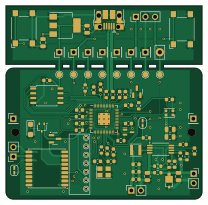
About the Pico-HABakuk PCB
Pico-HABakuk is an open source RP2040/RP2350 PCB design by serych, published on GitHub under the CERN-OHL-W-2.0 license. It is a 2-layer board measuring 52 × 51.3 mm, with 78 components from 55 distinct parts.
Its main chip is the RP2040, from the RP2040/RP2350 family. Other key parts include the NCP1117-3.3_SOT223, W25Q128JVS, SPV1040T, LM4040DBZ-3 and GP-02. By type, the board carries 27 capacitors, 15 test points, 14 resistors, 7 ICs, 7 connectors and 3 diodes.
It belongs with the rf & radio and power & battery designs in this gallery.
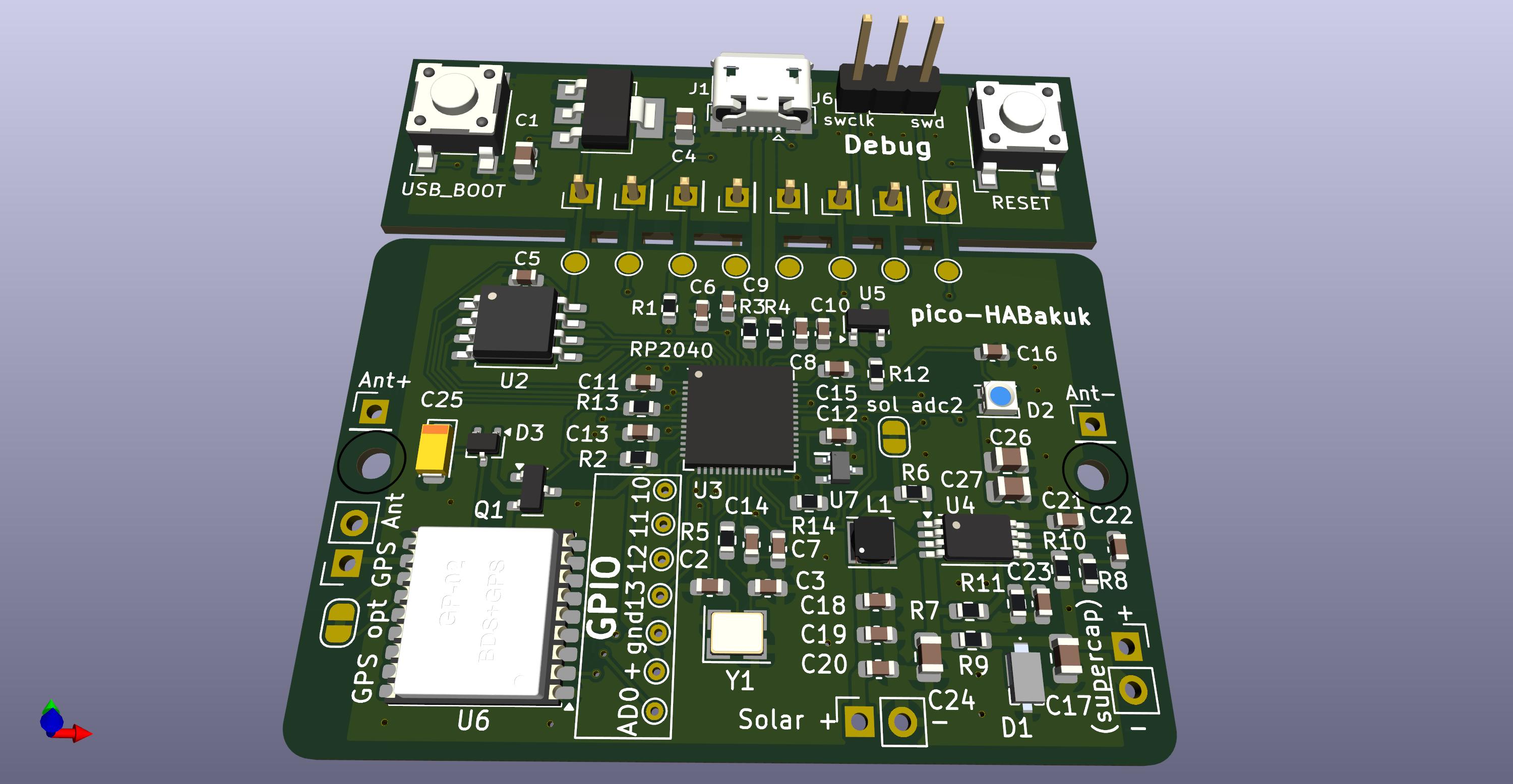
Main components on the Pico-HABakuk
Pico-HABakuk bill of materials (BOM)
78 components, 55 distinct parts.
| Qty | Part | Footprint | Refs |
|---|---|---|---|
| 1 | NCP1117-3.3_SOT223 | SOT-223-3_TabPin2 | U1 |
| 1 | W25Q128JVS | SOIC-8_5.23x5.23mm_P1.27mm | U2 |
| 1 | RP2040 | RP2040-QFN-56 | U3 |
| 1 | SPV1040T | TSSOP-8_4.4x3mm_P0.65mm | U4 |
| 1 | LM4040DBZ-3 | SOT-23 | U5 |
| 1 | GP-02 | ublox_MAX | U6 |
| 1 | MAX809SEXR+T MAX809STRG | SOT65P210X110-3N | U7 |
| 1 | BSS84 | SOT-23 | Q1 |
| 1 | ABM8-272-T3 | Crystal_SMD_3225-4Pin_3.2x2.5mm | Y1 |
| 1 | USB_B_Micro | USB_Micro-B_Amphenol_10103594-0001LF_Horizontal_modified | J1 |
| 1 | Ant+ | PinHeader_1x01_P2.54mm_Vertical | J2 |
| 1 | GPS Ant | PinSocket_1x02_P2.54mm_Vertical | J3 |
| 1 | Ant- | PinHeader_1x01_P2.54mm_Vertical | J4 |
| 1 | Solar | PinSocket_1x02_P2.54mm_Vertical | J5 |
| 1 | Debug | PinHeader_1x03_P2.54mm_Vertical | J6 |
| 1 | Super_Cap | PinSocket_1x02_P2.54mm_Vertical | J7 |
| 1 | USB BOOT | SW_SPST_Omron_B3FS-100xP | SW1 |
| 1 | RESET | SW_SPST_Omron_B3FS-100xP | SW2 |
| 1 | +3V3 | PinHeader_1x01_P2.54mm_Vertical | TP1 |
| 1 | USB_D+ | PinHeader_1x01_P2.54mm_Vertical | TP2 |
Show 35 more
| Qty | Part | Footprint | Refs |
|---|---|---|---|
| 1 | USB_D- | PinHeader_1x01_P2.54mm_Vertical | TP3 |
| 1 | GND | PinHeader_1x01_P2.54mm_Vertical | TP4 |
| 1 | USB_BOOT | PinHeader_1x01_P2.54mm_Vertical | TP5 |
| 1 | Reset | PinHeader_1x01_P2.54mm_Vertical | TP6 |
| 1 | SWCLK | PinHeader_1x01_P2.54mm_Vertical | TP7 |
| 1 | SWD | Pin_D1.1mm_L10.2mm_W3.5mm_Flat | TP8 |
| 1 | 10 | TestPoint_THTPad_D1.0mm_Drill0.5mm | TP17 |
| 1 | 11 | TestPoint_THTPad_D1.0mm_Drill0.5mm | TP18 |
| 1 | 12 | TestPoint_THTPad_D1.0mm_Drill0.5mm | TP19 |
| 1 | 13 | TestPoint_THTPad_D1.0mm_Drill0.5mm | TP20 |
| 1 | gnd | TestPoint_THTPad_D1.0mm_Drill0.5mm | TP21 |
| 1 | + | TestPoint_THTPad_D1.0mm_Drill0.5mm | TP22 |
| 1 | AD0 | TestPoint_THTPad_D1.0mm_Drill0.5mm | TP23 |
| 1 | SMM4F5.0A-TR | SMM4F15ATR | D1 |
| 1 | WS2812B-2020 | LED_WS2812B-2020_PLCC4_2.0x2.0mm | D2 |
| 1 | BAT54W | SOT-323_SC-70 | D3 |
| 1 | 10u | L_Taiyo-Yuden_MD-3030 | L1 |
| 5 | 10u | C_0805_2012Metric | C1, C4, C17, C26, C27 |
| 2 | 15p | C_0603_1608Metric | C2, C3 |
| 10 | 100n | C_0603_1608Metric | C5, C6, C7, C9, C11, C12, C13, C14 +2 |
| 2 | 1u | C_0603_1608Metric | C8, C22 |
| 1 | 2u2 | C_0603_1608Metric | C10 |
| 3 | 10u/4 | C_0603_1608Metric | C18, C19, C20 |
| 2 | 1n | C_0603_1608Metric | C21, C23 |
| 1 | 10u/10 | C_0805_2012Metric | C24 |
| 1 | 220uF | CP_EIA-3216-10_Kemet-I | C25 |
| 5 | 1k | R_0603_1608Metric | R1, R5, R6, R7, R8 |
| 1 | 10k | R_0603_1608Metric | R2 |
| 2 | 27 | R_0603_1608Metric | R3, R4 |
| 1 | 510m | R_0603_1608Metric | R9 |
| 1 | 360k | R_0603_1608Metric | R10 |
| 1 | 220k | R_0603_1608Metric | R11 |
| 1 | 200 | R_0603_1608Metric | R12 |
| 1 | 100 | R_0603_1608Metric | R13 |
| 1 | 2k2 | R_0603_1608Metric | R14 |
Pico-HABakuk design files
The KiCad project lives in the serych/pico-HABakuk repository on GitHub; these links point at the commit this page was built from.
- Layoutpico-HABakuk.kicad_pcb
- Schematicpico-HABakuk.kicad_sch
Pico-HABakuk: common questions
What microcontroller does the Pico-HABakuk use?
The Pico-HABakuk is built around the RP2040, from the RP2040/RP2350 family.
How big is the Pico-HABakuk PCB?
The Pico-HABakuk measures 52 × 51.3 mm, has 2 copper layers and is 1 mm thick.
How many components are on the Pico-HABakuk?
78 components, from 55 distinct parts. The full bill of materials is listed on this page.
Where can I download the Pico-HABakuk design files?
From the serych/pico-HABakuk repository on GitHub, which has the KiCad layout and the schematic; the links under Design files point to each one.
Can I use the Pico-HABakuk design in my own project?
Yes, under the terms of its CERN-OHL-W-2.0 license, which serych chose for the repository.
Can I test firmware for the Pico-HABakuk without the hardware?
Yes. HardLabs builds a simulation of the board from its netlist and BOM, so you can run and debug RP2040/RP2350 firmware against it before you order a PCB.
Similar boards
 RP2040/RP2350
Open Book Abridged Edition
joeycastillo
85 × 115 mm29 parts2LCC-BY-SA-4.08.1k RP2040/RP2350
Corne
foostan
277.2 × 107.5 mm164 parts2LCC-BY-4.07.7k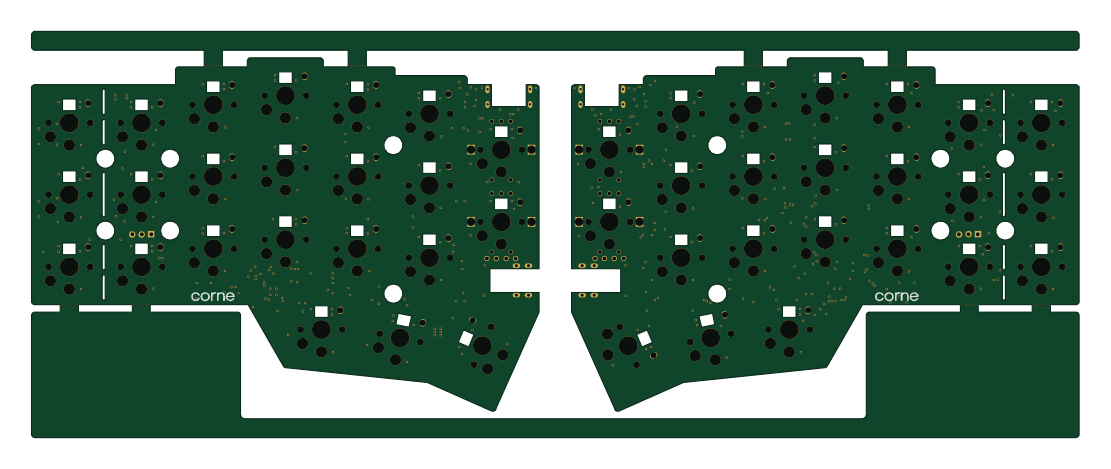 RP2040/RP2350
Corne
277.2 × 107.5 mm164 parts2LCC-BY-4.07.7k RP2040/RP2350
Jitx design
gusmanb
55.5 × 65 mm26 parts4LGPL-3.05.0k RP2040/RP2350
LogicAnalyzer
57 × 55.2 mm6 parts2LGPL-3.05.0k RP2040/RP2350
Main
google
98 × 71 mm102 parts2LApache-2.02.9k