
CosmicMouse

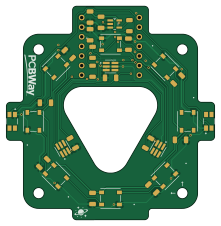
About the CosmicMouse PCB
CosmicMouse is an open source RP2040/RP2350 PCB design by tylerebowers, published on GitHub under the CC-BY-SA-4.0 license. It is a 2-layer board measuring 55 × 56.4 mm, with 32 components from 11 distinct parts.
Its main chip is the XIAO-RP2350-DIP, from the RP2040/RP2350 family. Other key parts include the SN74AHCT1G125DBVR, TMAG5273A1QDBVR, TMAG5273B1QDBVR and TMAG5273C1QDBVR. By type, the board carries 14 capacitors, 8 LEDs, 5 ICs, 3 resistors and 2 switches.
It belongs with the sensors and test & measurement designs in this gallery.
From the project
6DOF Cad Mouse; Uses Hall Effect Sensors with a Physics-based Dipole Model and the Levenberg-Marquardt Algo to Achieve Highly Accurate Measurements.
This is 6DOF mouse for CAD, inspired by the Space Mouse by 3DConexion, it uses 3x 3D Hall effect sensors over I2C with a custom single-piece isotropic spring which floats the knob in space. Firmware compensates for magnetic cross-talk by using a physics-based magnetic dipole model and the Levenberg-Marquardt algorithm to iteratively solve for the knob's pose by minimizing the difference between measured and predicted magnetic fields (see firmware/model.md). The enclosure knob, and diffuser are resin printed vis MSLA for smoothness. The knob shaft is printed in PETG and sping in TPU. I also…
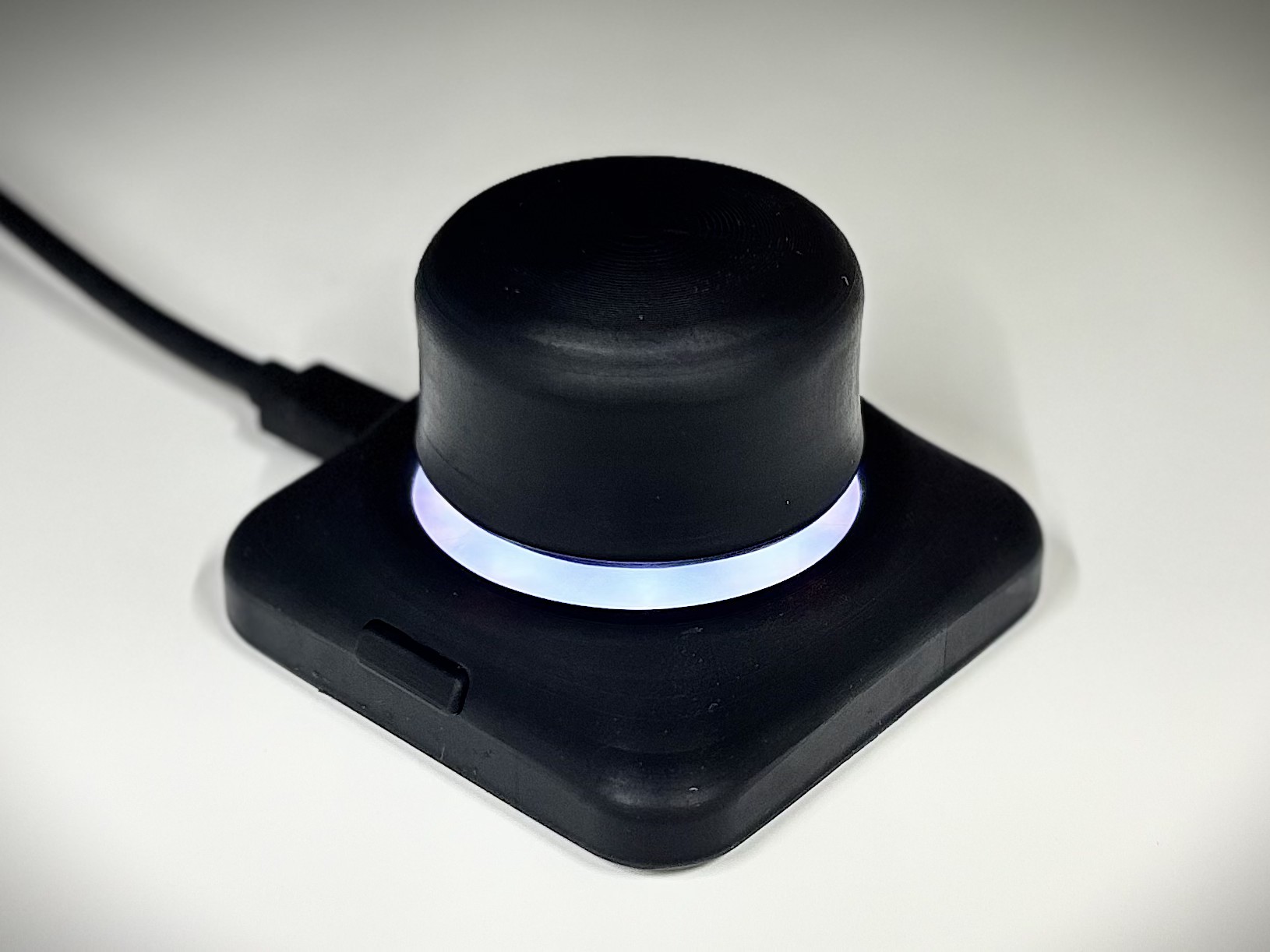
Main components on the CosmicMouse
CosmicMouse bill of materials (BOM)
32 components, 11 distinct parts — part numbers from the project's BOM.
| Qty | Part | Footprint | Refs |
|---|---|---|---|
| 1 | SN74AHCT1G125DBVR DBV5 | DBV5 | U1 |
| 1 | XIAO-RP2350-DIP | XIAO-RP2350-DIP | U2 |
| 1 | TMAG5273A1QDBVR DBV0006A-IPC_A | DBV0006A-IPC_A | U3 |
| 1 | TMAG5273B1QDBVR DBV0006A-IPC_A | DBV0006A-IPC_A | U4 |
| 1 | TMAG5273C1QDBVR DBV0006A-IPC_A | DBV0006A-IPC_A | U5 |
| 2 | EVQ-P7J01P SW_EVQ-P7J01P | SW_EVQ-P7J01P | SW1, SW2 |
| 8 | IN-PI55TATPRPGPB LED_IN-PI55TAT_INL | LED_IN-PI55TAT_INL | LED1, LED2, LED3, LED4, LED5, LED6, LED7, LED8 |
| 12 | 100NF C_1206_3216Metric | C_1206 | C1, C2, C3, C4, C5, C6, C7, C8 +4 |
| 2 | 10UF C_1206_3216Metric | C_1206 | C9, C14 |
| 2 | 4.7K R_1206_3216Metric | R_1206 | R1, R2 |
| 1 | 220 R_1206_3216Metric | R_1206 | R3 |
CosmicMouse design files
The KiCad project lives in the tylerebowers/CosmicMouse repository on GitHub; these links point at the commit this page was built from.
- Layoutpcb/pcb.kicad_pcb
- Schematicpcb/pcb.kicad_sch
- BOMpcb/bom.csv
CosmicMouse: common questions
What microcontroller does the CosmicMouse use?
The CosmicMouse is built around the XIAO-RP2350-DIP, from the RP2040/RP2350 family.
How big is the CosmicMouse PCB?
The CosmicMouse measures 55 × 56.4 mm, has 2 copper layers and is 1.6 mm thick.
How many components are on the CosmicMouse?
32 components, from 11 distinct parts, with part numbers taken from the project's own BOM. The full bill of materials is listed on this page.
Where can I download the CosmicMouse design files?
From the tylerebowers/CosmicMouse repository on GitHub, which has the KiCad layout, the schematic and the BOM; the links under Design files point to each one.
Can I use the CosmicMouse design in my own project?
Yes, under the terms of its CC-BY-SA-4.0 license, which tylerebowers chose for the repository.
Can I test firmware for the CosmicMouse without the hardware?
Yes. HardLabs builds a simulation of the board from its netlist and BOM, so you can run and debug RP2040/RP2350 firmware against it before you order a PCB.
Similar boards
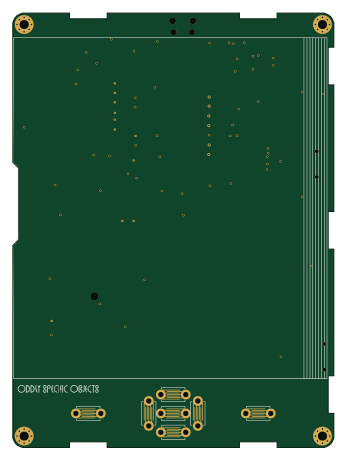 RP2040/RP2350
OSO-BOOK-C1
joeycastillo
85 × 115 mm29 parts2LCC-BY-SA-4.08.1k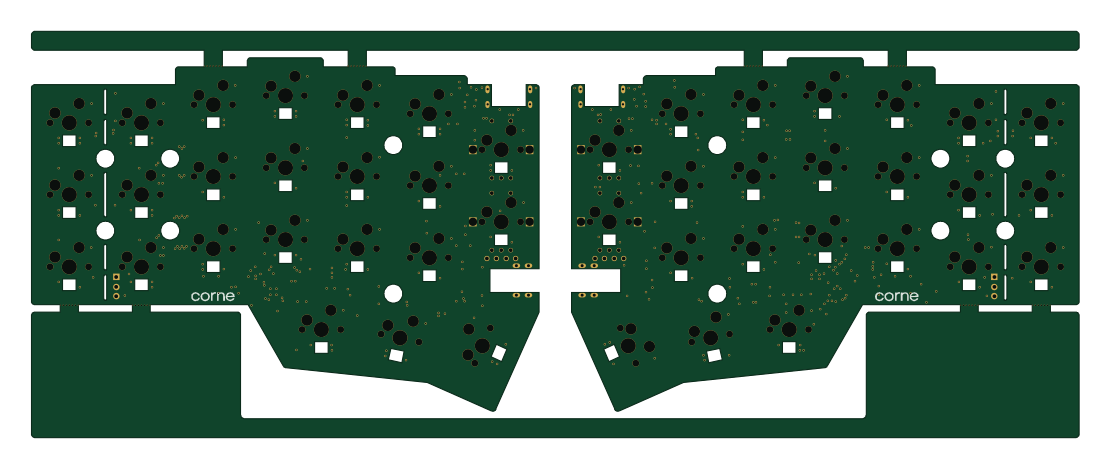 RP2040/RP2350
Corne cherry
foostan
277.2 × 107.5 mm164 parts2LCC-BY-4.07.7k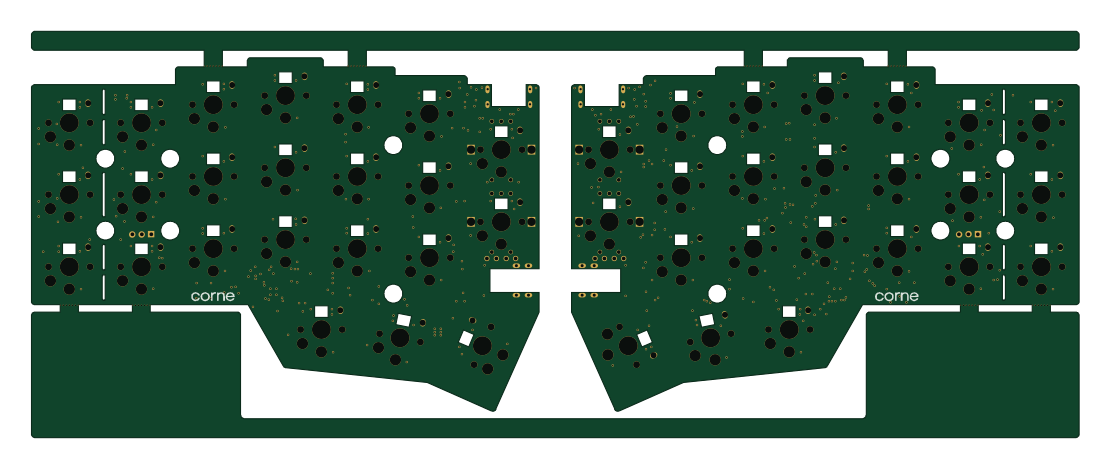 RP2040/RP2350
Corne chocolate
277.2 × 107.5 mm164 parts2LCC-BY-4.07.7k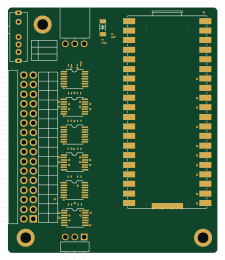 RP2040/RP2350
Jitx design
gusmanb
55.5 × 65 mm26 parts4LGPL-3.05.0k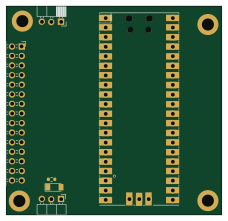 RP2040/RP2350
LogicAnalyzer
57 × 55.2 mm6 parts2LGPL-3.05.0k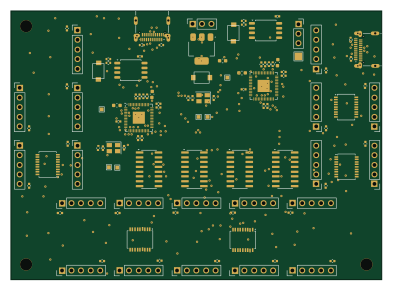 RP2040/RP2350
Main
google
98 × 71 mm102 parts2LApache-2.02.9k