
F9p board

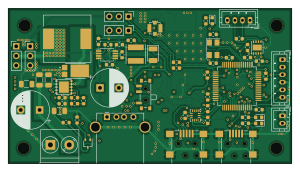
About the F9p board
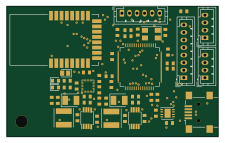
F9p board is an open source STM32 PCB design by vedderb, published on GitHub under the GPL-3.0 license. It is a 4-layer board measuring 75 × 41 mm, with 95 components from 54 distinct parts.
Its main chip is the STM32F405RGTx, from the STM32 family. Other key parts include the Ublox_ZED_F9P, MCP16311MS, ncv8705, BMI160 and TJA1051TK-3. By type, the board carries 40 capacitors, 24 resistors, 11 connectors, 9 ICs, 3 switches and 3 diodes.
From the project
The RISE Self-Driving Model Vehicle Platform
Main components on the F9p board
F9p board bill of materials (BOM)
95 components, 54 distinct parts.
| Qty | Part | Footprint | Refs |
|---|---|---|---|
| 1 | Ublox_ZED_F9P | UBLOX_ZED_F9P | U1 |
| 1 | STM32F405RGTx | LQFP-64_10x10mm_P0.5mm | U2 |
| 1 | MCP16311MS | MSOP-8_3x3mm_P0.65mm | U3 |
| 1 | ncv8705 | WDFN6 | U4 |
| 1 | BMI160 | Bosch_LGA-14_3x2.5mm_P0.5mm | U5 |
| 1 | TJA1051TK-3 | DFN-8-1EP_3x3mm_P0.65mm_EP1.55x2.4mm | U6 |
| 1 | uFL_conn | U.FL_Molex_MCRF_73412-0110_Vertical | U7 |
| 1 | TPS54561DPRR | TI-DPR | U8 |
| 1 | PDS760-13 | POWERDI5 | U9 |
| 1 | DMN62D0UW-7 | SOT-323_SC-70 | Q1 |
| 1 | 8Mhz | Crystal_SMD_5032-4Pin_5.0x3.2mm | Y1 |
| 2 | USB_B_Mini | USB_Mini-B_Lumberg_2486_01_Horizontal | J1, J2 |
| 1 | BAT_CONN | TerminalBlock_Phoenix_PT-1,5-2-5.0-H_1x02_P5.00mm_Horizontal | J3 |
| 1 | CAN | JST_PH_B4B-PH-K_1x04_P2.00mm_Vertical | J4 |
| 1 | USB_A_PWR_OUTPUT | USB_A_Stewart_SS-52100-001_Horizontal | J5 |
| 1 | EN_BAT_VIN | JST_PH_B2B-PH-K_1x02_P2.00mm_Vertical | J6 |
| 1 | SERV_0 | PinHeader_1x03_P2.54mm_Vertical | J7 |
| 1 | SERV_1 | PinHeader_1x03_P2.54mm_Vertical | J8 |
| 1 | SERV_2 | PinHeader_1x03_P2.54mm_Vertical | J9 |
| 1 | SERV_3 | PinHeader_1x03_P2.54mm_Vertical | J10 |
Show 34 more
| Qty | Part | Footprint | Refs |
|---|---|---|---|
| 1 | SWD | JST_PH_B6B-PH-K_1x06_P2.00mm_Vertical | P1 |
| 1 | F9P_USB_POWER | SW_SPDT_PCM12 | SW1 |
| 1 | MCU_USB_POWER | SW_SPDT_PCM12 | SW2 |
| 1 | BOOT0 | SW_SPDT_PCM12 | SW3 |
| 2 | RED | LED_0603_1608Metric | D1, D2 |
| 1 | GREEN | LED_0603_1608Metric | D3 |
| 1 | 22u | L_Taiyo-Yuden_MD-5050 | L1 |
| 1 | 56n | L_0603_1608Metric | L2 |
| 1 | 7.2u | L_12x12mm_H8mm | L3 |
| 23 | 2.2u | C_0603_1608Metric | C1, C2, C5, C6, C7, C10, C11, C12 +15 |
| 3 | 100n | C_0603_1608Metric | C3, C21, C22 |
| 1 | 100u | CP_EIA-3528-12_Kemet-T | C4 |
| 2 | 15p | C_0603_1608Metric | C8, C9 |
| 1 | 0.01u | C_0603_1608Metric | C27 |
| 4 | 2.2u | C_1206_3216Metric | C28, C29, C30, C31 |
| 1 | 4700p | C_0603_1608Metric | C32 |
| 2 | 0.1u | C_0603_1608Metric | C33, C40 |
| 1 | 47p | C_0603_1608Metric | C34 |
| 1 | 100u | CP_Radial_D10.0mm_P5.00mm | C38 |
| 1 | 470u | CP_Radial_D10.0mm_P5.00mm | C39 |
| 1 | 33k | R_0603_1608Metric | R1 |
| 1 | 10k | R_0603_1608Metric | R2 |
| 1 | 100K | R_0603_1608Metric | R3 |
| 2 | 27 Ohm | R_0603_1608Metric | R4, R5 |
| 5 | 1k | R_0603_1608Metric | R6, R7, R9, R10, R11 |
| 5 | 220R | R_0603_1608Metric | R8, R21, R22, R23, R24 |
| 1 | 4.7R | R_0603_1608Metric | R12 |
| 2 | 22R | R_0603_1608Metric | R13, R14 |
| 1 | 243k | R_0603_1608Metric | R15 |
| 1 | 16.9k | R_0603_1608Metric | R16 |
| 1 | 39k | R_0603_1608Metric | R17 |
| 1 | 2.2k | R_0603_1608Metric | R18 |
| 1 | 53.6k | R_0603_1608Metric | R19 |
| 1 | 10.2k | R_0603_1608Metric | R20 |
F9p board design files
The KiCad project lives in the vedderb/rise_sdvp repository on GitHub; these links point at the commit this page was built from.
F9p board: common questions
What microcontroller does the F9p board use?
The F9p board is built around the STM32F405RGTx, from the STM32 family.
How big is the F9p board?
The F9p board measures 75 × 41 mm, has 4 copper layers and is 1.6 mm thick.
How many components are on the F9p board?
95 components, from 54 distinct parts. The full bill of materials is listed on this page.
Where can I download the F9p board design files?
From the vedderb/rise_sdvp repository on GitHub, which has the KiCad layout; the links under Design files point to each one.
Can I use the F9p board design in my own project?
Yes, under the terms of its GPL-3.0 license, which vedderb chose for the repository.
Can I test firmware for the F9p board without the hardware?
Yes. HardLabs builds a simulation of the board from its netlist and BOM, so you can run and debug STM32 firmware against it before you order a PCB.
More boards in rise_sdvp
Similar boards
 STM32
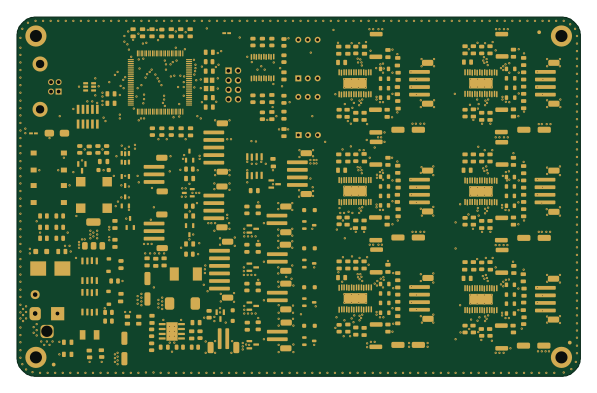
LumenPnP Motherboard
opulo-inc
149 × 95 mm296 parts4LCC-BY-SA-4.03.7k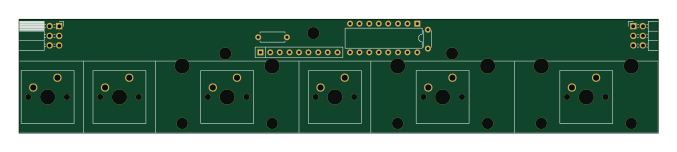 STM32
Type g
google
169 × 30 mm24 parts2LApache-2.02.9k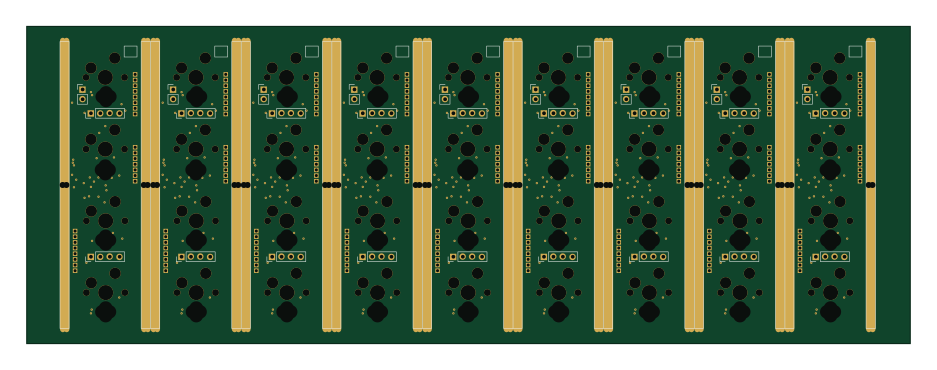 STM32
Main panel
234 × 84 mm26 parts4LApache-2.02.9k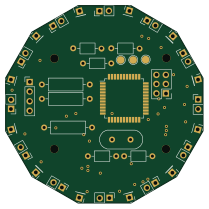 STM32
Base
52.3 × 52.3 mm36 parts2LApache-2.02.9k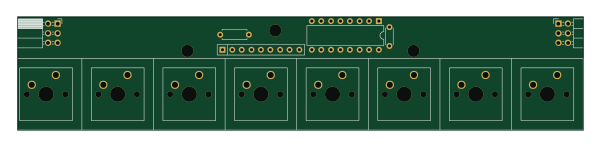 STM32
Type a
150 × 30 mm14 parts2LApache-2.02.9k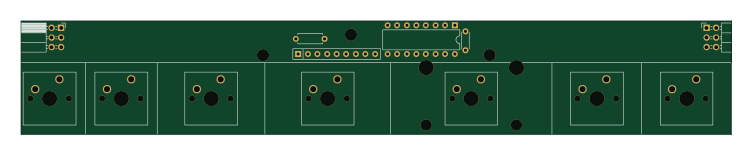 STM32
Type c
188 × 30 mm17 parts2LApache-2.02.9k