
Afterglow WHITESTAR 2.1

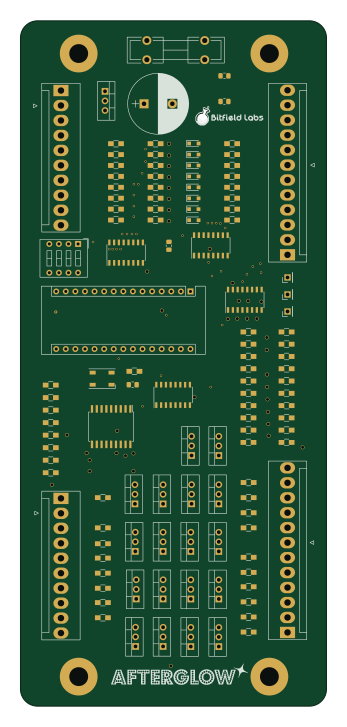
About the Afterglow WHITESTAR 2.1 PCB
Afterglow WHITESTAR 2.1 is an open source AVR/Arduino PCB design by bitfieldlabs, published on GitHub. It is a 2-layer board measuring 81 × 181.5 mm, with 118 components from 23 distinct parts.
Its main chip is the Arduino_Nano_v3.x, from the AVR/Arduino family. Other key parts include the 74LS165, 5V_Regulator, 74HC595 and ULN2803A. By type, the board carries 71 resistors, 18 transistors, 9 diodes, 6 ICs, 5 capacitors and 4 connectors.
It belongs with the retro computing designs in this gallery.
From the project
Pinball retro afterglow
AFTERGLOW is a pinball machine extension board that aims at softening the hard lamp on/off transitions which are the consequence of replacing the original incandescent bulbs with LEDs. Reproducing the original light effects is a big part of preserving a pinball game's nostalgia.
It currently works with Williams WPC, Williams System 11, Data East and probably also with Sega games. The basic principle involves resampling of the original lamp matrix signals at a higher frequency. This allows for PWM LED dimming with additional brightness steps.
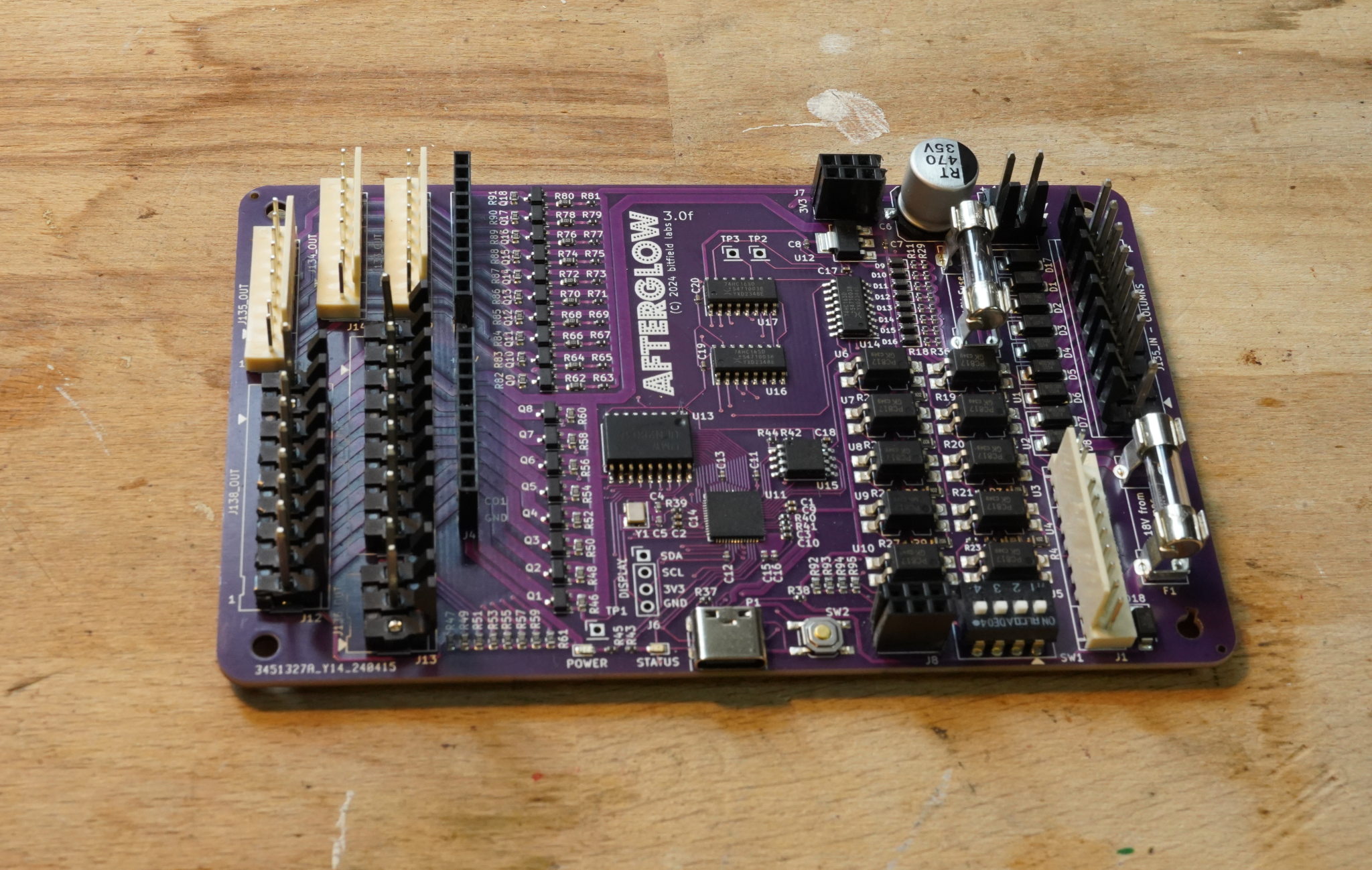
Main components on the Afterglow WHITESTAR 2.1
Afterglow WHITESTAR 2.1 bill of materials (BOM)
118 components, 23 distinct parts — part numbers from the project's BOM.
| Qty | Part | Footprint | Refs |
|---|---|---|---|
| 2 | 74LS165 | SOIC-16_3.9x9.9mm_Pitch1.27mm | U1, U2 |
| 1 | 5V_Regulator | TO-220_Vertical | U3 |
| 2 | 74HC595 | SOIC-16_3.9x9.9mm_Pitch1.27mm | U5, U6 |
| 1 | ULN2803A | SOIC-18W_7.5x11.6mm_Pitch1.27mm | U7 |
| 1 | Arduino_Nano_v3.x | Arduino_Nano | A1 |
| 8 | FQP11P06 | TO-220_Vertical | Q1, Q2, Q3, Q4, Q5, Q6, Q7, Q8 |
| 10 | FQP13N06L | TO-220_Vertical | Q9, Q10, Q11, Q12, Q13, Q14, Q15, Q16 +2 |
| 1 | J12_IN_R | Molex_KK-41791-12_10x3.96mm_Straight | J12_IN_R |
| 1 | J12_OUT_R | Molex_KK-41791-12_10x3.96mm_Straight | J12_OUT_R |
| 1 | J13_IN_C | Molex_KK-41791-10_10x3.96mm_Straight | J13_IN_C |
| 1 | J13_OUT_C | Molex_KK-41791-10_10x3.96mm_Straight | J13_OUT_C |
| 2 | TestPoint | Pin_Header_Straight_1x01_Pitch2.54mm | 5V, 18V |
| 1 | 5A SB | Fuseholder5x20_horiz_open_lateral_Type-II | F1 - 2A SB |
| 1 | CFG | SW_DIP_x4_W7.62mm_Slide | SW1 |
| 1 | WS2812B | LED_WS2812B-PLCC4 | D1 |
| 8 | 4.7V | D_SOD-323_HandSoldering | D2, D3, D4, D5, D6, D7, D8, D9 |
| 1 | 1000uF | CP_Radial_D16.0mm_P7.50mm | C1 |
| 1 | 0.33 | C_0805_2012Metric_Pad1.18x1.45mm_HandSolder | C2 |
| 3 | 0.1 | C_0805_2012Metric_Pad1.18x1.45mm_HandSolder | C3, C4, C5 |
| 24 | 1k | R_0805_HandSoldering | R1, R2, R3, R4, R5, R6, R7, R8 +16 |
Show 3 more
| Qty | Part | Footprint | Refs |
|---|---|---|---|
| 29 | 10K 10k | R_0805_HandSoldering | R25, R27, R28, R29, R30, R31, R32, R33 +21 |
| 10 | 220 | R_0805_HandSoldering | R26, R43, R45, R47, R49, R51, R53, R55 +2 |
| 8 | 2k | R_0805_HandSoldering | R35, R36, R37, R38, R39, R40, R41, R42 |
Afterglow WHITESTAR 2.1 design files
The KiCad project lives in the bitfieldlabs/afterglow repository on GitHub; these links point at the commit this page was built from.
Afterglow WHITESTAR 2.1: common questions
What microcontroller does the Afterglow WHITESTAR 2.1 use?
The Afterglow WHITESTAR 2.1 is built around the Arduino_Nano_v3.x, from the AVR/Arduino family.
How big is the Afterglow WHITESTAR 2.1 PCB?
The Afterglow WHITESTAR 2.1 measures 81 × 181.5 mm, has 2 copper layers and is 1.6 mm thick.
How many components are on the Afterglow WHITESTAR 2.1?
118 components, from 23 distinct parts, with part numbers taken from the project's own BOM. The full bill of materials is listed on this page.
Where can I download the Afterglow WHITESTAR 2.1 design files?
From the bitfieldlabs/afterglow repository on GitHub, which has the KiCad layout, the schematic and the BOM; the links under Design files point to each one.
Can I use the Afterglow WHITESTAR 2.1 design in my own project?
The repository has no license, so all rights stay with bitfieldlabs. Use it as a reference, and ask the author before reusing the design.
Can I test firmware for the Afterglow WHITESTAR 2.1 without the hardware?
Yes. HardLabs builds a simulation of the board from its netlist and BOM, so you can run and debug AVR/Arduino firmware against it before you order a PCB.
More boards in afterglow
 RP2040/RP2350
Afterglow
128.7 × 81 mm196 parts2LNo license32
Afterglow 1.3
128.7 × 81 mm124 parts2LNo license32
Afterglow 3.0 Debug Hat
64.4 × 81 mm97 parts2LNo license32 AVR/Arduino
Afterglow 1.1
193.5 × 80 mm78 parts2LNo license32
Hat modder
64.4 × 81 mm28 parts2LNo license32
Afterglow 3.0 Pinbender Hat
64.4 × 81 mm8 parts2LNo license32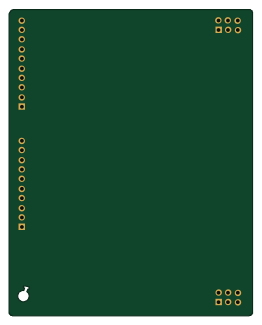
Hat template
64.4 × 81 mm4 parts2LNo license32
Similar boards
 AVR/Arduino
Redox keyboard
mattdibi
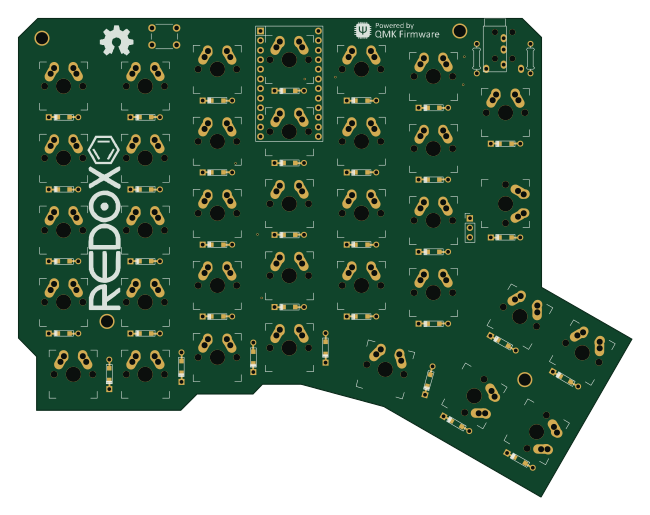
162.2 × 126.5 mm77 parts2LMIT2.0k AVR/Arduino
ModuleV450
stuartpittaway
30 × 61.4 mm39 parts2LCC-BY-NC-4.01.1k AVR/Arduino
V4
30 × 50 mm38 parts2LCC-BY-NC-4.01.1k AVR/Arduino
Discipline
coseyfannitutti
304.9 × 122.8 mm170 parts2LCC-BY-NC-4.01.0k AVR/Arduino
Megadesk
gcormier
41.7 × 32.2 mm23 parts2LGPL-3.0818 AVR/Arduino
Easyduino Atmega Nano
Hanqaqa
43.4 × 18 mm30 parts4LCERN-OHL-P-2.0746