
Mini-Air

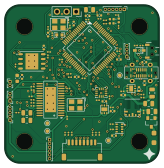
About the Mini-Air PCB
Mini-Air is an open source STM32 PCB design by darshg321, published on GitHub under the CERN-OHL-W-2.0 license. It is a 2-layer board measuring 41 × 42 mm, with 84 components from 34 distinct parts.
Its main chip is the STM32F405RGT6TR, from the STM32 family. Other key parts include the BMP280, ICM-42688-P, LP5912-3.3DRVR, TPSM84209RKHT and AT7456E. By type, the board carries 43 capacitors, 23 resistors, 9 ICs, 4 diodes, 2 crystals and 1 transistor.
It belongs with the robotics & motion, rf & radio and power & battery designs in this gallery.
From the project
Mini-Air is a DIY FPV drone! it features: - a custom flight controller supporting Betaflight - an ESC supporting Bluejay firmware - ELRS protocol - an analog camera - GPS
Mini-Air is a DIY FPV drone! it features: - a custom flight controller supporting Betaflight - an ESC supporting Bluejay firmware - ELRS protocol - an analog camera - GPS
the custom flight controller has an on-board OSD, IMU, Barometer, and SPI Flash
i made this project to learn how flight controllers and drones work, and because i want to fly a cool fpv drone. the project is optimized to support the features of all the latest fpv software available. all components are analog to reduce latency, and because 480p drone video with osd in general is really aesthetic. with a 2s lipo and a 2-inch…
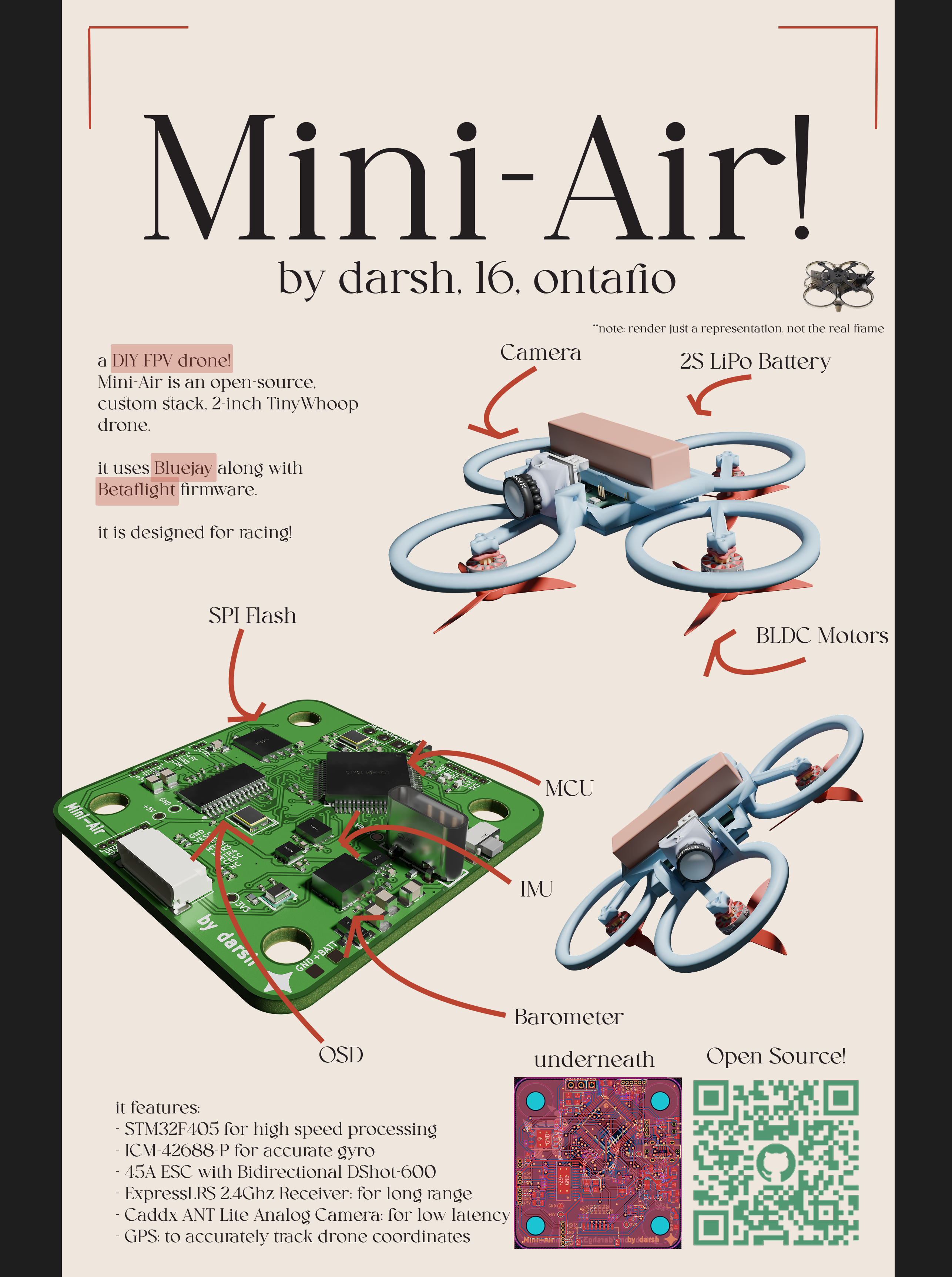
Main components on the Mini-Air
Mini-Air bill of materials (BOM)
84 components, 34 distinct parts — part numbers from the project's BOM.
| Qty | Part | Footprint | Refs |
|---|---|---|---|
| 1 | BMP280 Bosch(博世) | LGA-8_L2.5-W2.0-P0.65_AMP6127 | U1 |
| 1 | ICM-42688-P TDK InvenSense(应美盛) | LGA-14_L3.0-W2.5-P0.50-TL | U2 |
| 2 | LP5912-3.3DRVR TI(德州仪器) | WSON-6_L2.0-W2.0-P0.65-TL-EP | U3, U8 |
| 1 | STM32F405RGT6TR ST(意法半导体) | LQFP-64_L10.0-W10.0-P0.50-LS12.0-BL | U4 |
| 1 | TPSM84209RKHT TI(德州仪器) | QFN-9_L4.4-W4.0-P0.85-YTL | U5 |
| 1 | AT7456E 杭州中科微 | TSSOP-28_L9.7-W4.4-P0.65-LS6.4-BL-EP-2 | U6 |
| 1 | W25Q128JVPIQ Winbond(华邦) | WSON-8_L6.0-W5.0-P1.27-BL-EP | U7 |
| 1 | TYPE-C 16PLT-H10.0 SHOU HAN(首韩) | TYPE-C-SMD_USB4120-03-C | U9 |
| 1 | AO3401A AOS | SOT-23_L2.9-W1.3-P1.90-LS2.4-BR | Q1 |
| 1 | X322527MSB4SI YXC(扬兴晶振) | CRYSTAL-SMD_4P-L3.2-W2.5-BL-1 | X1 |
| 1 | 1C208000BC0R DSX321G 8MHz KDS(大真空) | CRYSTAL-SMD_4P-L3.2-W2.5-BL-1 | X3 |
| 1 | TS24CA SHOU HAN(首韩) | SW-SMD_2P-TS24CA | SW2 |
| 3 | LED | LED_0402_1005Metric | D1, D2, D3 |
| 1 | 1N5819WS Hottech(合科泰) | SOD-323_L1.8-W1.3-LS2.5-RD | D4 |
| 1 | FCM1608KF-601T03 TAI-TECH(台庆) | L0603 | L1 |
| 2 | 47uF | C_0805_2012Metric | C2, C18 |
| 3 | 22uF | C_0805_2012Metric | C3, C15, C16 |
| 8 | 1uF | C_0402_1005Metric | C4, C5, C20, C26, C45, C46, C47, C49 |
| 23 | 100nF | C_0201_0603Metric | C6, C7, C8, C9, C10, C11, C12, C13 +15 |
| 1 | 1uF | C_0603_1608Metric | C19 |
Show 14 more
| Qty | Part | Footprint | Refs |
|---|---|---|---|
| 3 | 2.2uF | C_0402_1005Metric | C22, C34, C35 |
| 2 | 18pF | C_0201_0603Metric | C30, C31 |
| 1 | 10uF | C_0805_2012Metric | C48 |
| 2 | 5.1K | R_0402_1005Metric | R1, R2 |
| 1 | 220 | R_0402_1005Metric | R3 |
| 5 | 10K | R_0201_0603Metric | R4, R17, R18, R21, R24 |
| 1 | 1.37K | R_0201_0603Metric | R5 |
| 3 | 330 | R_0201_0603Metric | R6, R7, R8 |
| 1 | 0 | R_0402_1005Metric | R9 |
| 2 | 75 | R_0201_0603Metric | R10, R11 |
| 2 | 100K | R_0201_0603Metric | R12, R22 |
| 3 | 1K | R_0201_0603Metric | R13, R14, R15 |
| 2 | 2.2K | R_0201_0603Metric | R19, R20 |
| 1 | 47K | R_0201_0603Metric | R23 |
Mini-Air design files
The KiCad project lives in the darshg321/Mini-Air repository on GitHub; these links point at the commit this page was built from.
- LayoutPCB/Mini-Air-FC.kicad_pcb
- SchematicPCB/Mini-Air-FC.kicad_sch
- BOMBOM.csv
Mini-Air: common questions
What microcontroller does the Mini-Air use?
The Mini-Air is built around the STM32F405RGT6TR, from the STM32 family.
How big is the Mini-Air PCB?
The Mini-Air measures 41 × 42 mm, has 2 copper layers and is 1.6 mm thick.
How many components are on the Mini-Air?
84 components, from 34 distinct parts, with part numbers taken from the project's own BOM. The full bill of materials is listed on this page.
Where can I download the Mini-Air design files?
From the darshg321/Mini-Air repository on GitHub, which has the KiCad layout, the schematic and the BOM; the links under Design files point to each one.
Can I use the Mini-Air design in my own project?
Yes, under the terms of its CERN-OHL-W-2.0 license, which darshg321 chose for the repository.
Can I test firmware for the Mini-Air without the hardware?
Yes. HardLabs builds a simulation of the board from its netlist and BOM, so you can run and debug STM32 firmware against it before you order a PCB.
Similar boards
 STM32
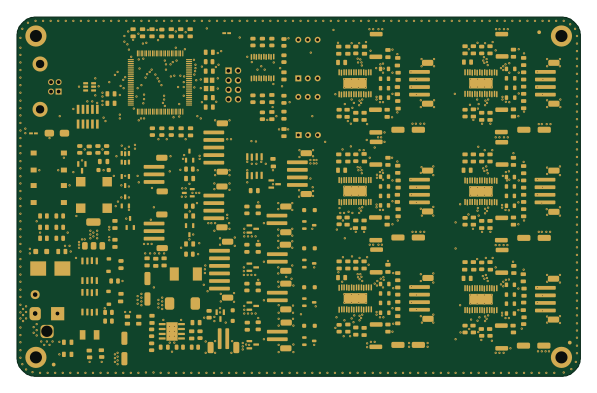
LumenPnP Motherboard
opulo-inc
149 × 95 mm296 parts4LCC-BY-SA-4.03.7k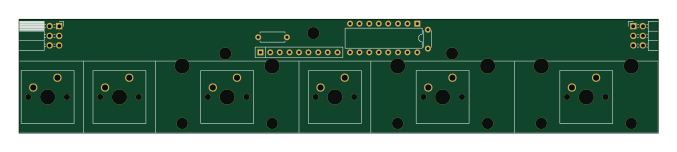 STM32
Type g
google
169 × 30 mm24 parts2LApache-2.02.9k STM32
Base
52.3 × 52.3 mm36 parts2LApache-2.02.9k STM32
Main panel
234 × 84 mm26 parts4LApache-2.02.9k STM32
Type a
150 × 30 mm14 parts2LApache-2.02.9k STM32
Type c
188 × 30 mm17 parts2LApache-2.02.9k