
Polaris

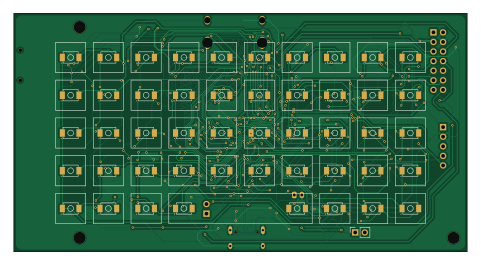
About the Polaris PCB
Polaris is an open source Raspberry Pi PCB design by hridcode, published on GitHub. It is a 2-layer board measuring 120 × 63 mm, with 132 components from 34 distinct parts.
Its main chip is the C39843328, from the Raspberry Pi family. Other key parts include the MAX98357A, C181692, C5446, APS1604M-3SQRx-SN and DS3231MZ. By type, the board carries 51 switches, 28 capacitors, 24 resistors, 12 diodes, 6 ICs and 6 connectors.
It belongs with the audio, displays & leds and power & battery designs in this gallery.
From the project
Polaris is a portable cyberdeck for everyday use. It does not use a Raspberry Pi or other SBC, but rather an RP2354B with extra PSRAM! It is meant for having an on-the-go device to use for everyday tasks.
Polaris is a portable cyberdeck for everyday use. It does not use a Raspberry Pi or other SBC, but rather an RP2354B with extra PSRAM! It is meant for having an on-the-go device to use for everyday tasks.
- RP2354B SoC - 520KB SRAM + 2MB PSRAM - 2MB flash memory - 5x10 thumb-size keyboard - SD card slot - USB-C port - Battery charging with power path (IP2306) - Audio output through speaker (MAX98357A) - GPIO access - Expansion port for apps
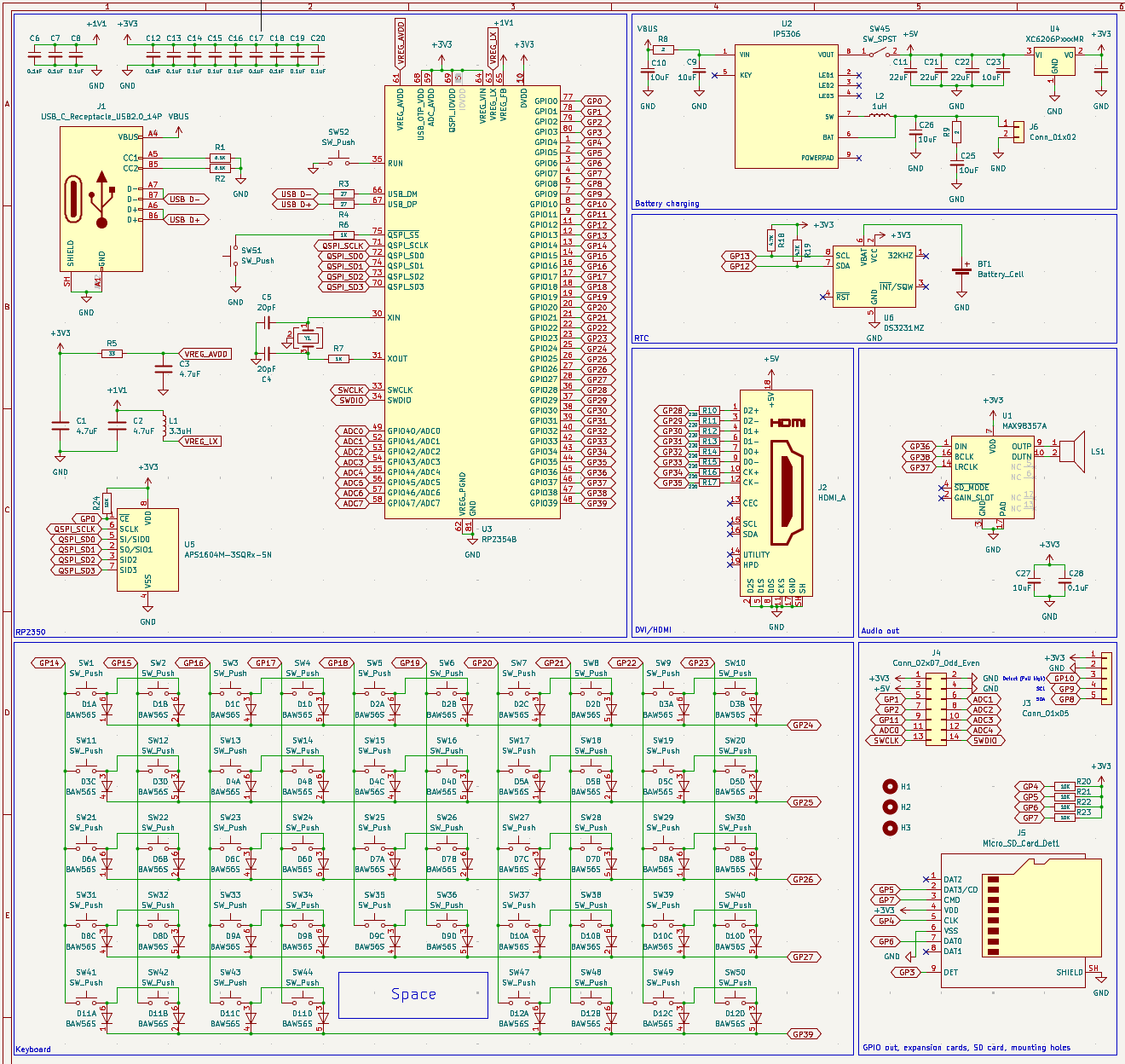
Main components on the Polaris
Polaris bill of materials (BOM)
132 components, 34 distinct parts.
| Qty | Part | Footprint | Refs |
|---|---|---|---|
| 1 | MAX98357A | TQFN-16-1EP_3x3mm_P0.5mm_EP1.23x1.23mm | U1 |
| 1 | C181692 IP5306 | eSOP-8 | U2 |
| 1 | C39843328 RP2354B | QFN-80-1EP_10x10mm_P0.4mm_EP3.4x3.4mm | U3 |
| 1 | C5446 XC6206PxxxMR | SOT-23-3 | U4 |
| 1 | APS1604M-3SQRx-SN | SOIC-8_3.9x4.9mm_P1.27mm | U5 |
| 1 | DS3231MZ | SOIC-8_3.9x4.9mm_P1.27mm | U6 |
| 1 | C9002 Crystal_GND24 | Crystal_SMD_3225-4Pin_3.2x2.5mm | Y1 |
| 1 | C165948 USB_C_Receptacle_USB2.0_14P | USB_C_Receptacle_HRO_TYPE-C-31-M-12 | J1 |
| 1 | HDMI_A | HDMI_A_Molex_208658-1001_Horizontal | J2 |
| 1 | Conn_01x05 | PinSocket_1x05_P2.54mm_Horizontal | J3 |
| 1 | Conn_02x07_Odd_Even | PinSocket_2x07_P2.54mm_Horizontal | J4 |
| 1 | Micro_SD_Card_Det1 | TF-SMD_TF-CARD-H1.8 | J5 |
| 1 | Conn_01x02 | JST_PH_B2B-PH-K_1x02_P2.00mm_Vertical | J6 |
| 1 | Battery_Cell | CR1220_Battery_Holder | BT1 |
| 1 | Speaker | PinSocket_1x02_P2.54mm_Vertical | LS1 |
| 48 | SW_Push | SW-SMD_L4.0-W3.0-LS5.0 | SW1, SW2, SW3, SW4, SW5, SW6, SW7, SW8 +40 |
| 1 | SW_SPST | PinSocket_1x02_P2.54mm_Vertical | SW45 |
| 2 | SW_Push | R_1812_4532Metric | SW51, SW52 |
| 12 | BAW56S | SOT-363_SC-70-6 | D1, D2, D3, D4, D5, D6, D7, D8 +4 |
| 1 | C84474 3.3uH | L_0402_1005Metric | L1 |
Show 14 more
| Qty | Part | Footprint | Refs |
|---|---|---|---|
| 1 | C84468 1uH | L_0402_1005Metric | L2 |
| 3 | C23733 4.7uF | C_0402_1005Metric | C1, C2, C3 |
| 2 | C1554 20pF | C_0402_1005Metric | C4, C5 |
| 13 | C1525 0.1uF | C_0402_1005Metric | C6, C7, C8, C12, C13, C14, C15, C16 +5 |
| 7 | C15525 10uF | C_0402_1005Metric | C9, C10, C23, C24, C25, C26, C27 |
| 3 | C59461 22uF | C_0603_1608Metric | C11, C21, C22 |
| 2 | C25905 5.1K | R_0402_1005Metric | R1, R2 |
| 2 | C25190 27 | R_0603_1608Metric | R3, R4 |
| 1 | C25105 33 | R_0402_1005Metric | R5 |
| 2 | C11702 1K | R_0402_1005Metric | R6, R7 |
| 2 | C22977 2 | R_0603_1608Metric | R8, R9 |
| 8 | C22977 220 | R_0603_1608Metric | R10, R11, R12, R13, R14, R15, R16, R17 |
| 2 | C25905 4.7K | R_0402_1005Metric | R18, R19 |
| 5 | C25905 10K | R_0402_1005Metric | R20, R21, R22, R23, R24 |
Polaris design files
The KiCad project lives in the hridcode/polaris repository on GitHub; these links point at the commit this page was built from.
Polaris: common questions
What microcontroller does the Polaris use?
The Polaris is built around the C39843328, from the Raspberry Pi family.
How big is the Polaris PCB?
The Polaris measures 120 × 63 mm, has 2 copper layers and is 1.6 mm thick.
How many components are on the Polaris?
132 components, from 34 distinct parts. The full bill of materials is listed on this page.
Where can I download the Polaris design files?
From the hridcode/polaris repository on GitHub, which has the KiCad layout and the schematic; the links under Design files point to each one.
Can I use the Polaris design in my own project?
The repository has no license, so all rights stay with hridcode. Use it as a reference, and ask the author before reusing the design.
Can I test firmware for the Polaris without the hardware?
Yes. HardLabs builds a simulation of the board from its netlist and BOM, so you can run and debug Raspberry Pi firmware against it before you order a PCB.
Similar boards
 Raspberry Pi
Open source rover
nasa-jpl
220 × 178 mm144 parts2LApache-2.09.7k Raspberry Pi
Iot
dotnet
56 × 65 mm24 parts2LMIT2.4k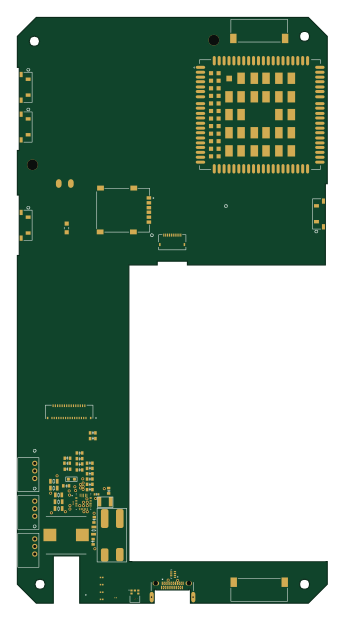 Raspberry Pi
SPIRIT
SPIRIT-org
82 × 155 mm130 parts6LCERN-OHL-S-2.01.3k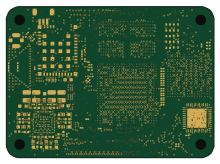 Raspberry Pi
CM5RevEng
schlae
55 × 40 mm417 parts10LNo license1.0k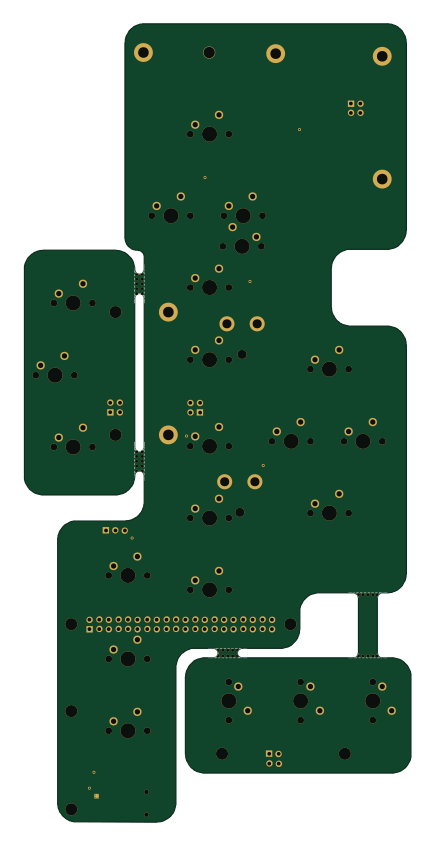 Raspberry Pi
Haxo hw
cardonabits
102.4 × 211.3 mm38 parts2LCustom license672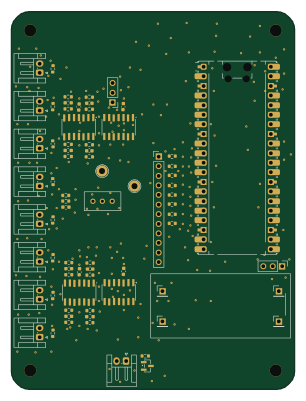 Raspberry Pi
Phased
Neumi
75 × 100 mm71 parts2LNo license507