
Dining-Buddy

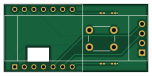
About the Dining-Buddy PCB
Dining-Buddy is an open source ESP32 PCB design by jackshisd, published on GitHub. It is a 2-layer board measuring 38 × 17.8 mm, with 7 components from 5 distinct parts.
Its main chip is the ESP32-C3, from the ESP32 family. By type, the board carries 2 ICs, 2 diodes, 2 resistors and 1 switch.
It belongs with the displays & leds and iot & wireless designs in this gallery.
From the project
An ultra-compact ESP32-C3 keychain device that displays UCLA dining menus and weather on an OLED screen with single-button control and nightly auto-updates.
- Safe Wi-Fi Shutdown: Device now safely enters deep sleep when unable to connect to Wi-Fi. - Manual Wi-Fi Retry: Long press the button to retry Wi-Fi connection without rebooting. - Smarter Menu Downloads: Optimized algorithm avoids redundant downloads, saving time and bandwidth. - Bug Fixes & Stability: Various minor improvements for a more reliable experience. - Custom Enclosure: 3D-printed and designed a protective case for portability. - PCB Revision 2: Updated layout for smoother button presses and improved assembly.
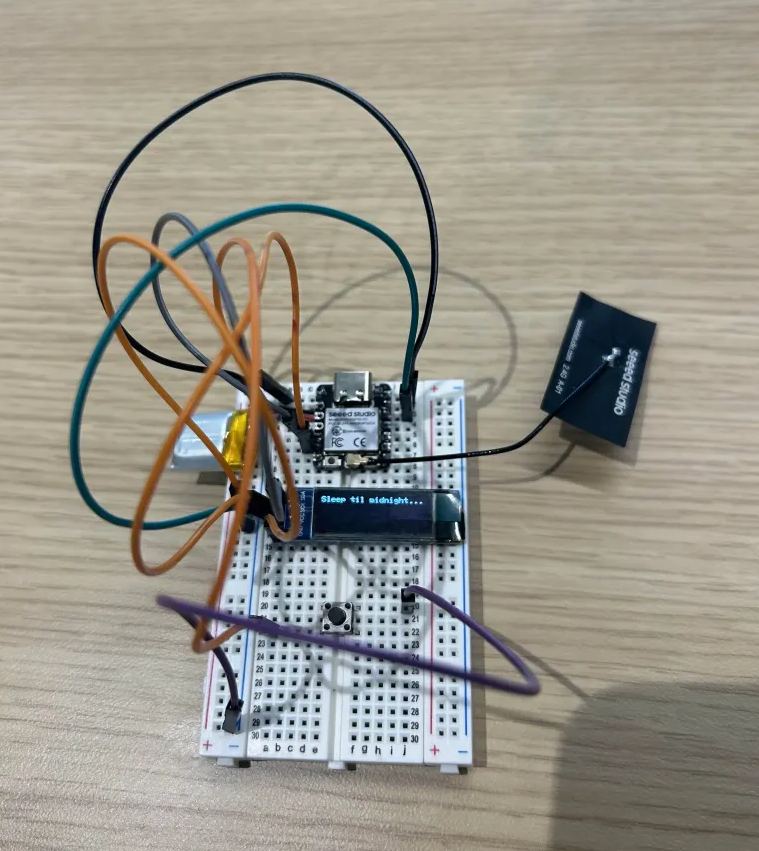
Main components on the Dining-Buddy
Dining-Buddy bill of materials (BOM)
7 components, 5 distinct parts.
| Qty | Part | Footprint | Refs |
|---|---|---|---|
| 1 | ESP32-C3 | MODULE_113991054 | U1 |
| 1 | ~ | SSD1306-0.91-OLED-4pin-128x32 (REVERSED) | U2 |
| 1 | SW_Push | SW_PUSH_6mm | SW1 |
| 2 | LED | LED_0201_0603Metric_Pad0.64x0.40mm_HandSolder | D1, D2 |
| 2 | 220 | R_0201_0603Metric_Pad0.64x0.40mm_HandSolder | R1, R3 |
Dining-Buddy design files
The KiCad project lives in the jackshisd/Dining-Buddy repository on GitHub; these links point at the commit this page was built from.
Dining-Buddy: common questions
What microcontroller does the Dining-Buddy use?
The Dining-Buddy is built around the ESP32-C3, from the ESP32 family.
How big is the Dining-Buddy PCB?
The Dining-Buddy measures 38 × 17.8 mm, has 2 copper layers and is 1.6 mm thick.
How many components are on the Dining-Buddy?
7 components, from 5 distinct parts. The full bill of materials is listed on this page.
Where can I download the Dining-Buddy design files?
From the jackshisd/Dining-Buddy repository on GitHub, which has the KiCad layout and the schematic; the links under Design files point to each one.
Can I use the Dining-Buddy design in my own project?
The repository has no license, so all rights stay with jackshisd. Use it as a reference, and ask the author before reusing the design.
Can I test firmware for the Dining-Buddy without the hardware?
Yes. HardLabs builds a simulation of the board from its netlist and BOM, so you can run and debug ESP32 firmware against it before you order a PCB.
Similar boards
 ESP32
ESP32Open Book Abridged Edition
joeycastillo
85 × 115 mm65 parts2LCC-BY-SA-4.08.1k ESP32
ESP32Esp32 minimal
atopile
36.2 × 26.8 mm20 parts2LMIT4.0k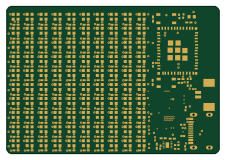 ESP32
ESP32Badge
56.3 × 39 mm239 parts4LMIT4.0k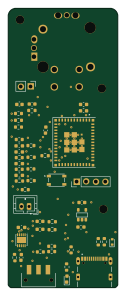 ESP32
ESP32Controller
StuckAtPrototype
29 × 74 mm58 parts4LApache-2.03.8k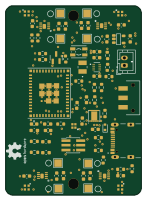 ESP32
ESP32Racer
36 × 50.2 mm70 parts4LApache-2.03.8k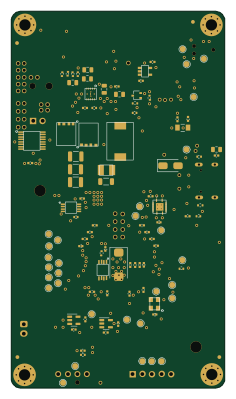 ESP32
ESP32Bitaxe
skot
56.5 × 99.8 mm86 parts4LCERN-OHL-S-2.01.4k