
NRF to Nucleo H536ZI connector board

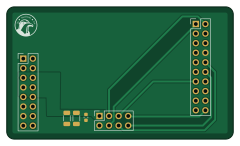
About the NRF to Nucleo H536ZI connector board
NRF to Nucleo H536ZI connector board is an open source PCB design by LiU-SeeGoals, published on GitHub. It is a 2-layer board measuring 60 × 35 mm, with 3 components from 3 distinct parts.
From the project
Schematics etc.
Motor driver has 5 pins to the devboard, 2 power pins and 8 pins to the motor
Capacitors and components change capacitance, inductance, etc as the voltage changes. This was not know during the making of driver.
Capacitors should be closer to the pins they are filtering.
There is a risk of overheating if the motors get stuck for a longer time, adding some cooling would be nice.
NRF to Nucleo H536ZI connector board bill of materials (BOM)
3 components, 3 distinct parts — part numbers from the project's BOM.
| Qty | Part | Footprint | Refs |
|---|---|---|---|
| 1 | 8.2PF 8.2pF | C_0603_1608Metric | C1 |
| 1 | 0.1UF 0.1uF | C_1206_3216Metric | C2 |
| 1 | 10UF 10uF | C_1206_3216Metric | C3 |
NRF to Nucleo H536ZI connector board design files
The KiCad project lives in the LiU-SeeGoals/Electronics repository on GitHub; these links point at the commit this page was built from.
NRF to Nucleo H536ZI connector board: common questions
How big is the NRF to Nucleo H536ZI connector board?
The NRF to Nucleo H536ZI connector board measures 60 × 35 mm, has 2 copper layers and is 1.6 mm thick.
How many components are on the NRF to Nucleo H536ZI connector board?
3 components, from 3 distinct parts, with part numbers taken from the project's own BOM. The full bill of materials is listed on this page.
Where can I download the NRF to Nucleo H536ZI connector board design files?
From the LiU-SeeGoals/Electronics repository on GitHub, which has the KiCad layout, the schematic and the BOM; the links under Design files point to each one.
Can I use the NRF to Nucleo H536ZI connector board design in my own project?
The repository has no license, so all rights stay with LiU-SeeGoals. Use it as a reference, and ask the author before reusing the design.
More boards in Electronics
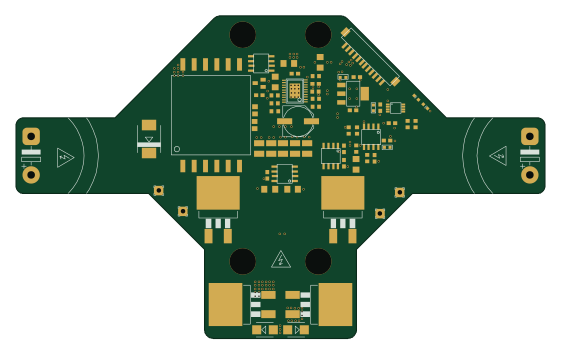
Kicker Board (Initial design by A Ryll -Tigers)
140 × 85.4 mm63 parts2LNo license0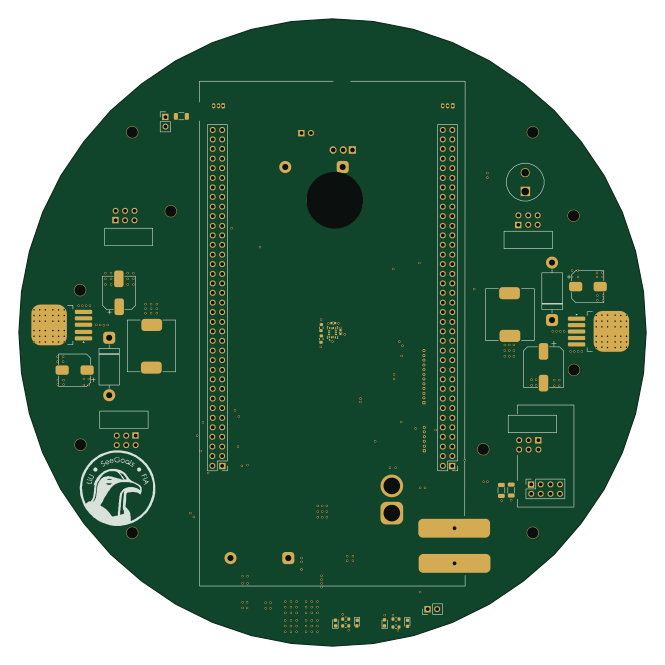
Power board
166 × 166 mm53 parts4LNo license0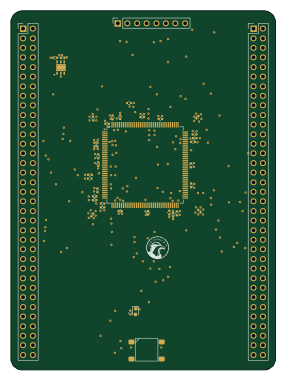 STM32
STM32STM32H755ZI breakout board
70 × 95 mm38 parts4LNo license0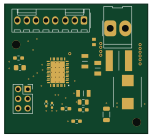
Driver seperate
37.9 × 34.2 mm19 parts4LNo license0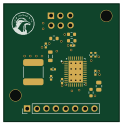
Motor driver board for pwr v2
30.5 × 31 mm16 parts2LNo license0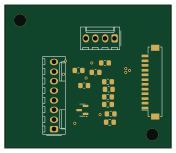
Kicker breakout
44 × 37.8 mm14 parts2LNo license0
Imu LSM6DSL
25.4 × 21 mm9 parts4LNo license0 STM32
STM32Enc v1 b
24 × 15.5 mm3 parts2LNo license0 STM32
STM32Enc v1 a
24 × 15.5 mm3 parts2LNo license0