
Astrum

About the Astrum PCB
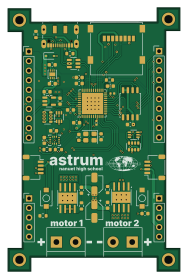
Astrum is an open source STM32 PCB design by LtBrain, published on GitHub under the MIT license. It is a 4-layer board measuring 45.5 × 69.8 mm, with 50 components from 27 distinct parts.
Its main chip is the STM32H523CEUX, from the STM32 family. Other key parts include the LDL212PV33R, USBLC6-2SC6, W25Q32JVSS, LSM6DSR and DRV8871DDA. By type, the board carries 21 capacitors, 10 connectors, 8 resistors, 7 ICs, 2 switches and 1 crystal.
It belongs with the robotics & motion and sensors designs in this gallery.
From the project
A control system board/robot for Science Olympiads Robot Tour. It will have 2 brushed motor drivers, at least 2 encoder inputs, and support for ultrasonic and TOF sensors, all in a compact package.
https://github.com/LtBrain/astrum/blob/main/Astrum%20BOM%20-%20Sheet1.csv
This covers the total sum of all the major parts.
There is a more in depth BOM for the PCB assembly components itself: BOM-astrum-JLCPCB Assembly Order.xls
REVIEWERS: Do note that I am aware of the high PCB fabrication costs + shipping, but this is the cheapest I could find it for (at JLCPCB). Additionally, the global standard direct shipping option will not work for this board. Sadly, JLCPCB requires the purchase to be under 59.99 dollars, which this board exceeds. This is why it got so expensive. Also do note that…
Main components on the Astrum
Astrum bill of materials (BOM)
50 components, 27 distinct parts — part numbers from the project's BOM.
| Qty | Part | Footprint | Refs |
|---|---|---|---|
| 1 | STM32H523CEUX STM32H523CEUx | QFN-48-1EP_7x7mm_P0.5mm_EP5.6x5.6mm | U1 |
| 1 | LDL212PV33R | DFN_V33R_STM | U2 |
| 1 | USBLC6-2SC6 | SOT-23-6 | U3 |
| 1 | W25Q32JVSS | SOIC-8_5.3x5.3mm_P1.27mm | U4 |
| 1 | LSM6DSR | LGA_M6DSR_STM | U6 |
| 2 | DRV8871DDA | Texas_HTSOP-8-1EP_3.9x4.9mm_P1.27mm_EP2.95x4.9mm_Mask2.4x3.1mm_ThermalVias | U8, U9 |
| 1 | 25MHZ 25mHz | Crystal_SMD_3225-4Pin_3.2x2.5mm | Y2 |
| 1 | USB_C_RECEPTACLE_USB2.0_16P USB_C_Receptacle_USB2.0_16P | USB_C_Receptacle_JAE_DX07S016JA1R1500 | J1 |
| 1 | C5912397 Micro_SD_Card | microSD_HC_Wuerth_693072010801 | J2 |
| 2 | SCREW_TERMINAL_01X02 Screw_Terminal_01x02 | TerminalBlock_bornier-2_P5.08mm | J3, J11 |
| 2 | CONN_01X04_MOUNTINGPIN Conn_01x04_MountingPin | JST_SH_SM04B-SRSS-TB_1x04-1MP_P1.00mm_Horizontal | J5, J6 |
| 2 | CONN_01X10_PIN Conn_01x10_Pin | PinHeader_1x10_P2.54mm_Vertical | J7, J8 |
| 2 | CONN_01X05_PIN Conn_01x05_Pin | PinHeader_1x05_P2.54mm_Vertical | J9, J10 |
| 2 | TS-1088-AR02016 | SW-SMD_L3.9-W3.0-P4.45 | SW1, SW2 |
| 1 | NSR0530HT3G | D_SOD-323 | D3 |
| 1 | 2.2UF 2.2uF | C_0603_1608Metric | C1 |
| 1 | 2.2UF 2.2uF | C_0402_1005Metric | C2 |
| 2 | 4.7UF 4.7uF | C_0603_1608Metric | C3, C10 |
| 9 | 100NF 100nF | C_0603_1608Metric | C4, C5, C6, C11, C15, C16, C17, C19 +1 |
| 2 | 18PF 18pF | C_0603_1608Metric | C7, C8 |
Show 7 more
| Qty | Part | Footprint | Refs |
|---|---|---|---|
| 3 | 1UF 1uF | C_0603_1608Metric | C9, C12, C13 |
| 2 | 22UF 22uF | CP_Elec_4x5.4 | C18, C20 |
| 1 | 100NF 100nF | C_0402_1005Metric | C22 |
| 2 | 5.1K 5.1k | R_0603_1608Metric | R1, R2 |
| 2 | 30K 30k | R_0603_1608Metric | R3, R4 |
| 1 | 4.7K 4.7k | R_0603_1608Metric | R6 |
| 3 | 10K 10k | R_0603_1608Metric | R8, R9, R10 |
Astrum design files
The KiCad project lives in the LtBrain/astrum repository on GitHub; these links point at the commit this page was built from.
- LayoutPCB/astrum.kicad_pcb
- SchematicPCB/astrum.kicad_sch
- BOMProduction/BOM-astrum.csv
Astrum: common questions
What microcontroller does the Astrum use?
The Astrum is built around the STM32H523CEUX, from the STM32 family.
How big is the Astrum PCB?
The Astrum measures 45.5 × 69.8 mm, has 4 copper layers and is 1.6062 mm thick.
How many components are on the Astrum?
50 components, from 27 distinct parts, with part numbers taken from the project's own BOM. The full bill of materials is listed on this page.
Where can I download the Astrum design files?
From the LtBrain/astrum repository on GitHub, which has the KiCad layout, the schematic and the BOM; the links under Design files point to each one.
Can I use the Astrum design in my own project?
Yes, under the terms of its MIT license, which LtBrain chose for the repository.
Can I test firmware for the Astrum without the hardware?
Yes. HardLabs builds a simulation of the board from its netlist and BOM, so you can run and debug STM32 firmware against it before you order a PCB.
Similar boards
 STM32
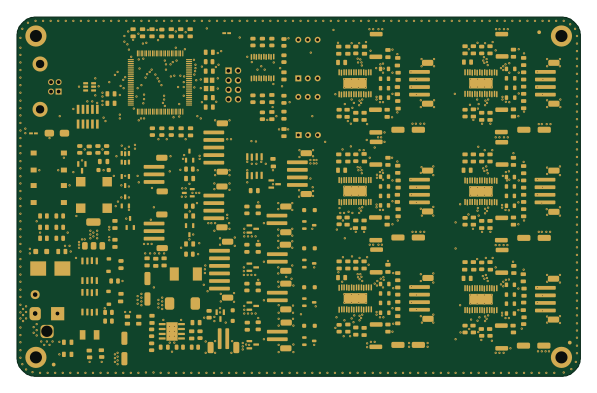
LumenPnP Motherboard
opulo-inc
149 × 95 mm296 parts4LCC-BY-SA-4.03.7k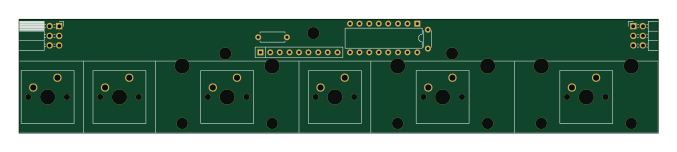 STM32
Type g
google
169 × 30 mm24 parts2LApache-2.02.9k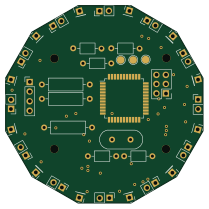 STM32
Base
52.3 × 52.3 mm36 parts2LApache-2.02.9k STM32
Main panel
234 × 84 mm26 parts4LApache-2.02.9k STM32
Type a
150 × 30 mm14 parts2LApache-2.02.9k STM32
Type c
188 × 30 mm17 parts2LApache-2.02.9k