
Orologio eink

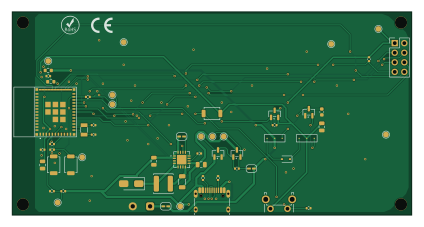
About the Orologio eink PCB
Orologio eink is an open source ESP32 PCB design by LucaBenzi, published on GitHub under the MIT license. It is a 2-layer board measuring 105.8 × 53.8 mm, with 36 components from 24 distinct parts.
Its main chip is the ESP32-C3-MINI-1-N4, from the ESP32 family. Other key parts include the MCP1700X-330XXTT and TP5000. By type, the board carries 13 resistors, 11 capacitors, 3 ICs, 3 transistors, 2 diodes and 1 crystal.
It belongs with the displays & leds, iot & wireless and power & battery designs in this gallery.
From the project
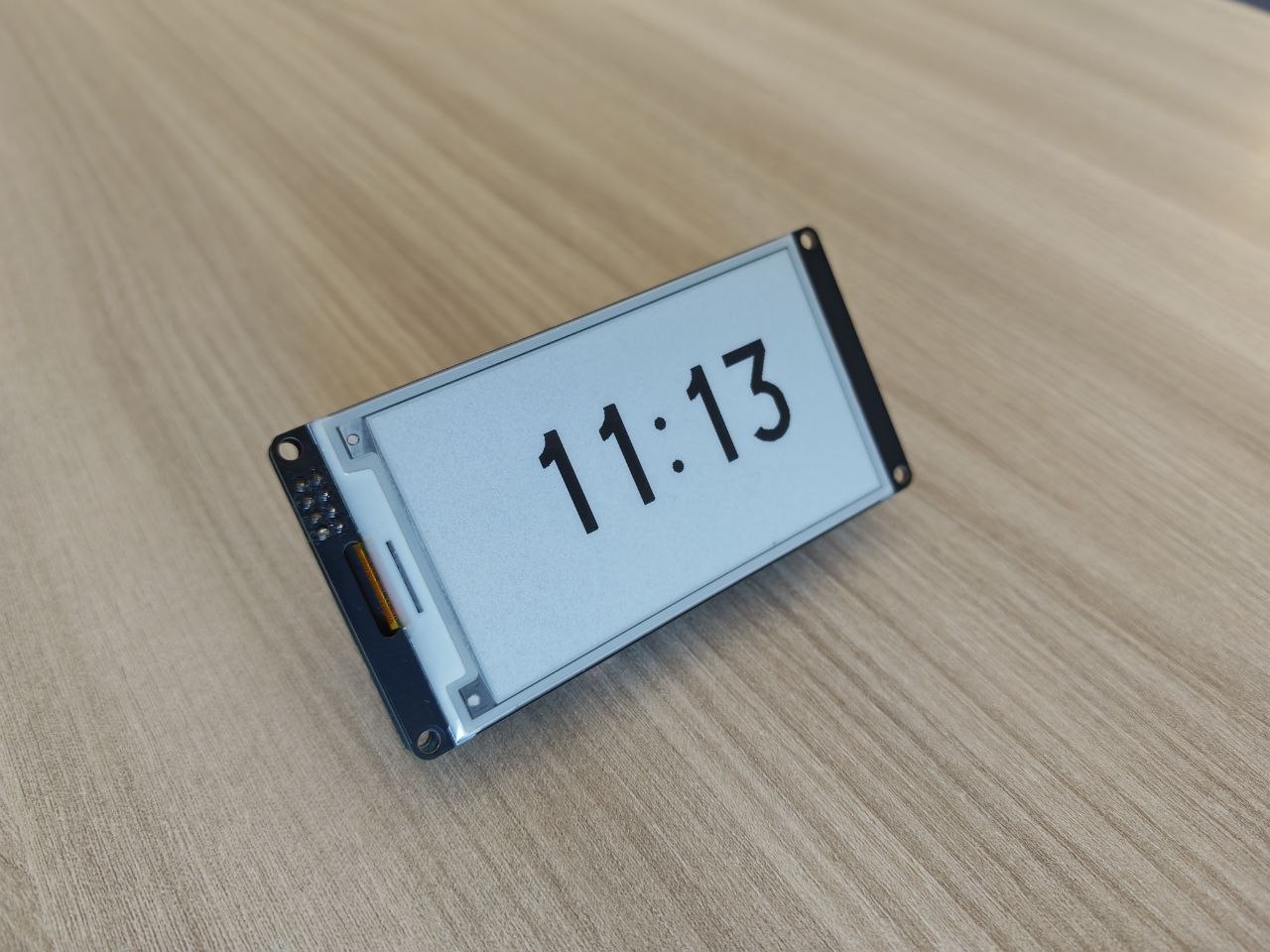
Orologio da tavolo e-ink con ESP32-C3, batteria LiFePO4 e sync NTP - 2 anni di autonomia con una ricarica USB-C
E-ink desk clock with a 3.7" display, ESP32-C3 and LiFePO4 battery. Connects to WiFi, syncs time via NTP and runs for about 2 years on a single ~2-hour USB-C charge.
Philosophy: "Place it and it works. Recharge it every 2 years."
- 3.7" e-ink display (240x416 px) — sunlight readable, zero power draw at rest - ESP32-C3 in deep sleep (~5 µA), wakes up every minute to update the display - External 32.768 kHz crystal for accurate deep-sleep timekeeping (~1.7 s/day drift) - Automatic nightly NTP sync to correct drift - 2x LiFePO4 18650 cells in parallel (3600 mAh) — USB-C charging via TP5000 -…
Main components on the Orologio eink
Orologio eink bill of materials (BOM)
36 components, 24 distinct parts — part numbers from the project's BOM.
| Qty | Part | Footprint | Refs |
|---|---|---|---|
| 1 | ESP32-C3-MINI-1-N4 ESPRESSIF(乐鑫) | C2838502_WIFIM-SMD_ESP32-C3-MINI-1 | U1 |
| 1 | MCP1700X-330XXTT MCP1700x-330xxTT | SOT-23 | U2 |
| 1 | TP5000 | QFN-16-1EP_4x4mm_P0.65mm_EP2.5x2.5mm | U3 |
| 2 | AO3401A | SOT-23 | Q1, Q3 |
| 1 | 2N7002 | SOT-23 | Q2 |
| 1 | Crystal | Crystal_SMD_3215-2Pin_3.2x1.5mm | Y1 |
| 1 | USB_C_RECEPTACLE_USB2.0_16P USB_C_Receptacle_USB2.0_16P | USB_C_Receptacle_HRO_TYPE-C-31-M-12 | J2 |
| 1 | SW_Push | SW_Tactile_SPST_Angled_PTS645Vx31-2LFS | SW1 |
| 1 | BAT60JFILM | D_SOD-323 | D1 |
| 1 | SS14 | D_SMA | D3 |
| 1 | 4.7U 4.7u | L_Sunlord_SWPA5040S | L1 |
| 2 | 100N 100n | C_0402_1005Metric | C1, C11 |
| 4 | 10U 10u | C_0805_2012Metric | C2, C7, C8, C9 |
| 1 | 1u | C_0402_1005Metric | C3 |
| 2 | 18P 18p | C_0402_1005Metric | C4, C5 |
| 1 | 1u | C_0603_1608Metric | C6 |
| 1 | 0.1U 0.1u | C_0402_1005Metric | C10 |
| 3 | 10K | R_0402_1005Metric | R1, R2, R6 |
| 2 | 5.1K | R_0402_1005Metric | R3, R4 |
| 1 | 0.1 | R_1206_3216Metric | R5 |
Show 4 more
| Qty | Part | Footprint | Refs |
|---|---|---|---|
| 1 | 15K | R_0402_1005Metric | R7 |
| 1 | 1M | R_0402_1005Metric | R8 |
| 3 | 100K 100k | R_0402_1005Metric | R9, R12, R13 |
| 2 | 2M | R_0603_1608Metric | R10, R11 |
Orologio eink design files
The KiCad project lives in the LucaBenzi/orologio-eink repository on GitHub; these links point at the commit this page was built from.
- Layoutpcb/progetto.kicad_pcb
- Schematicpcb/progetto.kicad_sch
- BOMpcb/production/bom.csv
Orologio eink: common questions
What microcontroller does the Orologio eink use?
The Orologio eink is built around the ESP32-C3-MINI-1-N4, from the ESP32 family.
How big is the Orologio eink PCB?
The Orologio eink measures 105.8 × 53.8 mm, has 2 copper layers and is 1.6 mm thick.
How many components are on the Orologio eink?
36 components, from 24 distinct parts, with part numbers taken from the project's own BOM. The full bill of materials is listed on this page.
Where can I download the Orologio eink design files?
From the LucaBenzi/orologio-eink repository on GitHub, which has the KiCad layout, the schematic and the BOM; the links under Design files point to each one.
Can I use the Orologio eink design in my own project?
Yes, under the terms of its MIT license, which LucaBenzi chose for the repository.
Can I test firmware for the Orologio eink without the hardware?
Yes. HardLabs builds a simulation of the board from its netlist and BOM, so you can run and debug ESP32 firmware against it before you order a PCB.
Similar boards
 ESP32
ESP32Open Book Abridged Edition
joeycastillo
85 × 115 mm65 parts2LCC-BY-SA-4.08.1k ESP32
ESP32Esp32 minimal
atopile
36.2 × 26.8 mm20 parts2LMIT4.0k ESP32
ESP32Badge
56.3 × 39 mm239 parts4LMIT4.0k ESP32
ESP32Controller
StuckAtPrototype
29 × 74 mm58 parts4LApache-2.03.8k ESP32
ESP32Racer
36 × 50.2 mm70 parts4LApache-2.03.8k ESP32
ESP32Bitaxe
skot
56.5 × 99.8 mm86 parts4LCERN-OHL-S-2.01.4k