
PE4302

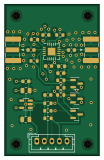
About the PE4302 PCB
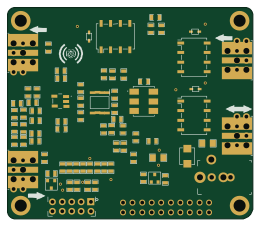
PE4302 is an open source PCB design by M0LTE, published on GitHub. It is a 4-layer board measuring 25 × 40 mm, with 27 components from 17 distinct parts.
Other key parts include the 74LVC1G17 and 74LVC74. By type, the board carries 10 capacitors, 9 resistors, 3 transistors, 3 connectors and 2 ICs.
It belongs with the rf & radio designs in this gallery.
From the project
An attempt to build a complete ham radio transceiver around a Raspberry Pi
Attenuator modules to test different options for the Pi Transceiver
* PE4302 - 0.5 to 31.5 serial control digital attenuator with level converters
Main components on the PE4302
PE4302 bill of materials (BOM)
27 components, 17 distinct parts — part numbers from the project's BOM.
| Qty | Part | Footprint | Refs |
|---|---|---|---|
| 1 | 74LVC1G17 PE4302 | QFN-20-1EP_4x4mm_P0.5mm_EP2x2mm | U1 |
| 1 | 74LVC74 TLV70233_SOT23-5 | SOT-23-5 | U2 |
| 1 | BC848W BSS138 | SOT-23 | Q1 |
| 1 | 2N7002 BSS138 | SOT-23 | Q2 |
| 1 | DMG2305UX BSS138 | SOT-23 | Q3 |
| 1 | CONN_01X06 Conn_Coaxial | SMA_Samtec_SMA-J-P-X-ST-EM1_EdgeMount | J1 |
| 1 | C1509221 Conn_Coaxial | SMA_Samtec_SMA-J-P-X-ST-EM1_EdgeMount | J2 |
| 1 | C1509221 Conn_01x05 | JST_PH_B5B-PH-K_1x05_P2.00mm_Vertical | J3 |
| 2 | 1NF 100n | C_0603_1608Metric | C1, C2 |
| 2 | 10N 10u | C_0805_2012Metric | C3, C4 |
| 6 | 10N 100n | C_0603_1608Metric | C5, C6, C7, C8, C9, C10 |
| 1 | 4K7 4k7 | R_0603_1608Metric | R1 |
| 1 | 10K 4k7 | R_0603_1608Metric | R2 |
| 2 | 4k7 | R_0603_1608Metric | R3, R4 |
| 1 | 220 4k7 | R_0603_1608Metric | R5 |
| 1 | 470 4k7 | R_0603_1608Metric | R6 |
| 3 | 10K 10k | R_0603_1608Metric | R7, R8, R9 |
PE4302 design files
The KiCad project lives in the M0LTE/pi-transceiver repository on GitHub; these links point at the commit this page was built from.
PE4302: common questions
How big is the PE4302 PCB?
The PE4302 measures 25 × 40 mm, has 4 copper layers and is 1.6 mm thick.
How many components are on the PE4302?
27 components, from 17 distinct parts, with part numbers taken from the project's own BOM. The full bill of materials is listed on this page.
Where can I download the PE4302 design files?
From the M0LTE/pi-transceiver repository on GitHub, which has the KiCad layout, the schematic and the BOM; the links under Design files point to each one.
Can I use the PE4302 design in my own project?
The repository has no license, so all rights stay with M0LTE. Use it as a reference, and ask the author before reusing the design.
More boards in pi-transceiver
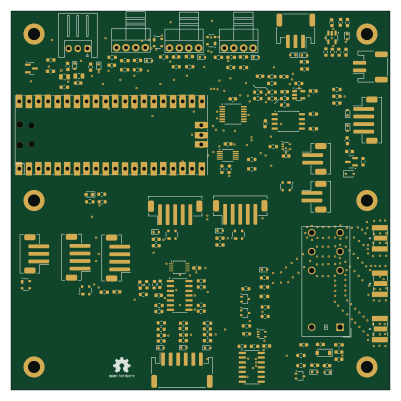 RP2040/RP2350
HF PA Radio Interface
100 × 100 mm180 parts2LNo license15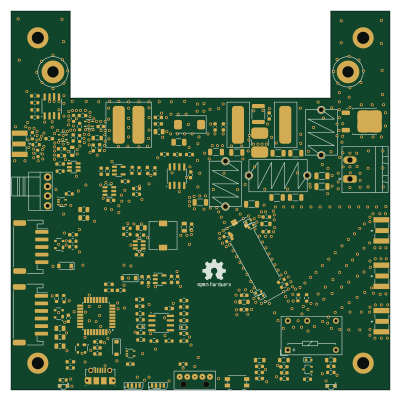 Microchip SAM
Pi TX 35W PA V2
100 × 100 mm161 parts4LNo license15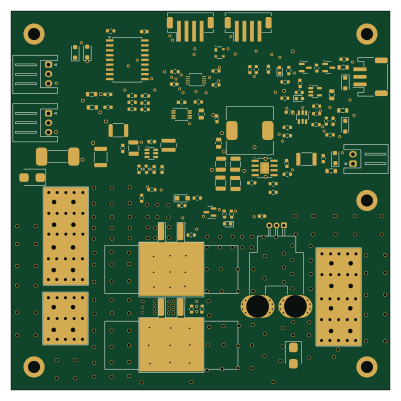
PA Power V1
100 × 100 mm111 parts4LNo license15
RXLNA
100 × 100 mm86 parts4LNo license15
LPF Relay
75 × 50 mm54 parts2LNo license15
Broadcast Filter
50 × 30 mm45 parts4LNo license15 Raspberry Pi
Internet Interrupter v1
65 × 56 mm36 parts4LNo license15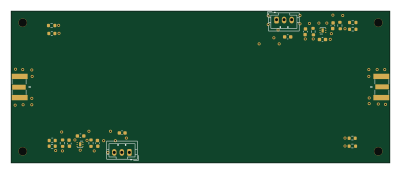
Coupler
100 × 40 mm26 parts2LNo license15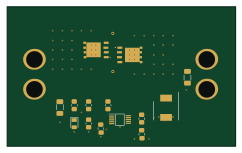
Pi tranceiver psu
60.3 × 36.8 mm16 parts2LNo license15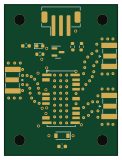
Relay RF HF3
30 × 40 mm13 parts4LNo license15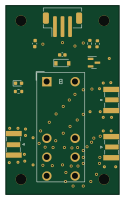
Relay RF G2RL
30 × 50 mm13 parts2LNo license15
Similar boards
Hat
pa3gsb
65 × 56 mm81 parts2LNo license675
Radioberry preamp
65 × 56 mm137 parts2LNo license675
Radioberry juice
65 × 56 mm87 parts2LNo license675
Goodwatch20
travisgoodspeed
25.6 × 27.6 mm20 parts2LNo license568
GoodPocketWatch
75.2 × 101.2 mm56 parts2LNo license568
Goodwatch31
25.6 × 27.6 mm23 parts2LNo license568