
Micromouse

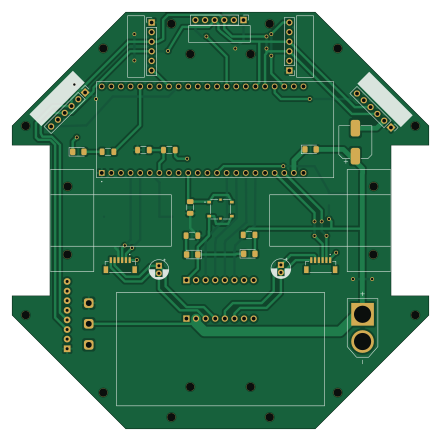
About the Micromouse PCB
Micromouse is an open source ESP32 PCB design by opatiny, published on GitHub under the CERN-OHL-P-2.0 license. It is a 2-layer board measuring 110 × 110 mm, with 35 components from 29 distinct parts.
Its main chip is the ESP32-S3-DEVKITC-1U-N8R2, from the ESP32 family. Other key parts include the GY-521. By type, the board carries 8 resistors, 4 diodes, 3 connectors, 3 capacitors, 2 ICs and 1 battery holder.
It belongs with the robotics & motion, power & battery and iot & wireless designs in this gallery.
From the project
Designing a custom micromouse robot.
YouTube demo of the project: https://youtu.be/nz4QlaSIkbY
Main repository for my bachelor's thesis project.
The software fo this robot can be found in the two following repositories:
- Software for the microcontroller: opatiny/ms-software - TypeScript code for the debug web page (is then built and uploaded on the MCU): opatiny/ms-webpage
This project was inspired by the micromouse competitions, in which small autonomous maze-solving robots compete to solve an unknown maze in the shortest possible time. The main focus of the project was to design a micromouse from scratch, which implied…

Main components on the Micromouse
Micromouse bill of materials (BOM)
35 components, 29 distinct parts — part numbers from the project's BOM.
| Qty | Part | Footprint | Refs |
|---|---|---|---|
| 1 | ESP32-S3-DEVKITC-1U-N8R2 | XCVR_ESP32-S3-DEVKITC-1U-N8R2 | U1 |
| 1 | GY-521 | GY-521 | U2 |
| 1 | Left motor | JST_SH_6pins | J1 |
| 1 | Right motor | JST_SH_6pins | J2 |
| 1 | XT60-M | AMASS_XT60-M | J3 |
| 1 | Battery | LiPo_2S1P_Battery | BT1 |
| 1 | DRV8833 | Polulu_DRV8833 | DRV1 |
| 1 | Bumper_front | Micromouse_bumper | H1 |
| 1 | Bumper_back | Micromouse_bumper | H2 |
| 2 | Motor_holes | Polulu_Micro_Gearmotor | H3, H4 |
| 2 | Caster_wheel | caster_wheel_custom | H5, H6 |
| 1 | PKLCS1212E20A0-R1 | buzzer_double_footprint | LS1 |
| 1 | PTS526_SMG15_SMTR2_LFS | SW_PTS526_SMG15_SMTR2_LFS | S1 |
| 1 | Left | TinyTronics_VL53L1X | VL53L1X1 |
| 1 | Front-right | TinyTronics_VL53L1X | VL53L1X2 |
| 1 | Front-left | TinyTronics_VL53L1X | VL53L1X3 |
| 1 | Right | TinyTronics_VL53L1X | VL53L1X4 |
| 1 | Front | TinyTronics_VL53L1X_header_front | VL53L1X5 |
| 1 | D_Schottky | D_1206_3216Metric_Pad1.42x1.75mm_HandSolder | D1 |
| 1 | DEBUG | LED_1206_3216Metric_Pad1.42x1.75mm_HandSolder | D2 |
Show 9 more
| Qty | Part | Footprint | Refs |
|---|---|---|---|
| 1 | LED_VBAT | LED_1206_3216Metric_Pad1.42x1.75mm_HandSolder | D3 |
| 1 | LED_3V3 | LED_1206_3216Metric_Pad1.42x1.75mm_HandSolder | D4 |
| 2 | 0.1uF | CP_Radial_D5.0mm_P2.00mm | C1, C2 |
| 1 | 220uF | CP_Elec_8x10.5 | C3 |
| 1 | 20k | R_1206_3216Metric_Pad1.30x1.75mm_HandSolder | R1 |
| 3 | 10k | R_1206_3216Metric_Pad1.30x1.75mm_HandSolder | R2, R3, R4 |
| 1 | 40k | R_1206_3216Metric_Pad1.30x1.75mm_HandSolder | R5 |
| 1 | 5k | R_1206_3216Metric_Pad1.30x1.75mm_HandSolder | R6 |
| 2 | 1k | R_1206_3216Metric_Pad1.30x1.75mm_HandSolder | R7, R8 |
Micromouse design files
The KiCad project lives in the opatiny/micromouse repository on GitHub; these links point at the commit this page was built from.
Micromouse: common questions
What microcontroller does the Micromouse use?
The Micromouse is built around the ESP32-S3-DEVKITC-1U-N8R2, from the ESP32 family.
How big is the Micromouse PCB?
The Micromouse measures 110 × 110 mm, has 2 copper layers and is 1.6 mm thick.
How many components are on the Micromouse?
35 components, from 29 distinct parts, with part numbers taken from the project's own BOM. The full bill of materials is listed on this page.
Where can I download the Micromouse design files?
From the opatiny/micromouse repository on GitHub, which has the KiCad layout, the schematic and the BOM; the links under Design files point to each one.
Can I use the Micromouse design in my own project?
Yes, under the terms of its CERN-OHL-P-2.0 license, which opatiny chose for the repository.
Can I test firmware for the Micromouse without the hardware?
Yes. HardLabs builds a simulation of the board from its netlist and BOM, so you can run and debug ESP32 firmware against it before you order a PCB.
Similar boards
 ESP32
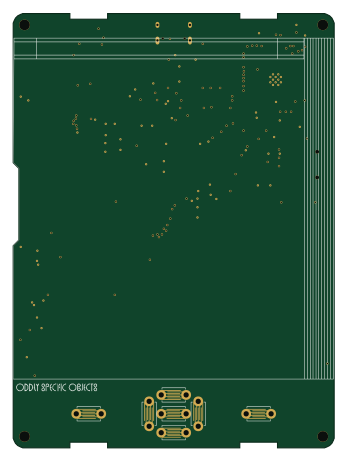
Open Book Abridged Edition
joeycastillo
85 × 115 mm65 parts2LCC-BY-SA-4.08.1k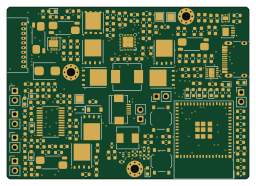 ESP32
Powertrain
byrantech
64 × 45.4 mm171 parts4LMIT4.3k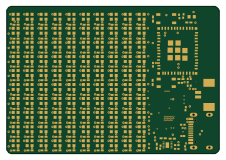 ESP32
Badge
atopile
56.3 × 39 mm239 parts4LMIT4.0k ESP32
Esp32 minimal
36.2 × 26.8 mm20 parts2LMIT4.0k ESP32
Controller
StuckAtPrototype
29 × 74 mm58 parts4LApache-2.03.8k ESP32
Racer
36 × 50.2 mm70 parts4LApache-2.03.8k