
Boku no pico

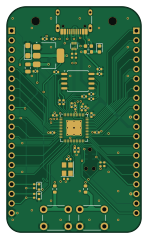
About the Boku no pico PCB
Boku no pico is an open source RP2040/RP2350 PCB design by Pyisoe-Thame, published on GitHub. It is a 4-layer board measuring 35.6 × 59.7 mm, with 48 components from 22 distinct parts.
Its main chip is the RP2040, from the RP2040/RP2350 family. Other key parts include the LM-USBLC6-2P6, AMS1117-3.3 and W25Q16JVSSIQ. By type, the board carries 19 capacitors, 16 resistors, 4 ICs, 3 connectors, 3 diodes and 2 switches.
It belongs with the dev boards & breakouts designs in this gallery.
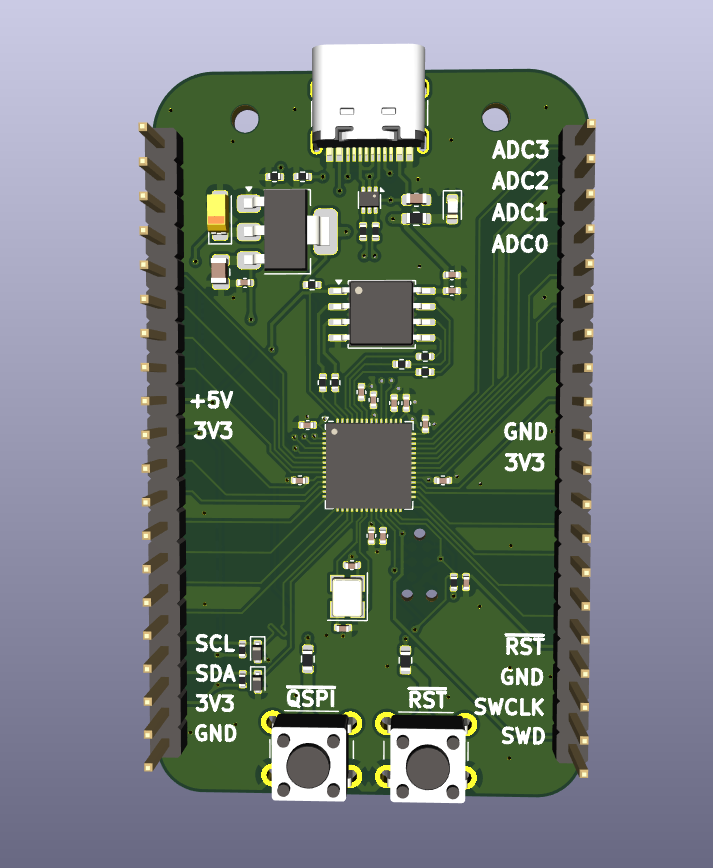
Main components on the Boku no pico
Boku no pico bill of materials (BOM)
48 components, 22 distinct parts — part numbers from the project's BOM.
| Qty | Part | Footprint | Refs |
|---|---|---|---|
| 1 | RP2040 Raspberry Pi | QFN-56-1EP_7x7mm_P0.4mm_EP4x4mm | U1 |
| 1 | LM-USBLC6-2P6 USBLC6-2P6 Leiditech | SOT-563 | U2 |
| 1 | AMS1117-3.3 UMW(Youtai Semiconductor Co., Ltd.) | SOT-223-3_TabPin2 | U3 |
| 1 | W25Q16JVSSIQ W25Q16JVSS Winbond Elec | SOIC-8_5.275x5.275mm_P1.27mm | U4 |
| 1 | ABM8-272-T3 Abracon LLC | Crystal_SMD_Abracon_ABM8G-4Pin_3.2x2.5mm | Y1 |
| 1 | TYPE-C-31-M-12 USB_C_2.0 Korean Hroparts Elec | USB_C_Receptacle_HRO_TYPE-C-31-M-12 | J1 |
| 2 | Conn_01x20 | PinHeader_1x20_P2.54mm_Vertical | J3, J4 |
| 2 | SMG-01-H055A1 SW_Push SM Switch | SW_PUSH_6mm | SW1, SW2 |
| 2 | ESD5Z3.3C-ES ESD5Z3.3C ElecSuper | D_SOD-523 | D1, D2 |
| 1 | XL-1608SURC-06 Red XINGLIGHT | LED_0603_1608Metric | D3 |
| 11 | TCC0402X7R104K160AT 100nF CCTC | C_0402_1005Metric | C1, C4, C5, C6, C9, C10, C11, C12 +3 |
| 2 | CC0402JRNPO7BN220 22pF YAGEO | C_0402_1005Metric | C2, C3 |
| 2 | CGA0402X5R224K100GT 220nF HRE | C_0402_1005Metric | C7, C8 |
| 1 | CGA0603X5R475K160JT 4.7uF HRE | C_0603_1608Metric | C14 |
| 1 | CL21A106KOQNNNE 10uF Samsung Electro-Mechanics | C_0805_2012Metric | C16 |
| 1 | TC212A226M010B 22uF Sunlord | CP_EIA-3216-18_Kemet-A | C17 |
| 1 | TCC0402X5R105K160AT 1uF CCTC | C_0402_1005Metric | C18 |
| 4 | SCR0402J10K 10k VO | R_0402_1005Metric | R1, R11, R14, R15 |
| 7 | FRC0402J270TS 27 FOJAN | R_0402_1005Metric | R2, R3, R4, R5, R6, R7, R8 |
| 2 | 0603WAF5101T5E 5k1 UNI-ROYAL(Uniroyal Elec) | R_0402_1005Metric | R9, R10 |
Show 2 more
| Qty | Part | Footprint | Refs |
|---|---|---|---|
| 2 | CR0603J1K00P05Z 1k Ever Ohms Tech | R_0603_1608Metric | R12, R13 |
| 1 | 0603WAF2200T5E 220R UNI-ROYAL(Uniroyal Elec) | R_0603_1608Metric | R16 |
Boku no pico design files
The KiCad project lives in the Pyisoe-Thame/boku_no_pico repository on GitHub; these links point at the commit this page was built from.
Boku no pico: common questions
What microcontroller does the Boku no pico use?
The Boku no pico is built around the RP2040, from the RP2040/RP2350 family.
How big is the Boku no pico PCB?
The Boku no pico measures 35.6 × 59.7 mm, has 4 copper layers and is 1.6 mm thick.
How many components are on the Boku no pico?
48 components, from 22 distinct parts, with part numbers taken from the project's own BOM. The full bill of materials is listed on this page.
Where can I download the Boku no pico design files?
From the Pyisoe-Thame/boku_no_pico repository on GitHub, which has the KiCad layout, the schematic and the BOM; the links under Design files point to each one.
Can I use the Boku no pico design in my own project?
The repository has no license, so all rights stay with Pyisoe-Thame. Use it as a reference, and ask the author before reusing the design.
Can I test firmware for the Boku no pico without the hardware?
Yes. HardLabs builds a simulation of the board from its netlist and BOM, so you can run and debug RP2040/RP2350 firmware against it before you order a PCB.
Similar boards
 RP2040/RP2350
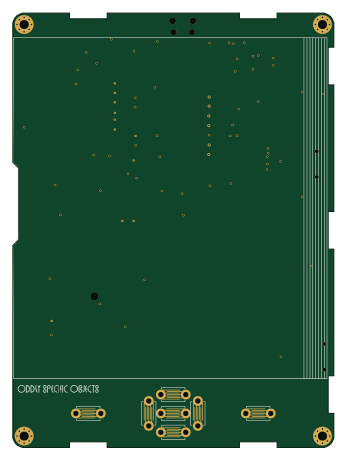
Open Book Abridged Edition
joeycastillo
85 × 115 mm29 parts2LCC-BY-SA-4.08.1k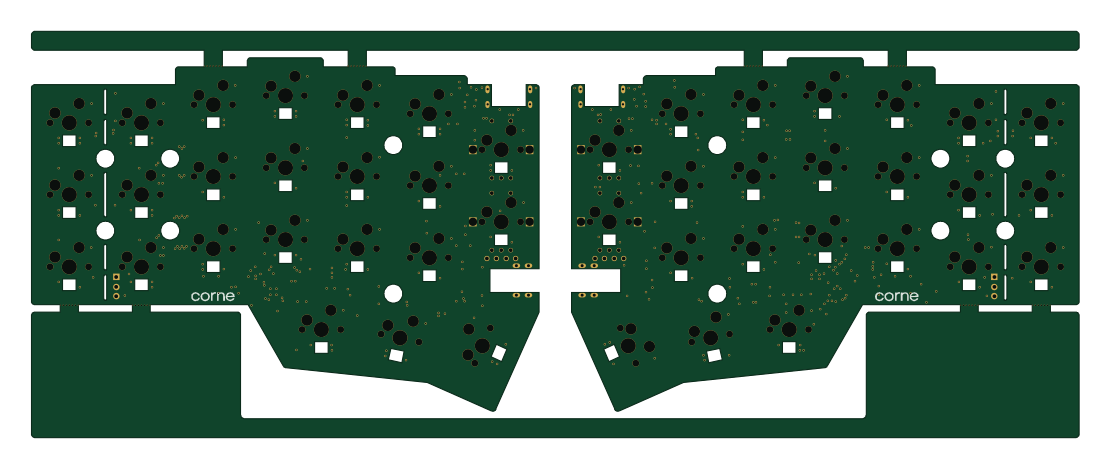 RP2040/RP2350
Corne
foostan
277.2 × 107.5 mm164 parts2LCC-BY-4.07.7k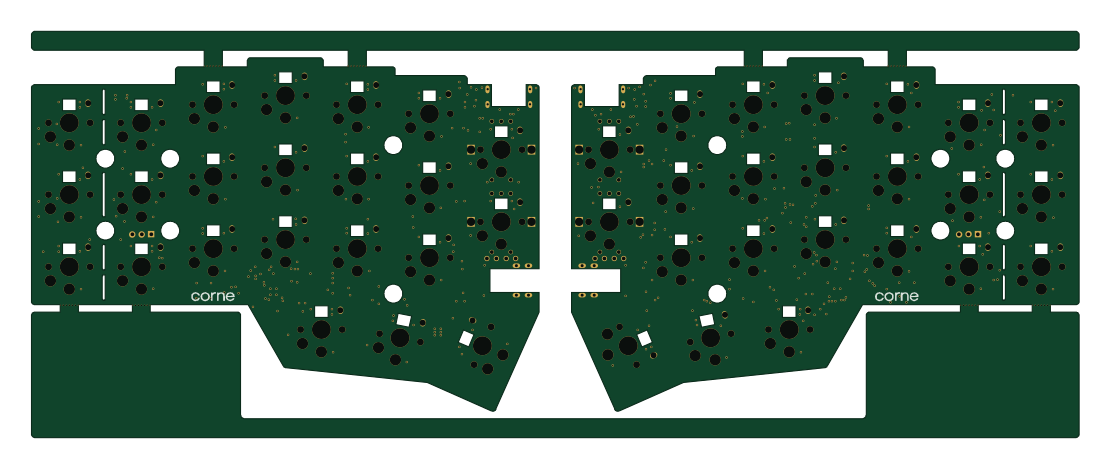 RP2040/RP2350
Corne
277.2 × 107.5 mm164 parts2LCC-BY-4.07.7k RP2040/RP2350
LogicAnalyzer
gusmanb
57 × 55.2 mm6 parts2LGPL-3.05.0k RP2040/RP2350
Jitx design
55.5 × 65 mm26 parts4LGPL-3.05.0k RP2040/RP2350
Main
google
98 × 71 mm102 parts2LApache-2.02.9k