
Three Octave #

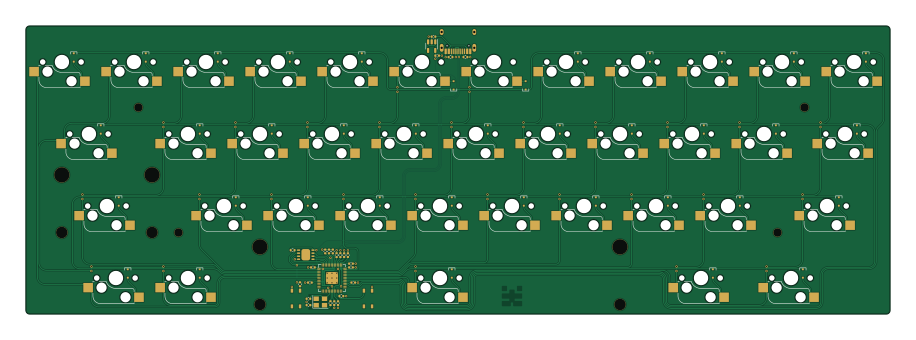
About the Three Octave # PCB
Three Octave # is an open source RP2040/RP2350 PCB design by takayoshiotake, published on GitHub under the CC-BY-SA-4.0 license. It is a 2-layer board measuring 228.6 × 76.2 mm, with 107 components from 52 distinct parts.
Its main chip is the RASPBERRY_PI_RP2040, from the RP2040/RP2350 family. Other key parts include the W25Q64JVXGIQ and AP2112K-3.3. By type, the board carries 38 switches, 38 diodes, 16 capacitors, 8 resistors, 3 ICs and 1 crystal.
It belongs with the keyboards designs in this gallery.
From the project
A 38-key (3-octave + 1) keyboard
A 38-key (3-octave + 1) keyboard. Powered by Vial firmware.
This keyboard is based on a 60% column staggered keyboard like the HHKB, which omits the number and symbol keys to reduce the number of keys to 38.
MEMO: I couldn't figure out how to map keys to fn on macOS using Vial, so I am using Karabiner-Elements, a macOS app, to modify rightcontrol to fn`.
RAW data for Keyboard Layout Editor v0.15:
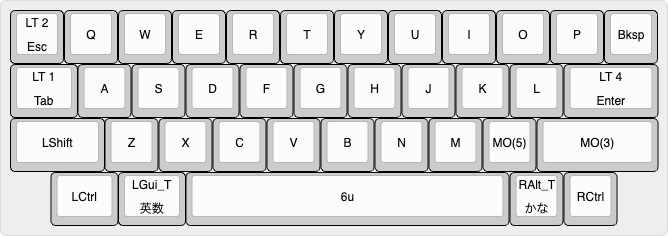
Main components on the Three Octave #
Three Octave # bill of materials (BOM)
107 components, 52 distinct parts — part numbers from the project's BOM.
| Qty | Part | Footprint | Refs |
|---|---|---|---|
| 1 | RASPBERRY_PI_RP2040 Raspberry_Pi_RP2040 | RP2040_QFN-56 | U1 |
| 1 | W25Q64JVXGIQ | XSON-8-EP_4x4mm | U2 |
| 1 | AP2112K-3.3 | SOT-23-5 | U3 |
| 1 | 12MHZ 12MHz | Crystal_SMD_3225-4Pin_3.2x2.5mm | Y1 |
| 1 | HRO_TYPE-C-31-M-12 | HRO_TYPE-C-31-M-12 | J1 |
| 1 | C5156480 Key Tab | Hot_Swap_Socket_CPG151101S11 | SW1 |
| 1 | C5156480 Key Q | Hot_Swap_Socket_CPG151101S11 | SW2 |
| 1 | C5156480 Key W | Hot_Swap_Socket_CPG151101S11 | SW3 |
| 1 | C5156480 Key E | Hot_Swap_Socket_CPG151101S11 | SW4 |
| 1 | C5156480 Key R | Hot_Swap_Socket_CPG151101S11 | SW5 |
| 1 | C5156480 Key T | Hot_Swap_Socket_CPG151101S11 | SW6 |
| 1 | C5156480 Key Y | Hot_Swap_Socket_CPG151101S11 | SW7 |
| 1 | C5156480 Key U | Hot_Swap_Socket_CPG151101S11 | SW8 |
| 1 | C5156480 Key I | Hot_Swap_Socket_CPG151101S11 | SW9 |
| 1 | C5156480 Key O | Hot_Swap_Socket_CPG151101S11 | SW10 |
| 1 | C5156480 Key P | Hot_Swap_Socket_CPG151101S11 | SW11 |
| 1 | C5156480 Key BS | Hot_Swap_Socket_CPG151101S11 | SW12 |
| 1 | C5156480 Key Caps | Hot_Swap_Socket_CPG151101S11 | SW13 |
| 1 | C5156480 Key A | Hot_Swap_Socket_CPG151101S11 | SW14 |
| 1 | C5156480 Key S | Hot_Swap_Socket_CPG151101S11 | SW15 |
Show 32 more
| Qty | Part | Footprint | Refs |
|---|---|---|---|
| 1 | C5156480 Key D | Hot_Swap_Socket_CPG151101S11 | SW16 |
| 1 | C5156480 Key F | Hot_Swap_Socket_CPG151101S11 | SW17 |
| 1 | C5156480 Key G | Hot_Swap_Socket_CPG151101S11 | SW18 |
| 1 | C5156480 Key H | Hot_Swap_Socket_CPG151101S11 | SW19 |
| 1 | C5156480 Key J | Hot_Swap_Socket_CPG151101S11 | SW20 |
| 1 | C5156480 Key K | Hot_Swap_Socket_CPG151101S11 | SW21 |
| 1 | C5156480 Key L | Hot_Swap_Socket_CPG151101S11 | SW22 |
| 1 | C5156480 Key Return | Hot_Swap_Socket_CPG151101S11 | SW23 |
| 2 | C5156480 Key Shift | Hot_Swap_Socket_CPG151101S11 | SW24, SW33 |
| 1 | C5156480 Key Z | Hot_Swap_Socket_CPG151101S11 | SW25 |
| 1 | C5156480 Key X | Hot_Swap_Socket_CPG151101S11 | SW26 |
| 1 | C5156480 Key C | Hot_Swap_Socket_CPG151101S11 | SW27 |
| 1 | C5156480 Key V | Hot_Swap_Socket_CPG151101S11 | SW28 |
| 1 | C5156480 Key B | Hot_Swap_Socket_CPG151101S11 | SW29 |
| 1 | C5156480 Key N | Hot_Swap_Socket_CPG151101S11 | SW30 |
| 1 | C5156480 Key M | Hot_Swap_Socket_CPG151101S11 | SW31 |
| 1 | C5156480 Key , | Hot_Swap_Socket_CPG151101S11 | SW32 |
| 1 | C5156480 Key Ctrl | Hot_Swap_Socket_CPG151101S11 | SW34 |
| 1 | C5156480 Key Cmd | Hot_Swap_Socket_CPG151101S11 | SW35 |
| 1 | C5156480 Key Space | Hot_Swap_Socket_CPG151101S11 | SW36 |
| 1 | C5156480 Key Opt | Hot_Swap_Socket_CPG151101S11 | SW37 |
| 1 | C5156480 Key Fn | Hot_Swap_Socket_CPG151101S11 | SW38 |
| 2 | Alps_Alpine_SKRP | Tactile_Switch_SKRP_Series | SW_B1, SW_R1 |
| 38 | 1N4148WS | D_SOD-323F | D1, D2, D3, D4, D5, D6, D7, D8 +30 |
| 2 | 30PF 30pF | C_0402_1005Metric | C1, C2 |
| 2 | 1UF 1uF | C_0402_1005Metric | C3, C4 |
| 10 | 0.1UF 0.1uF | C_0402_1005Metric | C5, C6, C7, C8, C9, C10, C11, C12 +2 |
| 2 | 10UF 10uF | C_0402_1005Metric | C15, C16 |
| 2 | 10K | R_0402_1005Metric | R1, R3 |
| 2 | 1K | R_0402_1005Metric | R2, R4 |
| 2 | 27 | R_0402_1005Metric | R5, R6 |
| 2 | 5.1K | R_0402_1005Metric | R7, R8 |
Three Octave # design files
The KiCad project lives in the takayoshiotake/three-octave-sharp-38-key-keyboard repository on GitHub; these links point at the commit this page was built from.
Three Octave #: common questions
What microcontroller does the Three Octave # use?
The Three Octave # is built around the RASPBERRY_PI_RP2040, from the RP2040/RP2350 family.
How big is the Three Octave # PCB?
The Three Octave # measures 228.6 × 76.2 mm, has 2 copper layers and is 1.2 mm thick.
How many components are on the Three Octave #?
107 components, from 52 distinct parts, with part numbers taken from the project's own BOM. The full bill of materials is listed on this page.
Where can I download the Three Octave # design files?
From the takayoshiotake/three-octave-sharp-38-key-keyboard repository on GitHub, which has the KiCad layout and the BOM; the links under Design files point to each one.
Can I use the Three Octave # design in my own project?
Yes, under the terms of its CC-BY-SA-4.0 license, which takayoshiotake chose for the repository.
Can I test firmware for the Three Octave # without the hardware?
Yes. HardLabs builds a simulation of the board from its netlist and BOM, so you can run and debug RP2040/RP2350 firmware against it before you order a PCB.
More boards in three-octave-sharp-38-key-keyboard
Similar boards
 RP2040/RP2350
OSO-BOOK-C1
joeycastillo
85 × 115 mm29 parts2LCC-BY-SA-4.08.1k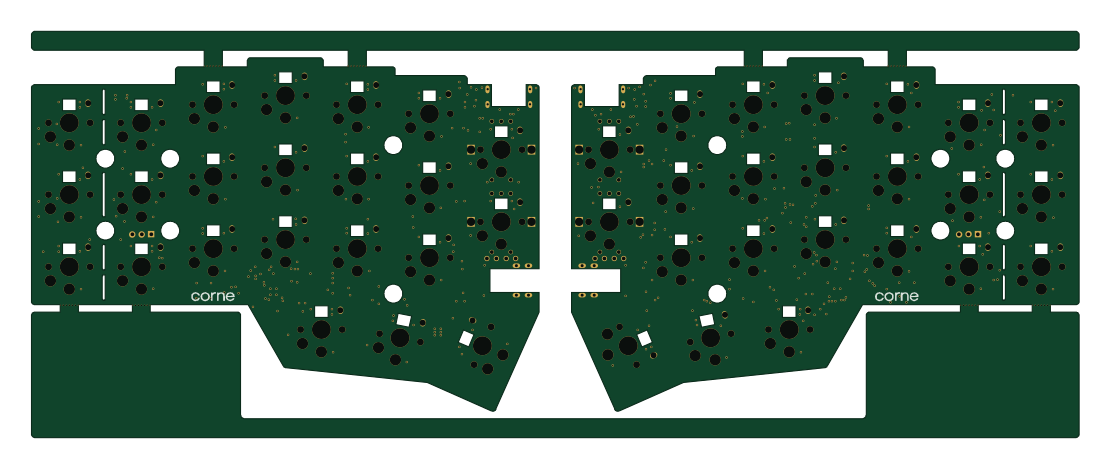 RP2040/RP2350
Corne chocolate
foostan
277.2 × 107.5 mm164 parts2LCC-BY-4.07.7k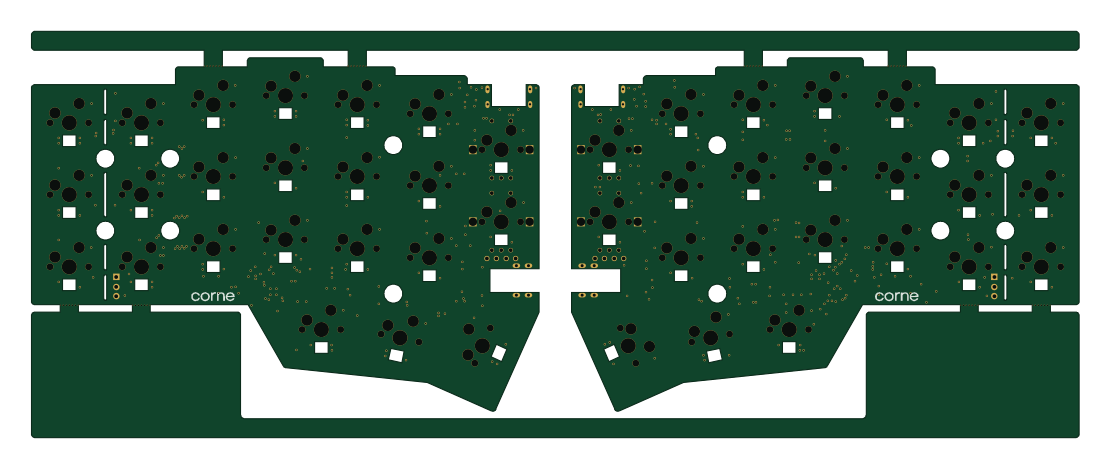 RP2040/RP2350
Corne cherry
277.2 × 107.5 mm164 parts2LCC-BY-4.07.7k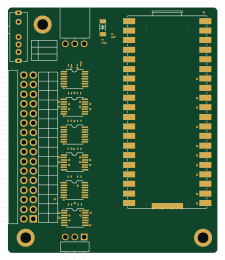 RP2040/RP2350
Jitx design
gusmanb
55.5 × 65 mm26 parts4LGPL-3.05.0k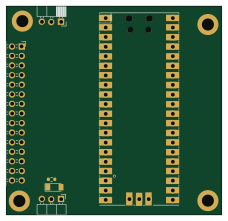 RP2040/RP2350
LogicAnalyzer
57 × 55.2 mm6 parts2LGPL-3.05.0k RP2040/RP2350
Main
google
98 × 71 mm102 parts2LApache-2.02.9k