
HT16K33Panel

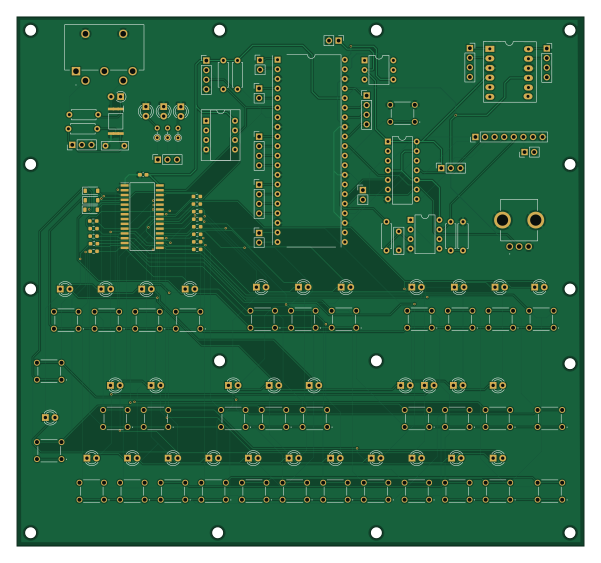
About the HT16K33Panel PCB
HT16K33Panel is an open source RP2040/RP2350 PCB design by wakimizufu, published on GitHub. It is a 2-layer board measuring 150 × 140 mm, with 126 components from 32 distinct parts.
Its main chip is the Raspberry Pi Pico DIP-40, from the RP2040/RP2350 family. Other key parts include the IRLML6402(DIP6Convert), FM24CL16B(DIP8 Convert), AE-LCNV4-MOSFET, 74HC126 and LM358. By type, the board carries 39 diodes, 35 switches, 23 resistors, 17 connectors, 8 ICs and 3 capacitors.
Main components on the HT16K33Panel
HT16K33Panel bill of materials (BOM)
126 components, 32 distinct parts — part numbers from the project's BOM.
| Qty | Part | Footprint | Refs |
|---|---|---|---|
| 1 | Raspberry Pi Pico DIP-40 | Raspberry Pi Pico DIP-40_W17.76mm | U1 |
| 1 | IRLML6402(DIP6Convert) | DIP-6_W7.62mm | U2 |
| 1 | FM24CL16B(DIP8 Convert) | CERDIP-8_W7.62mm_SideBrazed_Socket | U3 |
| 1 | AE-LCNV4-MOSFET | CERDIP-14_W10.16mm_SideBrazed_LongPads_Socket | U4 |
| 1 | 74HC126 | DIP-14_W7.62mm | U5 |
| 1 | LM358 | DIP-8_W7.62mm | U6 |
| 1 | HT16K33(28SOP-A) HT16K33_28SOP-A_ | SOIC127P1031X264-28N | U7 |
| 1 | TLP2304(TPR,E TLP2304_TPR,E | SOIC127P700X230-6N | U8 |
| 1 | KDJ03-5 | KDJ035 | J1 |
| 1 | CONN_01X02_SOCKET Conn_01x02_Socket | PinHeader_1x02_P2.54mm_Vertical | J2 |
| 2 | CONN_01X04_PIN Conn_01x04_Pin | PinSocket_1x04_P2.54mm_Vertical | J3, J14 |
| 5 | CONN_01X02_PIN Conn_01x02_Pin | PinHeader_1x02_P2.54mm_Vertical | J4, J5, J8, J9, J13 |
| 4 | CONN_01X04_SOCKET Conn_01x04_Socket | PinHeader_1x04_P2.54mm_Vertical | J6, J7, J10, J11 |
| 1 | CONN_01X08_PIN Conn_01x08_Pin | PinHeader_1x08_P2.54mm_Vertical | J12 |
| 1 | CONN_01X03_PIN Conn_01x03_Pin | PinHeader_1x03_P2.54mm_Vertical | J15 |
| 1 | CONN_01X03_PIN Conn_01x03_Pin | PinSocket_1x03_P2.54mm_Vertical | J16 |
| 1 | CONN_01X03_SOCKET Conn_01x03_Socket | PinSocket_1x03_P2.54mm_Vertical | J17 |
| 35 | B3F-1000S | B3F1060 | S1, S2, S3, S4, S5, S6, S7, S8 +27 |
| 1 | RK09D117000B | RK09D117000B | VR1 |
| 3 | 1N4148W | D_SOD-123 | D1, D2, D3 |
Show 12 more
| Qty | Part | Footprint | Refs |
|---|---|---|---|
| 35 | LED | LED_D3.0mm | D4, D5, D6, D7, D8, D9, D10, D11 +27 |
| 1 | 1SS120TD | D_A-405_P2.54mm_Vertical_AnodeUp | D36 |
| 1 | 0.1UF 0.1uF | C_0603_1608Metric_Pad1.08x0.95mm_HandSolder | C1 |
| 1 | 0.047UF 0.047uF | C_Rect_L7.0mm_W2.5mm_P5.00mm | C2 |
| 1 | 0.1UF 0.1uF | C_Rect_L7.0mm_W2.0mm_P5.00mm | C3 |
| 13 | 39K 39k | R_0603_1608Metric_Pad0.98x0.95mm_HandSolder | R1, R2, R3, R4, R5, R6, R7, R8 +5 |
| 2 | 1K | R_Axial_DIN0207_L6.3mm_D2.5mm_P7.62mm_Horizontal | R14, R15 |
| 1 | 22K | R_Axial_DIN0207_L6.3mm_D2.5mm_P7.62mm_Horizontal | R16 |
| 1 | 10K | R_Axial_DIN0207_L6.3mm_D2.5mm_P7.62mm_Horizontal | R17 |
| 1 | 5.1K | R_Axial_DIN0207_L6.3mm_D2.5mm_P7.62mm_Horizontal | R18 |
| 2 | 220 | R_Axial_DIN0207_L6.3mm_D2.5mm_P7.62mm_Horizontal | R19, R20 |
| 3 | 1K | R_Axial_DIN0204_L3.6mm_D1.6mm_P2.54mm_Vertical | R21, R22, R23 |
HT16K33Panel design files
The KiCad project lives in the wakimizufu/TBSEQ repository on GitHub; these links point at the commit this page was built from.
HT16K33Panel: common questions
What microcontroller does the HT16K33Panel use?
The HT16K33Panel is built around the Raspberry Pi Pico DIP-40, from the RP2040/RP2350 family.
How big is the HT16K33Panel PCB?
The HT16K33Panel measures 150 × 140 mm, has 2 copper layers and is 1.6 mm thick.
How many components are on the HT16K33Panel?
126 components, from 32 distinct parts, with part numbers taken from the project's own BOM. The full bill of materials is listed on this page.
Where can I download the HT16K33Panel design files?
From the wakimizufu/TBSEQ repository on GitHub, which has the KiCad layout, the schematic and the BOM; the links under Design files point to each one.
Can I use the HT16K33Panel design in my own project?
The repository has no license, so all rights stay with wakimizufu. Use it as a reference, and ask the author before reusing the design.
Can I test firmware for the HT16K33Panel without the hardware?
Yes. HardLabs builds a simulation of the board from its netlist and BOM, so you can run and debug RP2040/RP2350 firmware against it before you order a PCB.
More boards in TBSEQ
 RP2040/RP2350
MainBorad R1
200 × 130.3 mm258 parts2LNo license0
Analog separate
200 × 100 mm185 parts2LNo license0 RP2040/RP2350
Controll
110.6 × 155 mm135 parts2LNo license0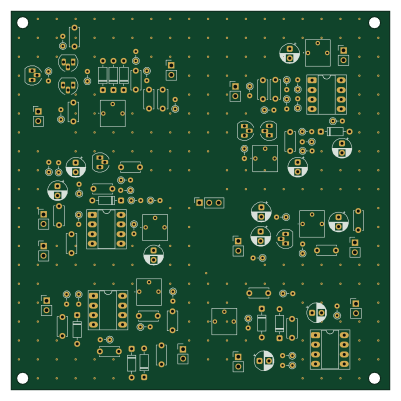
TestODDT
100 × 100 mm113 parts2LNo license0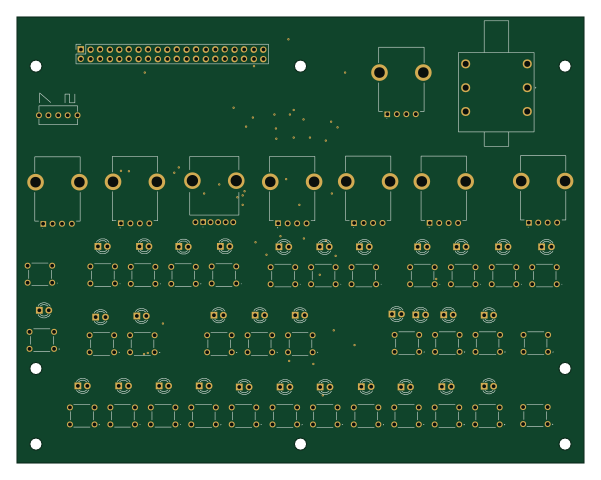
FrontPanel
150 × 118 mm95 parts2LNo license0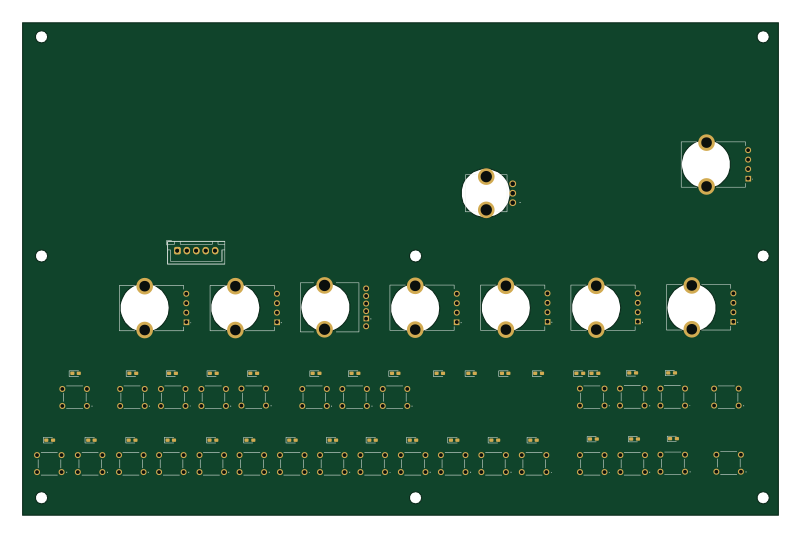
PanelBoard
200 × 130.3 mm90 parts2LNo license0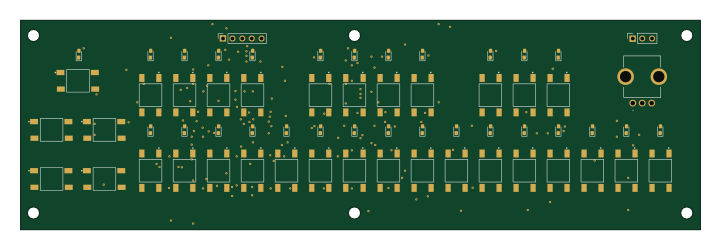
RythemPanelBoard
180 × 55.4 mm81 parts2LNo license0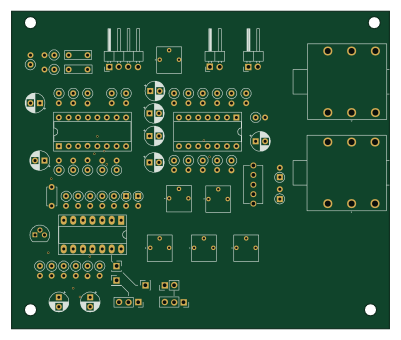
LM13700 VCA
100 × 84 mm74 parts2LNo license0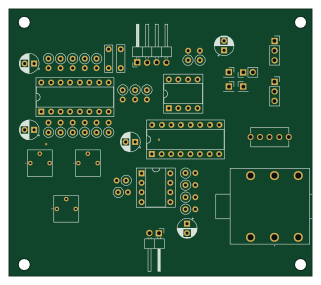
LM13700 Overdrive
80 × 70.5 mm46 parts2LNo license0
USBPD12VModule
25 × 34.5 mm17 parts2LNo license0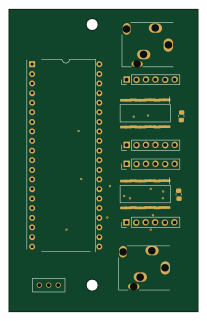 RP2040/RP2350
SyncBoard
50 × 80 mm12 parts2LNo license0
Similar boards
 RP2040/RP2350
Open Book Abridged Edition
joeycastillo
85 × 115 mm29 parts2LCC-BY-SA-4.08.1k RP2040/RP2350
Corne
foostan
277.2 × 107.5 mm164 parts2LCC-BY-4.07.7k RP2040/RP2350
Corne
277.2 × 107.5 mm164 parts2LCC-BY-4.07.7k RP2040/RP2350
LogicAnalyzer
gusmanb
57 × 55.2 mm6 parts2LGPL-3.05.0k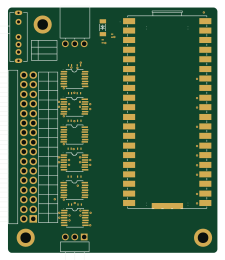 RP2040/RP2350
Jitx design
55.5 × 65 mm26 parts4LGPL-3.05.0k RP2040/RP2350
Pro V2
kata0510
290.1 × 130 mm270 parts2LMIT2.3k