
Kaidi desk

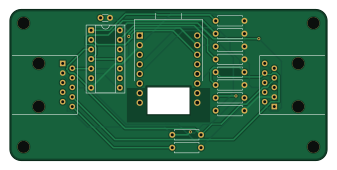
About the Kaidi desk PCB
Kaidi desk is an open source ESP32 PCB design by clintval, published on GitHub under the MIT license. It is a 2-layer board measuring 84 × 40 mm, with 15 components from 9 distinct parts.
Its main chip is the ESP32-C3 SuperMini, from the ESP32 family. Other key parts include the 74AHCT125. By type, the board carries 10 resistors, 2 ICs, 2 connectors and 1 capacitor.
It belongs with the iot & wireless designs in this gallery.
From the project
Control a Kaidi standing desk from Home Assistant with an ESP32 and ESPHome
Control a Kaidi standing desk from Home Assistant with an ESP32 and ESPHome.
Many "K Series" and other budget standing desks run on a Kaidi control box, such as the KDDY094. The box talks to its keypad over a 9600 baud serial link on a 10-pin RJ50 cable, and no off-the-shelf smart-desk dongle speaks its protocol. This component reads the desk's height and drives it the way the keypad does: it raises the keypad's wake line to power the motors, waits for the box to settle, then streams Up, Down and Reset commands. Earlier Kaidi projects only listened to the box; moving the desk needed the wake…
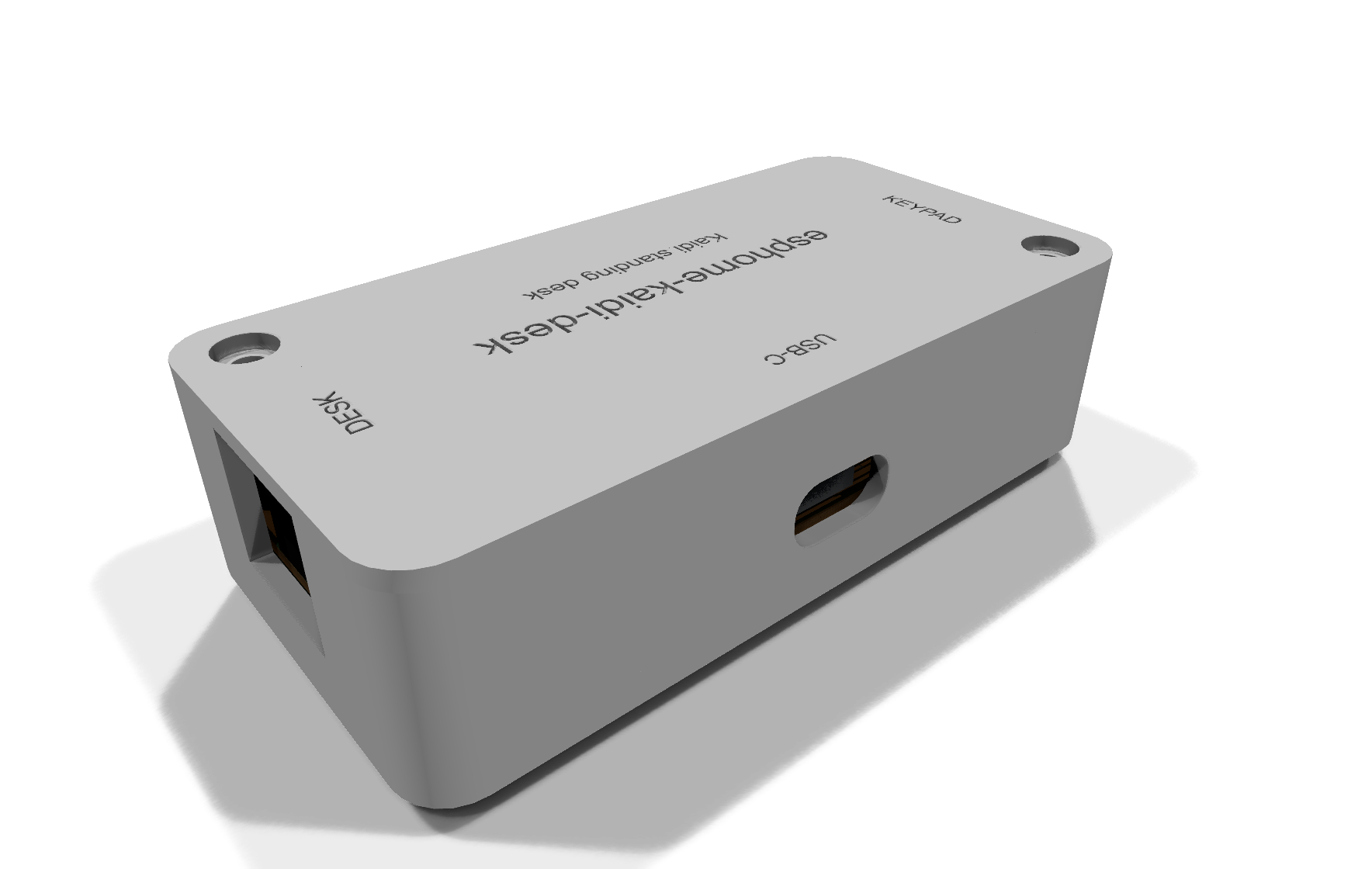
Main components on the Kaidi desk
Kaidi desk bill of materials (BOM)
15 components, 9 distinct parts.
| Qty | Part | Footprint | Refs |
|---|---|---|---|
| 1 | ESP32-C3 SuperMini | ESP32-C3_SuperMini_Flush | U1 |
| 1 | 74AHCT125 | DIP-14_W7.62mm_Socket | U2 |
| 1 | Keypad (RJ50) | RJ50_Amphenol_54602-910_Horizontal | J1 |
| 1 | Desk (RJ50) | RJ50_Amphenol_54602-910_Horizontal | J2 |
| 1 | 100n | C_Disc_D3.0mm_W1.6mm_P2.50mm | C1 |
| 2 | 1k | R_Axial_DIN0207_L6.3mm_D2.5mm_P7.62mm_Horizontal | R1, R2 |
| 4 | 10k | R_Axial_DIN0207_L6.3mm_D2.5mm_P7.62mm_Horizontal | R3, R4, R7, R9 |
| 2 | 100k | R_Axial_DIN0207_L6.3mm_D2.5mm_P7.62mm_Horizontal | R5, R6 |
| 2 | 15k | R_Axial_DIN0207_L6.3mm_D2.5mm_P7.62mm_Horizontal | R8, R10 |
Kaidi desk design files
The KiCad project lives in the clintval/esphome-kaidi-desk repository on GitHub; these links point at the commit this page was built from.
- Layouthardware/kaidi-desk.kicad_pcb
- Schematichardware/kaidi-desk.kicad_sch
Kaidi desk: common questions
What microcontroller does the Kaidi desk use?
The Kaidi desk is built around the ESP32-C3 SuperMini, from the ESP32 family.
How big is the Kaidi desk PCB?
The Kaidi desk measures 84 × 40 mm, has 2 copper layers and is 1.6 mm thick.
How many components are on the Kaidi desk?
15 components, from 9 distinct parts. The full bill of materials is listed on this page.
Where can I download the Kaidi desk design files?
From the clintval/esphome-kaidi-desk repository on GitHub, which has the KiCad layout and the schematic; the links under Design files point to each one.
Can I use the Kaidi desk design in my own project?
Yes, under the terms of its MIT license, which clintval chose for the repository.
Can I test firmware for the Kaidi desk without the hardware?
Yes. HardLabs builds a simulation of the board from its netlist and BOM, so you can run and debug ESP32 firmware against it before you order a PCB.
More boards in esphome-kaidi-desk
Similar boards
 ESP32
OSO-BOOK-B1
joeycastillo
85 × 115 mm65 parts2LCC-BY-SA-4.08.1k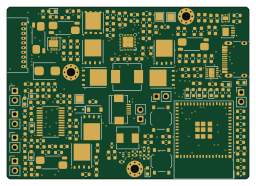 ESP32
Powertrain
byrantech
64 × 45.4 mm171 parts4LMIT4.3k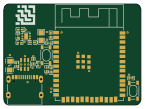 ESP32
Esp32 minimal
atopile
36.2 × 26.8 mm20 parts2LMIT4.0k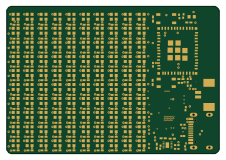 ESP32
Badge
56.3 × 39 mm239 parts4LMIT4.0k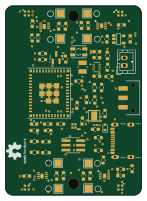 ESP32
Racer
StuckAtPrototype
36 × 50.2 mm70 parts4LApache-2.03.8k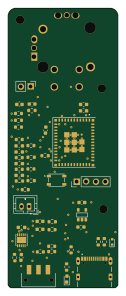 ESP32
Controller
29 × 74 mm58 parts4LApache-2.03.8k